U.S EUROPE WORLD AFFAIRS NEWSLETTER APRIL 2025
Dear all, April’s Newsletter is available online. You can find it on the Newsletters page or by clicking here. Have a happy and blessed spring, Editor in Chief.
U.S. Army and National Guard are the vital part of NATO-KFOR. This contribution not only establishes a secure environment in Kosovo but also actively encourages dialogue and cooperation between the region’s diverse communities.

See some of our recent articles and interviews with the U.S Army and NG in KFOR: https://useuworldaffairs.com/nato-kfor/
Get updated from: KFOR Regional Command East
@USArmyEURAF @NATO_KFOR @US_EUCOM @IowaNatGuard
@USANATO @7thATC @HQUSAFEAFAF @USNavyEurope @USEmbPristina @AmbasadaSUA @USEmbLuxembourg @USembdenmark @USembfinland
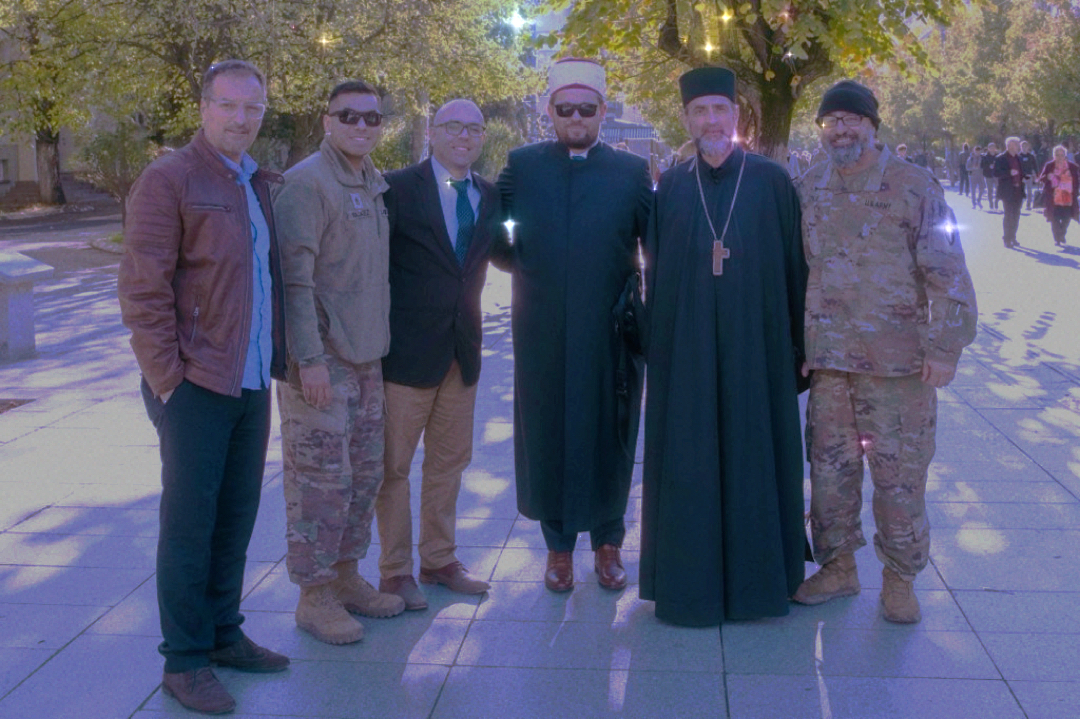
Acknowledgments: Image: first from right U.S. Army Chaplain Maj. Daniel Leslie with religious leaders of the various faiths around Kosovo, Nov. 13, 2023 © U.S Army National Guard/ U.S Army/ KFOR Regional Command-East, photo by Sgt. Gauret Stearns. Article by Catherine S. Schmidt, Editor in Chief.

The presence of U.S. military in Japan has fostered a strong alliance, contributing significantly to the regional stability and security. This partnership has played a crucial role in maintaining peace in the Indo-Pacific region and beyond.
Every spring, U.S. Forces Japan hosts the friendship cherry blossom festival, attracting upward of 17,000 visitors. This year’s open gate festivals were held on Yokosuka Naval Base and Army Camp Zama on March 22nd. Yokota Air Base has scheduled to host its celebration on March 29th.
Open gate celebration, involving U.S. military bases promotes cultural exchange and mutual understanding.
Get news from U.S Forces in Japan
Additional: Annual event celebrates spring while bringing together 17,000 U.S., Japanese visitors ( U.S Army 2024)
Acknowledgments: Source © U.S Forces in Japan, U.S Army. Yokota U.S Air Base, Japan, March 30, 2018. U.S. Air Force photo by Yasuo Osakabe. Article by Catherine S. Schmidt, Editor in Chief.
This year’s African Air Chiefs Symposium co-hosted by U.S. Air Forces Europe – Air Forces Africa, and Zambia Air Force was held in Lusaka, Zambia from February 17 – 21. The thematic focus of the 14th African Air Chiefs Symposium was on ‘Strategic Collaboration and Operational Excellence: Enhancing effectiveness of the Association of African Air Forces.
“The multilateral partnerships developed during the 14th African Air Chiefs Symposium are keys in the preparation and response to cross-continental natural disasters,”
“Developing African-led solutions to these enduring challenges will help save lives.” elaborated U.S. Air Force Gen. James Hecker ©U.S. Air Forces Europe – Air Forces Africa
Military leaders, Air Chiefs, Liaison Officers, Women, Peace and Security Representatives, Senior Enlisted Representatives, and U.N Representatives, from 38 nations convened in African Air Chiefs Symposium 2025 to discuss crucial continental defense issues, and addressed challenges that threaten regional security, The symposium also assessed the existing capabilities and explored avenues to increase partnerships between African nations and the United States.
Among symposium’s key delivered outcomes:
Additional: Digital Press Briefing State Department Feb. 19, 2025: U.S Air Forces Africa Commander Gen. James B. Hecker and Zambia Air Force Commander Lt. Gen. Oscar Nyoni.
Acknowledgments: Sources ©U.S. Air Forces in Europe – U.S. Air Forces Africa. Image: U.S. Air Force Gen. James Hecker, U.S. Air Forces in Europe – Air Forces Africa commander and Association of African Air Forces co-chairman, during the opening ceremony for the 14th African Air Chiefs Symposium in Lusaka, Zambia, Feb. 17, 2025, by Senior Airman Seleena Muhammad-Ali ©U.S. Air Forces in Europe -U.S. Air Forces Africa. Article by Catherine S. Schmidt, Editor in Chief.
An exclusive interview with Hon. Vice Admiral Ignacio Villanueva Serrano, EUNAVFOR ATALANTA Operation Commander, conducted by Editor in Chief, Catherine S. Schmidt
Biography of Vice Admiral Ignacio Villanueva Serrano
Honorable Vice Admiral, it is a great honor to have the occasion of this interview with you. Thank you for your time Sir.
Q 1: The Indian Ocean, Gulf of Aden, and Red Sea are vital maritime corridors for global trade. These waterways have historically faced significant security challenges, including piracy, illicit activities, and in the recent years the climate change. Improving security conditions in these regions requires a multifaceted approach, involving international cooperation, regional initiatives, and technological advancements. How is EUNAVFOR ATALANTA adapting its operational capabilities to address these challenges?
Vice Admiral Ignacio Villanueva Serrano: On 8 December 2024, we marked 16 years of operation since ATALANTA was launched by the EU in 2008. Over time, the Operation has evolved and adapted to changing circumstances due to several factors: regular updates to our mandate by the Common Security and Defence Policy (CSDP), improvements in information sharing, the strengthening of our position within the maritime security architecture, communication with nations on how to better prepare for the challenges they may face in the Area of Operations, expanded relations and cooperation with other nations and naval operations, and the incorporation of new capabilities, such as anti-drone systems.
All of these changes are vital in addressing the challenges faced by Operation ATALANTA. Over the years, we have been able to improve our information-sharing processes, to ensure that threats are taken into account at the right time and enhance the effectiveness of our efforts in the region.
As you mentioned, these threats require a multifaceted approach that calls for regional cooperation. That is why another line of action that is particularly important to me is to ensure that our actions are in line with regional dynamics, what we call the “maritime security architecture”. Over time, we have been able to build solid ties with regional institutions, nations and naval operations, which allowed us fostering deeper cooperation.
We are always ready to respond to changing circumstances in the region where we operate, incorporating new capabilities as needed.
And what are the key priorities and strategic objectives for moving forward?
Vice Admiral Ignacio Villanueva Serrano: Precisely, we have just presented the activity of the Operation during the last 6 months and the way forward for 2025. The core of our mission —the fight against piracy— remains the basis of everything we do, and that is always in coordination and cooperation with the other stakeholders in the area. On another note, we will continue to advocate for agreements regarding the transfer of apprehended persons, drugs, and arms to regional countries. Furthermore, we will keep optimizing our monitoring of IUU fishing, which is a threat to the livelihood of coastal populations, and the root of many other illicit activities.
We will maintain close coordination and cooperation with our EU sister organizations, the EU Capacity Building Mission (EUCAP-S), EU Training Mission (EUTM-S), both in Somalia, and the EU naval operation ASPIDES. We will strengthen cooperation with other maritime security partners, such as India, consolidating the work done up to date. ATALANTA will also continue to develop existing projects to consolidate its established profile in the area.
Q 2: The 52nd edition of the SHADE (Shared Awareness and De-confliction) Conference, co-chaired by Combined Maritime Forces (CMF) and Operation ATALANTA, was held in December 2024, in Bahrain. This crucial gathering brought together a diverse range of stakeholders, including military personnel, industry representatives, and academic experts, to address and strengthen the maritime security in the Western Indian Ocean region.
Could you please share the main takeaways from this conference?
Vice Admiral Ignacio Villanueva Serrano: During the 52nd SHADE (Shared Awareness and De-confliction) Conference, the transformation of the Maritime Security Centre Horn of Africa (MSCHoA) into the Maritime Security Centre Indian Ocean (MSCIO) was presented. This is a significant advancement, as it will serve as a hub for maritime awareness and security operations, focused on enhancing data analysis, intelligence sharing, and engagement with the shipping industry, and thus, contribute to strengthening maritime security across the Red Sea, Gulf of Aden, Indian Ocean, and Persian Gulf. A major milestone in information sharing was achieved by formalizing standardized Best Management Practice, as well as sharing reporting forms between MSCIO, JMIC and United Kingdom Maritime Trade Operations (UKMTO) This strategic partnership is now fully operational, enhancing maritime security coordination by facilitating seamless information exchange, standardized vessel registration, and report forms.
It represents a significant step forward in regional maritime security capabilities in support of the shipping industry, while maintaining a constant and fluid relationship with the maritime industry.
Q 3: Regional cooperation is crucial for effective maritime security. What initiatives is EUNAVFOR undertaking to strengthen further partnerships with regional navies and maritime agencies? How can these collaborations be leveraged to address shared security challenges and improve maritime domain awareness?
Vice Admiral Ignacio Villanueva Serrano: Only during the second half of 2024, the Operation has conducted seven focused operations – targeted operations addressing specific areas of the mandate – and six joint activities at sea with other operations and navies to enhance interoperability. These activities at sea, combined with numerous capacity-building and enhancement exercises with local forces in the Area of Operations, and big regional exercises, have further strengthened existing relationships. Regular engagements with maritime security centers in the region continues to be a crucial point in bolstering ATALANTA’s footprint in the area.
The presence of ATALANTA, along with its ability to offer training, expertise, participation, and support for addressing other needs of regional countries, is a key strength in integrating into the maritime architecture, which is fundamental for the operation.
Q 4: Please tell us how do you see the year 2025 ahead for EUNAVFOR in Operation ATALANTA? Does EUNAVFOR consider to increase its presence in the area of its operation or beyond?
Vice Admiral Ignacio Villanueva Serrano: We wrapped up 2024 with the news that the European Union had extended the Operation until 28 February 2027, which demonstrates the strong support of the EU member states and contributing nations to our efforts and commitment to maritime security in the Western Indian Ocean. With this in mind, we face 2025 with great enthusiasm, committed to maintain our role as reference in maritime security, and keeping the threat of piracy deterred in this region. The new mandate for the Operation further strengthens our position as a key tool for the EU’s foreign actions in the Indo-Pacific, complemented by the recent launch of our MSCIO website. Additionally, our objective of contributing to the development and enhancement of maritime security architecture in the area of operations gives us valuable opportunities to deepen cooperation with the coastal states in the area of operations, particularly Somalia. We have an exciting year ahead.
Operation ATALANTA is more relevant and necessary than ever. It will remain a key tool in the EU’s strategy for the Indo-Pacific. We will continue with our ongoing efforts, as we have done so far. The Operation is ready to evolve as the security situation requires.
Acknowledgments: Image-1 Vice Admiral Ignacio Villanueva Serrano, EUNAVFOR ATALANTA Operation Commander. Image-2 the 52nd edition of SHADE Conference, in Bahrain 16-17 December 2024. Media images © EUNAVFVOR Atalanta. The interview is subject to Copyright Law ©EUNAVFVOR Atalanta/Spanish NAVY/U.S Europe World Affairs.
Stay tuned with our first special event of 2025 this week.
An exclusive interview with Hon.Vice Admiral Ignacio Villanueva Serrano, Operation Commander of EUNAVFOR ATALANTA
February 17, 2025 marks the beginning of the biennial Exercise Arctic Forge 25, led by a U.S. Army Europe and Africa. The exercise will continue until February 28, 2025 in the High North.
With much enhancement this year, the Arctic Forge 25 elevates military capabilities and cooperation in the High North to a new level, fostering an unprecedented environment for operational readiness among allied forces.
Confirmed by the U.S Army Europe and Africa, the Exercise is designed to integrate seamlessly with Finnish Defense Exercise 25 and Norwegian Joint Viking 25, establishing a robust framework that promotes significantly the Arctic readiness and interoperability in the High North.
Key aspects that underline the strategic importance of the Arctic Forge 25
More news from U.S Army Europe and Africa
U.S European Command U.S-Arctic Affairs
Acknowledgments: Sources U.S Army Europe and Africa. Logo of the Arctic Forge © U.S Army Europe and Africa. Article by Catherine S. Schmidt, Editor in Chief.
Dear all, January’s Newsletter is available online. You can find it on the Newsletters page or by clicking here. Have a happy winter 2025, Editor in Chief.

Starting January 17 through Feb. 16, 2025, Exercise Combined Resolve 25-1 will be taking place at the 7th Army Training Command and Joint Multinational Readiness Center in a U.S. Army Base in the south of Germany.
Combined Resolve 25-1
develops further the joint capabilities, it enhances the readiness and interoperability across the wide scope of U.S- European armed forces. It ensures the collective defense posture remains ready and robust.
This exercise facilitates opportunities for U.S- NATO allies and partners to experience, and immerse themselves in each other’s military cultures and frameworks. It as well strengthens their partnerships in a profound way.
Announced by 7th Army Training Command, the participating armed forces in the Combined Resolve 25-1 are from: Albania, Armenia, Belgium, Georgia, Greece, Italy, Kosovo, Lithuania, Moldova, North Macedonia, Norway, Poland, Slovakia, Spain, the United Kingdom, and the United States.
Combined Resolve 25-1 will be led by 7th Army Training Command.
Acknowledgments: Sources and the Combined Resolve 25 logo: 7th Army Training Command/ U.S Army Europe and Africa. Article by Catherine S. Schmidt, Editor in Chief.