Category Archives: U.S Armed Forces in the World

Update on Newsletters

Dear all, due to the increased number of articles, news, and interviews on our media platform for the rest of 2021 our Newsletters will be published monthly. The interviews with Ambassador Liselotte Plesner, Permanent Representative of Denmark to NATO and Captain Erik Anthony, USAFE-AFAFRICA Public Affairs Spokesperson will be featured in August edition. Thank you for your interest.  Editor in Chief  

U.S. Armed-Forces and NATO Allies in Atlantic Resolve-1

Atlantic Resolve is the continuation of U.S-led measure which began in 2014 under the Department of Defense ‘European Deterrence Initiative’ to enhance NATO military capacities.

“The United States is demonstrating to NATO allies and the world its continued commitment to peace, security and stability in Europe.” highlighted the Department of Defense on the importance of the Atlantic Resolve 

This year as well  the operation continues to execute series of bilateral and multilateral training in different parts of Europe with the participation of the armed-forces from most European States including: Belgium, Bulgaria, Czech Republic, Denmark, Estonia, France, Georgia, Germany, Greece, Hungary, Italy, Latvia, Lithuania, Netherlands, Norway, Poland, Romania, Slovakia and the United Kingdom.                                                                                                       Indicated by U.S Army Europe and Africa, 7000 soldiers from U.S are assigned on rotational deployment to Europe as a part of Atlantic Resolve.

U.S. Army Europe’s Operation Atlantic Resolve demonstrates continued U.S. commitment to collective security. This reassures NATO allies and partners of America’s dedication to enduring peace and stability in the region following Russia’s intervention in Ukraine.” described the U.S Army in 2017

“Deterrence requires ready and capable allies in Europe, which is why we have enhanced the frequency and complexity of exercises with NATO allies and partners, while augmenting the U.S. air, ground, and naval presence in the region.

The U.S.-European strategic partnership is built on a foundation of shared values and common experience, and we build on that foundation with a robust training and exercise plan.” announced the White House in 2016

Acknowledgments: the Infographic of Atlantic Resolve 2021©U.S. Army Europe and Africa. Sources: DoD, U.S Army,  U.S Army Europe and Africa

By Catherine S. Schmidt, Editor in Chief  (Copyrighted material)

Special Edition Interview with the Belgian Chief of Defence Hon. Admiral Michel Hofman (Part-2)

Interview with the  Belgian Chief of Defence Hon. Admiral Michel Hofman, conducted by Editor in Chief

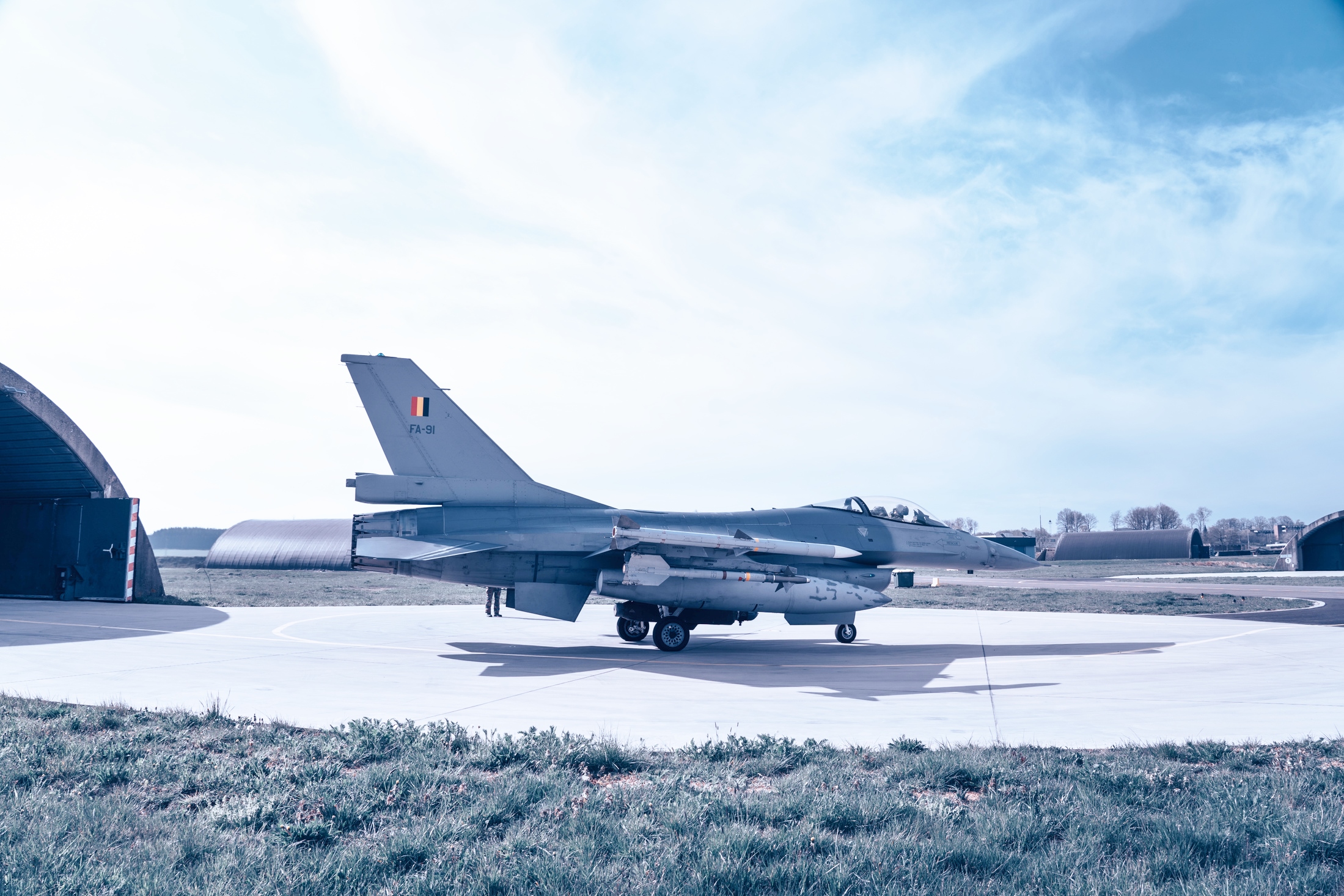
Q: 4 In late March this year NATO announced that Belgian F-16s are ready for NATO Response Force. Could you discuss about this mission and the role that Belgium is holding in it.

Indeed, at the end March 2021, NATO completed a tactical evaluation of the Belgian air combat capability, flying F-16. This process started in 2019 but due to COVID-19, we experienced some inevitable delays.

NATO’s Readiness Forces are one of the cornerstones in the Alliance’s Deterrence and Security Policy and thus an important pillar of collective defence, one of NATO’s core tasks. By meeting NATO’s evaluation standards, we demonstrated our Air Force’s ability to operate at par with our Allies, supporting the Alliance, contributing to its readiness forces and other engagements such as Baltic Air Policing.

Apart from our Air Force, Belgium also provides maritime capabilities for NATO’s Standing Naval Forces and Land Forces for NRF and engagements such as enhanced Forward Presence. Such contributions are a clear sign of our willingness to take on our responsibility and share the burden regarding collective defence. It is a testimony of our commitment to the Alliance, our solidarity with our Allies and our reliability.

In order to remain relevant, keeping up with technological evolutions, Belgium invested in the replacement of its major combat platforms such as our air combat capability. As from 2023, the F-16 fleet will transition to F-35 over a period of five years. The same process is planned for regarding the replacement of our land combat vehicles, air transport capability, frigates and mine hunting vessels, albeit each within its own time frame. Although these transitions are very challenging, we will of course respect our operational commitments to NATO and our level of readiness. 

Q: 5 Belgium and the United States enjoy very special relations in the diplomatic field, in trade cooperation, as well as in defence and security partnership. As decades of military joint training and exercises, joint forces in the overseas operations are all real presentations that accentuate this fact. Would you please comment on U.S-Belgian Armed Forces partnership.

Belgium was liberated by American and Canadian soldiers at the end of the Second World War and with the Battle of the Bulge a special bond was created between our two countries. The post-war period was characterized by a strong Trans-Atlantic cooperation with the creation of NATO in 1949. Since then Belgo-American relations have grown strong in a sphere of mutual respect.

Obviously, the United States remain the important Strategic partner for Belgium and Europe in general with common values and strategic interests as the basis of this partnership. The enhanced cooperation on security and defence is the evident consequence of common values as the strengthening of the multilateral system and democracy around the world.

The United States taking on the leading role in different operations like Resolute Support and Inherent Resolve, allow us to contribute in the achieving of these common challenges to promote regional stability in the areas of our interest. Participating in common operations implies a high degree of cooperation and interoperability, which is reflected in many bilateral contacts, in the sphere of education and training, in operations, and not to mention the many military and political fora where we take part in, and certainly not to forget, the procurement of equipment and weapon systems.

The United States and Belgium have been interconnected for a long time and the intention is to continue cooperation both bilaterally and multilaterally for a long time to come. 

Additional: “To our brave Belgian allies and comrades-in-arms, I say ‘Amérique se souvient de vos sacrifices.’ (America remembers your sacrifices). Excerpt from the speech of Chief Master Sgt. Richard Lien, 52nd Civil Engineer Squadron fire chief from Twig, Minn, at the honoring those who gave their lives ceremony in Hombourg, Belgium. November 11, 2013. 

Acknowledgments: Image of a Belgian F-16 jet during a quick Reaction Alert exercise. 30. April. 2021©NATO. Excerpt from the speech of Chief Master Sgt. Richard Lien.©U.S Air Forces in Europe and Air Forces in Africa/Staff Sgt. Joe W. McFadden, 52nd Fighter Wing Public Affairs. November 13, 2013. The interview is subject to Copyright Law. 

Special Edition Interview with the Belgian Chief of Defence Hon. Admiral Michel Hofman (Part-1)

Interview with the Belgian Chief of Defence Hon. Admiral Michel Hofman, conducted by Editor in Chief 

Admiral we are profoundly honored to have this special occasion with you. Thank you very much for accepting our invitation.

Q: 1 I would like to start the first question with the comprehensive view of the Belgian Armed Forces. Could you please tell us about Belgium’s strategic interests and engagements in the overseas missions.

The effective engagements of the Belgian Defence are situated in the framework of deterrence and collective defence, collective security, the protection of the Belgian citizens and interests abroad, and the assistance on the national territory in case of crises or emergencies. The objective is to remain a reliable and important partner within the UN, the EU and  NATO. As a small country in the centre of Europe and in the strong conviction of the complementarity between the European approach and NATO’s role, Belgium continues to promote multilateralism and the integrated approach of the European Union.

When it comes to deterrence and collective defence, it goes without saying that we ensure a fair contribution to the NATO Readiness Action Plan with engagements on the eastern flank of the alliance. Belgian Defence is among others present with ground forces embedded in a German Battle Group in Lithuania, we have a long tradition of contributing to the Air policing Mission in the Baltic States and  to the NATO’s Defence Capacity Building (DCB) projects in countries on the eastern flank. Furthermore, Belgium continuous to contribute to the NATO Response Forces, the Readiness Initiative and the Standing NATO Maritime and Mine Counter Measure Groups.  By taking up its responsibility, Belgium wants to remain a reliable partner within NATO.

In the area of collective security, our challenges lie in the fight against international terrorism, violent extremism and radicalization. Remembering the terrorist attacks in Brussels in March 2016, Belgium’s focus is directed towards the regions of instability on the southern borders of Europe, more precisely the Mediterranean area, the Sahel and West Africa and the Middle East. The Sahel is undoubtedly Belgium’s main effort. In Mali, we contribute to the MINUSMA mission of the UN and to the EUTM Mission. We support the Nigerian forces in their fight against terrorism, since 2017 on a bilateral basis. This operation, which is firmly coordinated with other partner nations present in the country, is a very good example of Belgium’s expertise how to support forces in the development of capacities, based on the principle of local ownership. Belgium also participates to the French TAKUBA mission in Mali. Furthermore, the Belgian Armed Forces do support numerous projects of development, cooperation and capacity building in different countries in West Africa.

In the Middle East region, Belgian Defence is an important contributor to the D-ISIS Coalition. The region of the Middle East is still a breeding ground for violent extremism and with our actual contributions with F-16 fighter aircrafts, we support the Iraqi and Coalition forces in their endeavours to prevent a resurgence of ISIS.

After almost two decades of Belgian presence in Afghanistan and participation in different missions, we will end our engagement this summer, in concurrence with the NATO decision to end the Resolute Support Mission.

In addition to the many foreign assignments, the Belgian armed forces also remain active on our national territory.   The Belgian armed forces were several times deployed to assist the nation as demonstrated during the terrorist attacks and the actual COVID-pandemic, where Belgian soldiers provided support to the nation in different fields. 

I note with pride the numerous and the broad spectrum of engagements the service men and women of a small army that contributes to defend the nations interests.

Q: 2 In the context of EU and UN peacekeeping missions please give us the highlight of the operations that Belgian Armed Forces are currently leading or taking part in?

Belgium has a long tradition in taking part of EU and UN peacekeeping missions. Multilateralism, rule-of-law, conflict prevention, peacekeeping and peacebuilding are essential elements of the Belgian foreign policy.

Belgium has been involved in peacekeeping operations since the beginning of UNO peacekeeping in 1948. While being one of the main contributors to the Organization’s budget, Belgium also participated in early peacekeeping operations such as those in Kashmir (1949) and in Korea (1950). In more recent years Belgium was involved in Somalia (UNOSOM), former Yugoslavia (UNPROFOR/UNTAES), Rwanda (UNAMIR), Lebanon (UNIFIL) and also Sudan (UNMIS).

Today, Belgium is deploying 95 UN peacekeepers in Mali (MINUSMA), the Democratic Republic of Congo (MONUSCO), and in the Middle East (UNTSO – Lebanon). Belgium took the lead of MINUSMA providing the Force Commander from April 2017 until October 2018. We also took the lead of the EUTM MALI operation from July 2016 until January 2018 and we will do the same for EUTM RCA from February 2022 until June 2022 (pending political agreement).

When participating in peacekeeping operations, Belgium focusses on performance by assuming command, observation, and liaison and training duties. On top of this Belgium is providing UN peacekeeping with highly qualified, multilingual troops and the specialized assets it requires. Being a small country, we cannot send large contingents everywhere and we have to work in a “smart” way, integrating our capacities with partner nations. The joint deployment of our NH-90 helicopters within a German unit, the deployment of our C-130 as part of a multinational rotating mechanism and the integration of a detachment in a German ISR (Intelligence, Surveillance and Reconnaissance) unit are examples of this.

Belgian Defence also actively contributes to training initiatives in peacekeeping operations, thus improving performance. Based on the experience gained by the former Belgian Commander of MINUSMA, general Deconinck, Belgian Defence decided to develop and contribute to the concept of Mobile Training Teams (MTT’s) in order to improve the performance of UN peacekeeping. A Belgian 10 person MTT is available on call for deployment and training of UN peacekeepers.

Belgian Defence is, in support of UN Secretary-General’s Guterres agenda for peacekeeping reform A4P (Action for Peacekeeping), also involved in the UN “train the trainers” initiative. Five Belgian medical trainers were certified by the UN and are qualified and available for medical training (BFAC-Buddy First Aid Course, MFAC-Medical First Aid Course) in troop contributing countries, in Belgium or in operations.

On top of that, Belgium has also provided trainers for the FMOC (Female Officers Course) and UNSOC (United Nations Staff Officers Course) in close cooperation with UN-ITS (Integrated Training Services) and is actively contributing to the translation of UN-training manuals in French.

Cooperation with the countries in European’s southern periphery and more in particular in the Sahel is a priority for Belgium. The Belgian global approach aims to contribute to a positive and enduring development in the region. Belgian Defence is perceived by the Sahel States as a reliable and predictable partner, operating without hidden agenda, acting with an engagement for peace and security by reinforcing the military capacities of the concerned countries.

We are currently taking part in three Common Security and Defence Policy missions  (EUTM Mali, IRINI, ATALANTA) as part of the EU’s Common Foreign and Security Policy.

In Mali, Belgian Defence is participating through different constellations: EUTM Mali, MINUSMA, bilateral activities, Task force TAKUBA.

We also participate in the EUNAVFOR MED IRINI monitoring mission that aims to monitor and gather information on illicit exports from Libya, to contribute to the capacity building and training of the Libyan Coast Guard and Navy and to contribute to the disruption of the business model of human smuggling and trafficking networks.

As from the second half of 2021, Belgium will take part in the EUTM RCA mission through our EUROCORPS participation. A Belgian general will take command of this mission as from 2022.  

Q: 3 As a founding members of NATO, Belgium holds an enormously significant role within the security and defense of the North Transatlantic Alliance and beyond. Just to name a few: the contributions of Belgian Navy to the Standing NATO Mine Counter Measure Group-1 ‘SNMCMG1’ in April, and providing the Flagship BNS Godetia in the NATO’s  ‘SNMCMG1’ in January 2021. And of course there are more. How Belgium sees its strategic position and leadership in the Frame of NATO?

Belgium’s membership of the Atlantic Alliance reflects the political decision taken after the Second World War to guarantee the security and defence of our country in a multilateral framework, in which NATO, thanks to its strong transatlantic link, is the cornerstone. Belgium attaches great importance to the collective and defensive character of the Alliance, as enshrined in Article 5 of the Washington Treaty.

In parallel with its commitments within the Alliance, Belgium is strengthening its efforts aiming at an effective European defence. We have always believed that a strong European pillar within NATO can only benefit both organizations. The EU-NATO collaboration represents a positive dynamic through 7 areas of cooperation (pro memoria: countering hybrid threats, operational cooperation including at sea and on migration, cyber security and defence, defence capabilities, defence industry and research, exercises, supporting Eastern and Southern partners’ capacity-building efforts) which were identified in 2016. Cyber security and military mobility are great examples of this necessary cooperation when we consider what is at stake.

Historically, as a founding member, Belgium has always been a reliable and fair partner within the Alliance. In particular, we have participated and still participate intensively in operations. The lasting contribution to the Resolute Support Mission has been the best example of this in recent years. Beyond operations, Belgium also actively contributes to the assurance measures to emphasize the Alliance’s determination and unity. Solidarity is indeed a fundamental principle of the Alliance and Belgium assumes its responsibilities in terms of burden sharing through its contributions to operations or through its recent investments in cutting-edge equipment.

Belgium also advocates the constant search for a good balance between security efforts on the eastern and on the southern flank. Even though Russia becomes increasingly assertive, in the Belgian perspective, terrorism remains the most important threat to be dealt with. In this context, encouraging the strengthening of partnerships with the countries beyond Europe’s borders is vital for the stabilization of these regions.

Belgium has the great privilege to host NATO Headquarters, SHAPE and NCIA. This is for a small country a tremendous opportunity and it is our honour and duty to welcome all personnel, civilian or military, as well as their families.

Finally, given Belgians central position in Europe, we are an excellent transit nation thanks to the port of Antwerp-Bruges and the dense road and railway network, creating challenges in the dimensions of the civil-military cooperation and the resilience of critical infrastructure and services.

To be continued in part-2 on Thursday July 1st 

The interview is subject to Copyright Law. ©Belgian Defence/ Belgium MFA/ Belgium to NATO/Belgium in the USA/NATO/Belgium to UN/U.S. Europe World Affairs.

Memorial Day and the National Moment of Remembrance

The Memorial Day in the United States 

The history of “Memorial Day” or “Decoration Day” goes back to 1864 in remembrance of those who lost their lives during the Civil War in the battle of Gettysburg, in Pennsylvania. The day was only observed as the remembrance day in several States until 1873 when it became an official holiday first in New York and soon after across the U.S by more States.                                                                                In 1966 the House resolution of 587 introduced by Congressman Samuel S. Stratton, recognized the observance of May 5th, 1866 in Waterloo New York the original date and place of the Memorial Day. Throughout the decades, from 1868 to 1970, the observance of the Memorial Day had been held on May 30th.                                 

In 1971 the Memorial Day was moved to the last Monday of May as the Federal holiday. Further to that in 2000 the Congress established the “National Moment of Remembrance” act by inviting all Americans at 3:00 p.m to observe (in their own ways) moments of remembrance, honoring, respect and prayer for all fallen heroes.

By Editor in Chief                                         Sources: U.S Army 

Special Edition Interview with Hon. VICE ADMIRAL JOSÉ M. NÚÑEZ TORRENTE, Operation Commander of the EU Naval Force Somalia Operation ATALANTA

Interview with Hon. VICE ADMIRAL JOSÉ M. NÚÑEZ TORRENTE, Operation Commander of the European Union Naval Force Somalia Operation ATALANTA, conducted by Editor in Chief.


Vice Admiral, we are tremendously honored to have this interview with you. Thank you very much indeed for your time sir.


Q 1: In December 2020 the EU NAVFOR celebrated its 12 years of Operation Atalanta. Could you please briefly outline the main achieved success of this operation in the last ten years.

Hon. VICE ADMIRAL JOSÉ M. NÚÑEZ TORRENTE: When EU member states launched Operation Atalanta in December 2008, piracy in Somali waters was increasing dramatically. Container ships plying the east-west trade routes between Europe and Asia were under constant and very real threat. 

Over the past 12 years, EU NAVFOR has managed to work hand in hand not only with other multinational naval forces operating in this region, such as the US-led CMF, and NATO until 2016, which is one of our most important partners in the region, but also with the navies of independently deployed nations such as Japan and South Korea, all of which have significant maritime interests present. As a result, piracy has been drastically suppressed, with the last confirmed act of piracy taking place in April 2019.

This significant success does not mean, however, that piracy has been eradicated. Operation ATALANTA has forced criminal networks associated with piracy to diversify their activities and engage in other illicit maritime crimes, keeping piracy as a dormant activity waiting for the right opportunity to reemerge. 

This extremely complicated context has led to the modifications in Operation ATALANTA´s new mandate, approved in December 2020 to enable the Operation to strengthen maritime situational awareness and counter maritime threats beyond piracy.

Q 2: In January 2021 the Operation Atlanta received its new mandate. With this new mandate how long the Operation Atalanta has been further extended in time and expanded in its mission?

Hon. VICE ADMIRAL JOSÉ M. NÚÑEZ TORRENTE:  First of all, I must say that due to the success of Operation Atalanta and  other international initiatives, the situation today is very different. The last incident of piracy in our area of operations was in April 2019. However, it must always emphasize that although piracy is contained, it has not been eradicated. Incidents that we can classify as “suspicious approaches” continue to occur in the area of operations and the networks that were engaged in piracy have adapted their activities to other illegal activities with less risk, retaining their ability to carry out acts of piracy, as soon as the situation is favorable to them. 

This is the main reason why the mandate of Operation ATALANTA has been extended every two years, and why the last extension in December 2020 for another two years included additional tasks. Now, besides combating piracy and protecting UN World Food Program (WFP) ships and other vulnerable vessels in the area of operations, which has been and is our main mission, we also contribute to eradicating other illegal activities, such as drug trafficking, arms smuggling and illegal charcoal trafficking, activities in which these pirate networks are becoming involved due to the presence of anti-piracy naval forces in the area.

Q 3: Air assets have been recognized highly valuable in Operation Atalanta from its start. Could you please speak about the EU NAVFOR and its Air operations (Maritime Patrol Reconnaissance)?

Hon. VICE ADMIRAL JOSÉ M. NÚÑEZ TORRENTE: The air assets make an essential contribution with their specific capabilities, adding range and flexibility to the joint effort. They are mainly used to carry out Maritime Patrol Reconnaissance, as you said, and collect data which is processed by our analysts. This contributes to all aspects of Op ATALANTA and supports the full spectrum of maritime operations, especially those related to maritime security. 

Additionally, we have to highlight that they can be tasked for other activities, such as SAR (Search and Rescue) missions, in response to an emergency or other situation’s demanding immediate assistance. 

Fortunately, we can count not only on our own resources but also on the MPRA of our partners in the area of operations, sharing information and distributing action zones to guarantee the maximum effectiveness and efficiency of our resources.

  • Have there been any upgrades in EU NAVFOR’s Air resources in the recent years?

Hon. VICE ADMIRAL JOSÉ M. NÚÑEZ TORRENTE: Since the beginning of the Operation, the number of deployed MPRA during rotations has been the same with the P-3 ORION as core asset. These assets are one of the reasons for our success, together with the deployed Air Detachments supporting their every need, every step of the way. The means and characteristics of the P-3 ORION offer us a wide range of capabilities that cover all operational requirements.

Unmanned aerial vehicles like the embarked Scan Eagle also reinforce our ISR capabilities. Therefore, we are more than pleased to continue with this outstanding asset as part of our operation and, at the same time, be able to offer its capabilities to those of our partners who may need them.

Q 4: The United States Navy has been the supporting partner for the EU NAVFOR in Operation Atalanta from the beginning of this Operation. Could you please comment on the significance of this partnership.

Hon. VICE ADMIRAL JOSÉ M. NÚÑEZ TORRENTE: As we have been already saying, trying to make the best use of the maritime assets already present in the area, EU NAVFOR ATALANTA has created a specific framework, the Cooperation Concept of Operation ATALANTA (COCOA), which provides for enhanced cooperation in our area of operations and foresees various types and durations to contribute and support the Operation. Currently, we are cooperating with the US Navy in several different frameworks.

An example could be the increased coordination between Operation EU NAVFOR ATALANTA and Combined Task Forces 150 and 151 of the Combined Maritime Forces (CMF) under command of a Vice Admiral of the US Navy and a considerable U.S. participation in means and capabilities. As already mentioned in the first question, we maintain the best of relations with both of them and we can coordinate our efforts, if necessary for maximum effectiveness and efficiency with our available assets.

On the other hand, the US Navy has regularly supported the assets of Operation ATALANTA. As an example, we could mention the Replenishment at Sea (RAS) operations that, on recent occasions, ATALANTA naval assets have carried out with the USNS Big Horn of the U.S. Sixth Fleet.

Q 5: Please tell us about the crucial role that the Spanish Naval Force is playing in the Operation Atalanta.

Hon. VICE ADMIRAL JOSÉ M. NÚÑEZ TORRENTE:  Spain is fully committed to the EU’s external action. We understand that EU NAVFOR Somalia Operation ATALANTA is a tool that offers a vital service to Member States by providing maritime security and sending a message of protection, stability and support to both WFP vessels and the maritime community. At the same time, we support different institutions in Somalia, together with our two EU sister missions: EUCAP Somalia and EUTM Somalia within the EU framework of the “Integrated Approach” for Somalia, in order to reach the desired situation that will allow local authorities to take responsibility for sustainable development and security in the area, as soon as possible. 

In this vein, Spain is making a great effort to lead the Operation by dedicating means and permanent personnel out of our strong commitment to those principles of security, stability and support to Somalia.

News from: VICE ADMIRAL JOSÉ M. NÚÑEZ TORRENTE

Additional news: Spain’s contributions and leadership in EU NAVFOR

Acknowledgment: Image Hon. VICE ADMIRAL JOSÉ M. NÚÑEZ TORRENTE, Operation Commander of the European Union Naval Force Somalia Operation ATALANTA, April 2021©EUNAVFOR. The Interview is subject to Copyright Law. ©EU NAVFOR/ Spanish Naval Force / U.S Naval force/ U.S Europe World Affairs.

« Older Entries Recent Entries »