Announcement: article to come ‘NATO Summit 2025’
Stay tuned for the upcoming article ‘NATO Summit 2025 in in The Hague, the Netherlands’
Get updated from NATO The White House U.S Mission NATO NATO Secretary General
Stay tuned for the upcoming article ‘NATO Summit 2025 in in The Hague, the Netherlands’
Get updated from NATO The White House U.S Mission NATO NATO Secretary General
The State of Israel and its Armed-Forces have one of the most open multicultural political and military system. The history of Holy Land can attest this fact, by having its 8th President an Iranian immigrant Moshe Katsav, only a few years ago.
With the encouragement of PM Benjamin Netanyahu and religious leaders like Greek Orthodox Priest Father Gabriel Nadaf more young Arab and Christian are joining the Israeli Armed-Forces, for a better life and future.
The number of christians and Arabs serving in the Israeli Defense Force is increasing every year.
“The traditional view of the Arab-Israeli conflict is of Jews fighting Muslims. But that image does not always reflect the truth.
In fact, there are thousands of Muslim Bedouin who serve in the Israeli army, or IDF, and even bear arms against their fellow Muslims in the occupied West Bank and Gaza.” Rachid Sekkai BBC Arabic Service, northern Israel. October 20, 2009
Acknowledgments: This article was originally published in October 2016 on U.S.Europe World Affairs and in PCDN Global Think Tank in the U.S. Article by Catherine S. Schmidt, Editor in Chief.
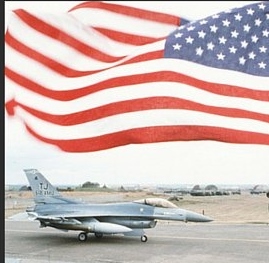
June 14th holds a special significance for the United States. It marks both the U.S. Army’s birthday and U.S Flag day.
On this day in 1777, the Continental Congress recognized and adopted the Stars and Stripes as the United States’ official flag. And years later in 1949 the formal recognition of June 14th as the Flag Day was established by President Harry S. Truman.
Throughout the centuries…… across the world, the U.S flag has been the leading defender of freedom, by fighting openly against tyranny, oppression, fascism and authoritarian systems. The Stars and Stripes is not only the representative of United States national emblem, but prominently on the international stage and….. for the rest of the world…..,it is the enduring aspirations of Freedom and Liberty, Human Rights and Democracy.
About the United States Flag, by Smithsonian
Acknowledgments: Image © California NG. Article by Catherine S. Schmidt, Editor in Chief.
Get update from U.S Army Europe and Africa on Defender Europe 25
Observed every year on the first Thursday of May, the National Day of Prayer was first established in 1952. And later in 1988 the day was designated by Congress as a time for all faiths to pray for the United States, its leadership, and the world. This important observance has its origin back to 1774, when the first Continental Congress invited the nation to this spiritual event.
“From the earliest days of our Nation’s journey, America has been guided by the grace of Almighty God. Beginning with the opening prayer at the First Continental Congress in 1774, our faith has perpetually stood as the summit of our strength, the source of our unity, and the fount of our greatness. This National Day of Prayer, we thank God for His endless blessings ‑- and we ask Him to grant us fortitude, wisdom, and a renewed spirit of justice as we continue the work to save our country and restore our national promise.” Excerpt from President Trump’s Presidential Proclamation of the National Day of Prayer 2025 ©The White House May 1, 2025
“On this day, may our faiths enable us to sow the seeds of progress in our ever-changing world. Let us resolve to guide our children and grandchildren to embrace freedom for all, to see God in everyone, and to remember that no matter what differences they may have, they, just like we, will always be united by their common humanity.” Excerpt from President Obama’s Presidential Proclamation of the National Day of Prayer 2016 ©The White House May 2016
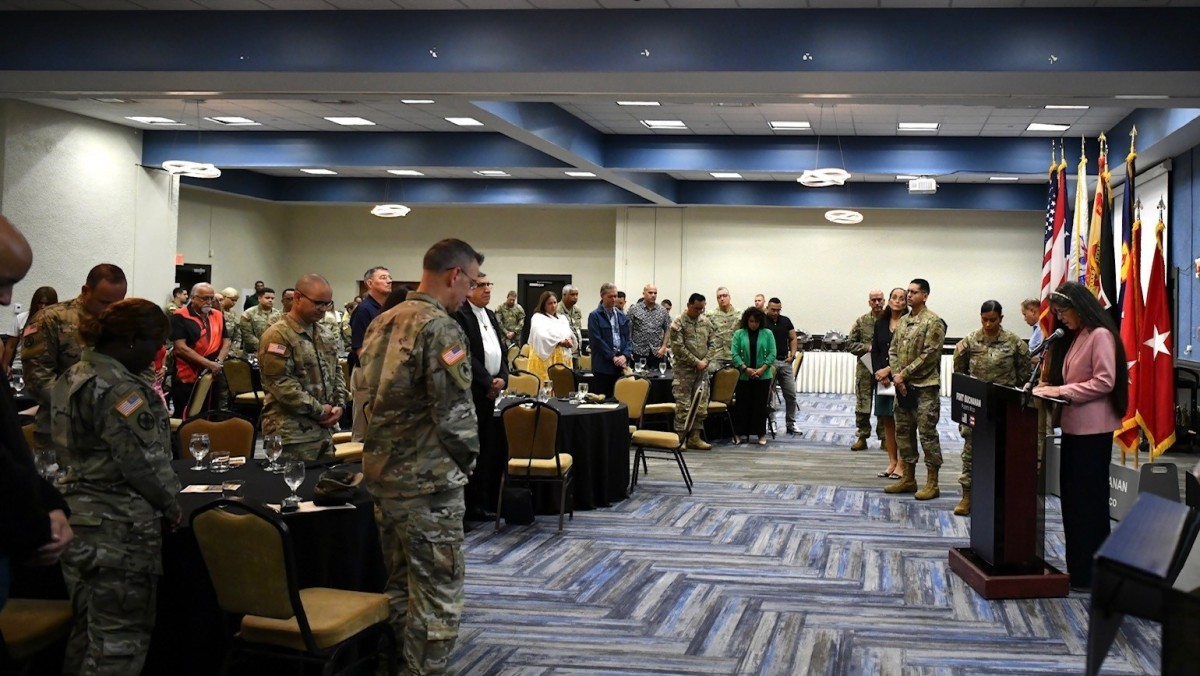 “This event is a powerful reminder that prayer has the strength to connect and inspire us, fostering unity across all branches of service and the surrounding communities. Praying together strengthens not only individuals but entire families, creating a ripple effect that builds unit cohesion and enhances readiness for any mission,” Highlighted Maj. Joseph Okpe, Fort Buchanan’s Chaplain, on the National Prayer Luncheon May 1, 2025
The 405th Army Field Support Brigade Europe and Africa joined the Army and the Nation in the National Day of Prayer May 1 at the brigade headquarters on Daenner Kaserne in Germany (U.S Army Base)
Acknowledgments: Sources © U.S Army / The White House/ National Day of Prayer. Image: Service members, families, retirees, and veterans gathered in the National Prayer Luncheon, where they prayed for peace and unity in Puerto Rico, the United States, and around the world. May 1, 2025 ©U.S Army /David Hernandez. Video: 405th AFSB joins Army and Nation in the National Day of Prayer May 1 2025.©DoD/ 405th Army Field Support Brigade – Europe and Africa/ National Guard/ 405th Army Field Support Brigade- Europe and Africa. May 1, 2025, by Cameron Porter. Article by Catherine S. Schmidt, Editor in Chief.
The presence of U.S. military in Japan has fostered a strong alliance, contributing significantly to the regional stability and security. This partnership has played a crucial role in maintaining peace in the Indo-Pacific region and beyond. 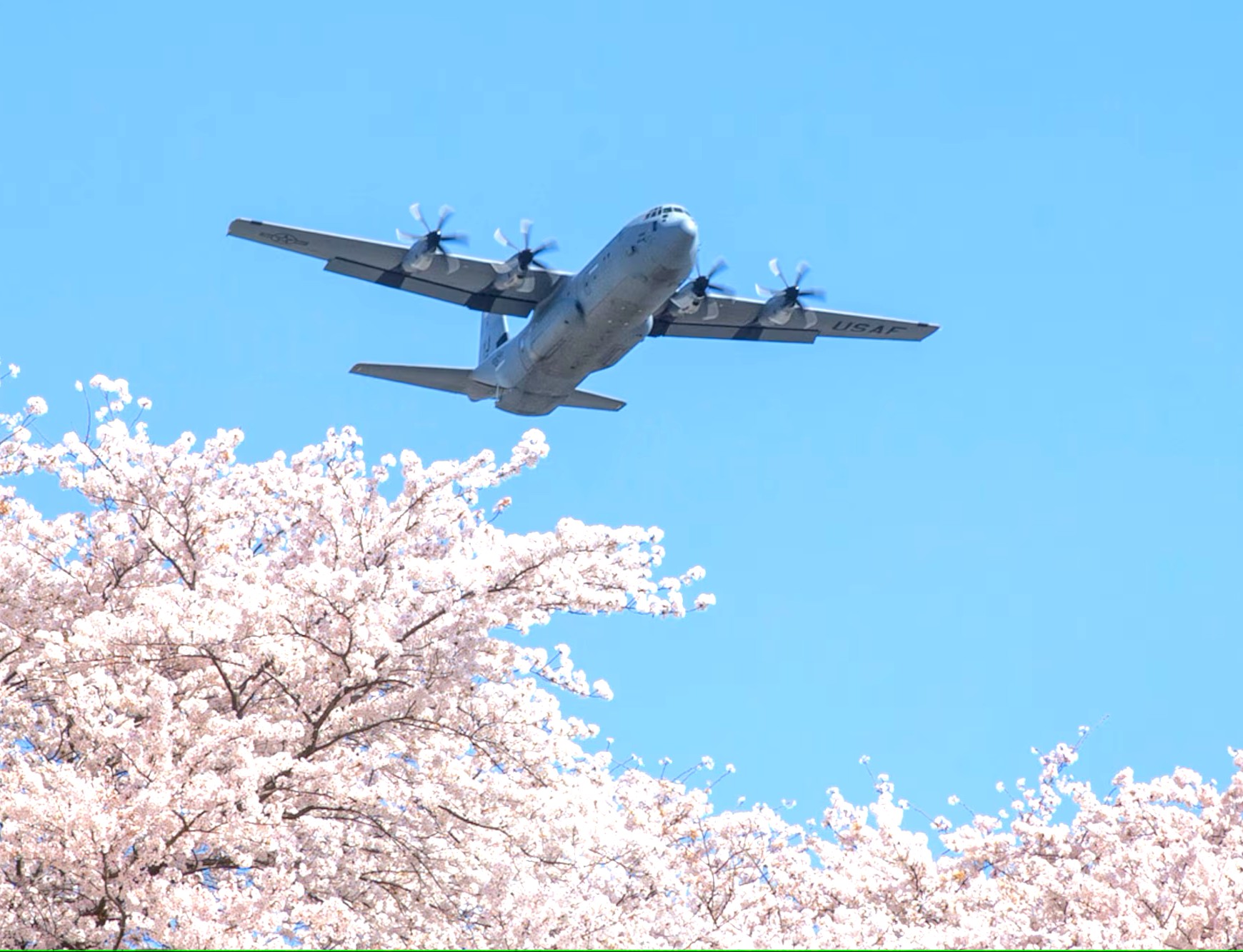 Every spring, U.S. Forces Japan hosts the friendship cherry blossom festival, attracting upward of 17,000 visitors. This year’s open gate festivals were held on Yokosuka Naval Base and Army Camp Zama on March 22nd. Yokota Air Base has scheduled to host its celebration on March 29th.
Open gate celebration, involving U.S. military bases promotes cultural exchange and mutual understanding.
Get news from U.S Forces in Japan
Additional: Annual event celebrates spring while bringing together 17,000 U.S., Japanese visitors ( U.S Army 2024)
Acknowledgments: Source © U.S Forces in Japan, U.S Army. Yokota U.S Air Base, Japan, March 30, 2018. U.S. Air Force photo by Yasuo Osakabe. Article by Catherine S. Schmidt, Editor in Chief.
Initiated in 1952, Operation Christmas Drop “OCD” is a longstanding humanitarian U.S Air Force mission taking place every year in the Indo-Pacific region. The operation is conducted by the U.S Andersen Air Force base from Guam and the Yokota U.S Air Force base in Japan. With over 70 years of mission and backed by the Department of Defense, Operation Christmas Drop is the ongoing….. longest-running humanitarian airlift operation in the world.
Every year across the Indo Pacific region, the Christmas and New Year holiday season starts with the Operation Christmas Drop, as the inhabitants of over 58 islands eagerly await for the arrival of U.S. Air Force planes to deliver significant quantities of Christmas gifts and packages of essential supplies via parachute. The operation is also known “the Love From Above”
In recent years an increasing number of partner countries have participated in this mission.
Additional: Operation Christmas Drop 2024: U.S Air Force, Allies and Partners Integrating to Deliver Donated Supplies
Acknowledgments: Sources: DoD, U.S Air Force,Yokota Air Base.Video ©Yokota Air Base. Image published in the X: A C-130J Super Hercules assigned to the 36th Airlift Squadron, Yokota Air Base, Japan, in Operation Christmas Drop 2019 at Andersen Air Force Base, Guam, Dec.6, 2019. ©U.S Air Force by Staff Sgt. Kyle Johnson. Article by Catherine S. Schmidt, Editor in Chief.
An exclusive interview with the Hon. General James B. Hecker Commander Allied Air Command, conducted by Editor in Chief, Catherine S. Schmidt
General James B. Hecker is Commander, Allied Air Command headquartered at Ramstein Air Base, Germany; and Director, Joint Air Power Competence Centre at Kalkar, Germany.
 In his capacity as Commander, Allied Air Command, General Hecker is responsible to the Supreme Allied Commander Europe for the Air and Missile Defence of NATO Alliance member nations during peacetime operations. His command ensures the preservation of Alliance territorial integrity from Northern Norway to Southern Italy and from the Azores to Eastern Türkiye, including every European NATO nation. Furthermore, in the event of a joint NATO operation he is the responsible commander of the Air Component.
General Hecker is also Commander, U.S. Air Forces in Europe and U.S. Air Forces Africa. In this capacity, he commands U.S. airpower across more than 19 million square miles. This area also includes 104 countries in Europe, Africa, Asia and the Middle East, the Arctic, Atlantic and Indian Oceans, possesses more than a quarter of the world’s population, and generates more than a quarter of the world’s gross domestic product.
Honorable General, it’s a great privilege and real honor to have this interview with you. Thank you for your time, Sir.
With your permission I start the first question about the multinational live-fly Exercise INIOCHOS 24, which took place at Andravida Air Base in Greece from April 8 to April 18, 2024. What were the main objectives of this exercise?
Hon. Gen. James B. Hecker: Exercise INIOCHOS 24 offered a great opportunity for participants to fly complex missions, specifically designed to enhance interoperability and increase combat readiness. During the exercise, we covered the full spectrum of air operations including Air Power Contribution to Counter-Land and Maritime Operations and Combat Search and Rescue. Both offering live flying during composite air operations or COMAOs and using the Hellenic Air Force’s F-16 Tactical Simulators greatly enhanced achieving the participants’ training objectives. Participating crews (from Host Nation Greece and NATO members France, Montenegro, Romania, Spain, the United Kingdom, the United States and non-NATO members Cyprus, and Qatar) operated in a simulated complex and congested air environment with multiple modern threats and real-time live injects specially designed to enhance interoperability and increase combat readiness, building a stronger and more agile Alliance.
Later this year, the Hellenic Air Force will also host the NATO’s first Ramstein Flag exercise at the same Andravida Air Base. Organised by Allied Air Command, this multi-domain exercise will be the first iteration, exercising high-end sophisticated defence skills including; Counter Anti-Access/Area Denial (C-A2AD), Integrated Air and Missile Defence (IAMD) and 4th and 5th generation aircraft integration. The exercise will also combine use of the synthetic training environment to achieve its objectives. We’re doing a Ramstein Flag – similar to the U.S.-led Red Flag-exercise series in the United States, to provide that high end test and experimentation to NATO air forces. And this fits within a much broader, evolving picture of what our training and exercises needs to look like. We actually adapting out exercise program to make sure it prepares our air forces for contingencies and for better integration – that is why we embarked on this new Flag exercise series.
Q 2: March 2024 marked the 20th anniversary of NATO’s Baltic Air Policing Mission. Could you provide us with the overview of the challenges and the achievements that Allied Air Forces have encountered during these years? And how does this mission contribute to NATO’s overall defense strategy?
Hon. Gen. James B. Hecker: For more than sixty years, preserving the integrity of NATO airspace through 24/7/365 NATO air policing has been a collective task. All Allies have contributed to this enduring mission with air surveillance, command and control and – most visibly – fighter jets ensuring airspace protection and security within NATO Europe.
NATO’s Baltic Air Policing mission is one example of the regional arrangements; it has been executed since April 2004. For 20 years, Allies have worked together to preserve the integrity and safety of the airspace above the Baltic States. Since Estonia, Latvia and Lithuania joined NATO in 2004, the principle of collective defence has been rolled out to the Baltic states and Baltic Air Policing has epitomised the one-for- all-all-for-one promise, solidarity and cohesion among allies. Under that mission, Lithuania has hosted 64 consecutive rotations of Allied fighter jets safeguarding NATO’s airspace in the region providing credible deterrence and protection of NATO territory in the region.
And NATO is constantly adapting to the global security environment and Russia’s increasingly aggressive and violent behaviour. In 2014 – following Russia’s illegal annexation of Crimea – NATO activated Ämari Air Base, Estonia, as a second base for enhanced Air Policing in the region. In early 2022 – again in response to Russia’s brutal and aggressive war in Ukraine, NATO introduced enhanced Vigilance Activities and the Air Shielding mission. These efforts are aiming to strengthen air posture and provide additional Integrated Air and Missile Defence capabilities including airborne and surface–based systems to deter and – if required – defend NATO territories along the eastern flank.
We keep up these efforts on top of our 24/7 Air Policing mission. We demonstrate our capabilities, readiness and our steadfast commitment to collective deterrence and defence. On a daily basis, our Allied fighter jets flying over the Baltic Sea – that is now surrounded by NATO allies – are strong symbol of what our great NATO Alliance has represented for 75 years: a success story of an organisation that ensures collective security and promotes stability and peace for one billion people in 32 member states.
Q 3: From April 15- 17 NATO Air Command hosted the Agile Combat Employment or ACE conference with the participation of 25 members and partner states. Could you walk us through this conference and its key takeaways? Were there policy or operational recommendations?
Hon. Gen. James B. Hecker: I have established Agile Combat Employment (ACE) as one of my five priorities for NATO’s Allied Air Forces. The goal is to regain some of the agility and interoperability in how we maintain and support our aircraft. These are skills and knowledge we worked hard to develop and practice during the Cold War, but which we then did not maintain. Our work to progress ACE and supporting elements such as Aircraft Cross Servicing (ACS) is geared to correct this shortfall, increasing the survivability and operational effectiveness of our aircraft and systems while posing problems for our adversaries. During the various ACE conferences and symposiums AIRCOM hosts, we are establishing an operational concept to ensure Allies will regain their agility and interoperability in how aircraft are maintained, supported and operated under the full spectrum of joint operations. This also means that we must train and exercise like we fight – already in peacetime and make it part of the fabric of national education, training, planning, operations and future investment.
We have put a load of work into the ACE concept over the last one and half year. We have just released the first NATO ACE CONOPS. The salient statement is that no matter what nation you are from and what aircraft you are operating you need to be able to disperse your flying assets, service them, turn them around and unfold combat power at very short notice.
And you don’t have to have any aircraft to be an ace player, because if you have got an airfield, logistics support, force protection, or you’ve got a bunch of other things that will enable the overall NATO air power contribution, that is a powerful thing to bring which is critical support to the ACE concept.
We are testing some of it on smaller deployments and exercises and they are taking that CONOPS and running with it. We are certainly going to see more of that playing out over the coming months and years.
Once again, the war in Ukraine has highlighted the need to avoid being predictable and thus easily targeted. It has also exposed vulnerabilities demanding we develop the speed and responsiveness to deploy and redeploy as required.
Q 4: In the areas of strengthening regional security, rapid response and crisis management, as well as cyber defense and resilience what initiatives are on the table for the immediate future?
Hon. Gen. James B. Hecker: Let me elaborate on my five overarching Commander’s priorities for 2024 touching key areas for NATO Air and Space Power.
1. Counter-Anti Access/ Area Denial (C-A2AD). Our adversaries have studied our way in warfare for over 30 years, and they’ve learned that Air and Space power is the foundation on which everything else is built. Accordingly, they have sought to limit our access to the battlespace and to deny key operating areas to us. So one of the things we need to do is make sure that our defense has enough of offense in it as well. We need to take down the Surface to Air Missile systems and coastal defence cruise missiles that particularly limit our freedom of manoeuvre, and that of our navies and armies too. I’ve focused our primary efforts here, to ensure that all of NATO’s air forces can bring their best operational capability to ensure access in all domains, but especially air, land and maritime.
2. Integrated Air and Missile Defence (IAMD). To the extent that we need to dismantle our opponents’ C-A2AD capability, we also need to ensure we are able to defend NATO territory, its people, critical infrastructure, and essential defence capabilities. After over 30 years of relative peace in Europe and the opportunity to invest in other things, we now need to bring IAMD back to the forefront. AIRCOM have briefed at many events including senior NATO decision-making levels and engaged with all 32 nations’ air chiefs. We will continue applying considerable attention to IAMD to ensure we are able to defend every inch of NATO airspace as well as territory.
3. Air Command and Control (C2). There’s no point in having great capability – fighters, air defence missile systems, radars and munitions – if you’re unable to ensure they’re employed effectively. This requires an appropriately designed Air C2 systems approach, and hence C2 is another key priority. The war in Ukraine has also underlined the need for survivability, redundancy and the ability to operate when our communications and other things we’ve got used to taking for granted are denied us. We are looking hard at what this means now and in the very near-term – from how we train commanders and staff, through testing distributed C2, to the equipment that allows us to prosecute air operations at scale within increasingly complicated battlespace.
4. Information Sharing. Information sharing holds the most promise on return with the lowest cost, if we can overcome some important policy barriers. We need to ensure that our understandable but restrictive rules and processes guarding what information we can share with each other do not unnecessarily hold us back. To be sure, this is not just an issue for the US; we’ve all got restrictions on what we can share with each other. Each nation needs to assess and – where appropriate – overcome outdated and overly restrictive policy. One key example – the US now shares 3000 points of interest a month with NATO allies, previously it was 30 a month.
5. Agile Combat Employment (ACE). I have already talked about my fifth priority: To ensure we regain some of the agility and interoperability in how we maintain and support our aircraft. Let me reiterate that we need to work hard to apply ACE skills and knowledge in our operations. Once again, the war in Ukraine has highlighted the need to avoid being predictable and thus easily targeted. It has also exposed vulnerabilities demanding we develop the speed and responsiveness to deploy and redeploy as required.
Q 5: We would appreciate it Sir, if you could tell us also about the NATO Air Chiefs’ Symposium (NACS) which was hosted by AIRCOM on April 4th this year?
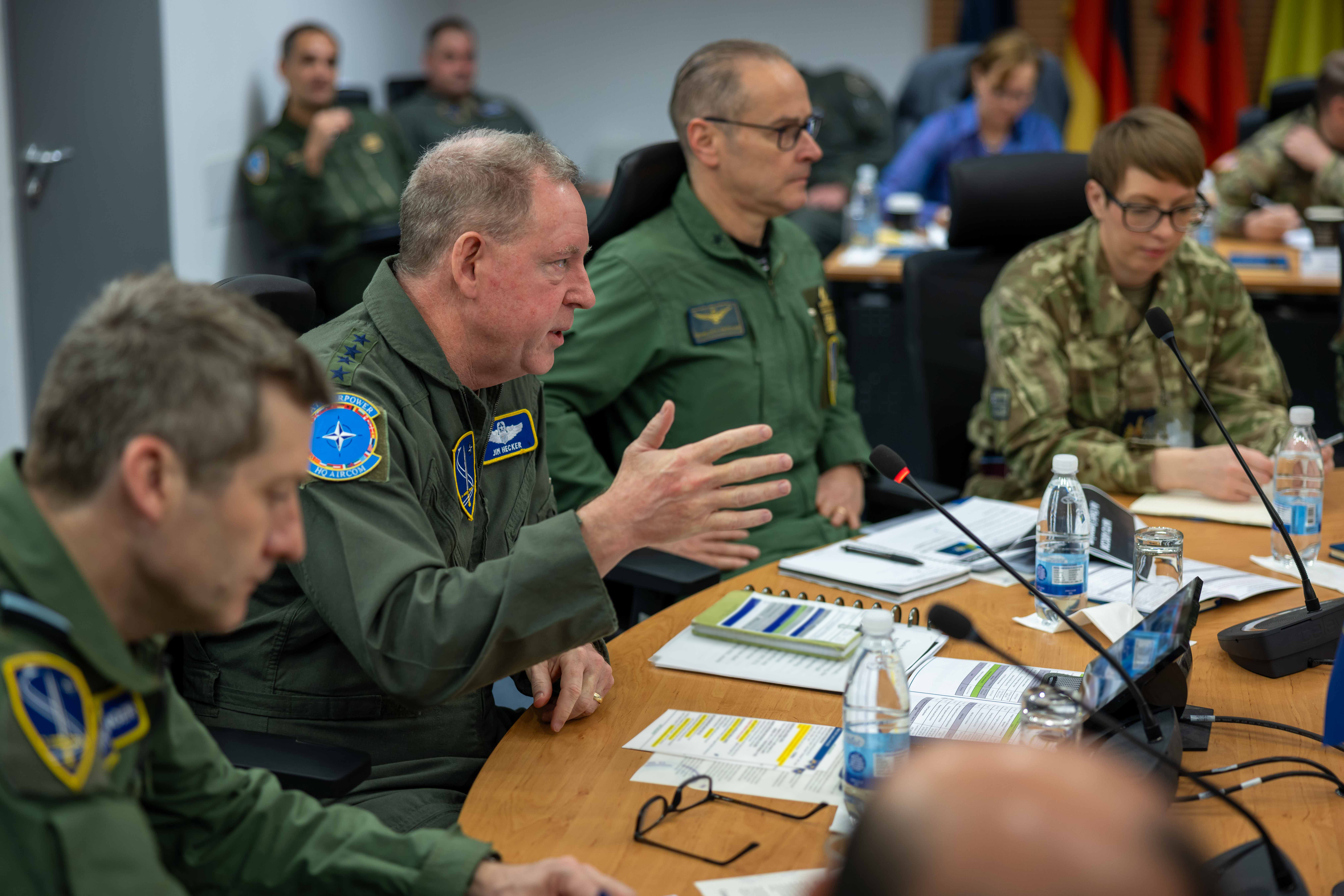
Hon. Gen. James B. Hecker: Allied Air Command has hosted semi-annual NATO Air Chiefs’ Symposiums for several years. During the first NATO Air Chiefs’ Symposium (NACS) in on April 4, 2024, we had senior leadership from the Nations, NATO and international organisations gathered the AIRCOM headquarters to exchange views, compare notes and discuss cooperation, coordination and development of Allied Air and Space Power. The Ukrainian Air Force Chief of Staff joint the deliberations via video teleconference. We seized the opportunity of having top representatives from the Allied air forces with us to commemorate the 75th anniversary of the Alliance in a brief ceremony underlining NATO’s long-standing tradition as a guarantor of collective security, peace and stability for more than one billion people in the 32 member nations.
Further to my top priority of integration by design, to NACS topic was focused on how to enhance integrated operations in NATO Air and Space Power. During the symposium participants underscored their steadfast commitment to the collective defence of all of NATO, and we agreed to continue developing Air and Space Power to support that bedrock of our Alliance. The successful integration of capabilities across the entirety of the Alliance is critical to continued deterrence and defence.
We also discussed matters related to the air fight in the joint campaign, Agile Combat Employment practicalities as well as Space Component development and requirements. One block of discussions focused on Integrated Air and Missile Defence lessons learned from the war in Ukraine.
Additional remarks by Hon. Gen. James B. Hecker Commander Allied Air Command on 75 years of NATO and 50 years of a NATO Air Command at Ramstein Air Base April 4, 2024
Today we celebrate the 75th anniversary of the strongest, most enduring and most successful Alliance in history – the North Atlantic Treaty Organisation – NATO.
On this day 75 years ago, the Foreign Ministers of twelve countries from Europe and North America, came together to sign the Washington Treaty and create our great Alliance.
Ever since, the vision articulated in its preamble continues to guide us saying that Allies “are determined to safeguard the freedom, common heritage and civilisation of their peoples, founded on the principles of democracy, individual liberty and the rule of law. They seek to promote stability and well-being in the North Atlantic area. They are resolved to unite their efforts for collective defence and for the preservation of peace and security”.
This treaty has kept our people safe through the long years of the Cold War, and when it ended, NATO helped bring two brutal ethnic conflicts in the Balkans to a close.
In 2001, after the 9/11 attacks against the U.S., for the first time, we invoked Article 5 of the Washington Treaty, which states that an attack on one Ally is an attack on all.
NATO has been on the front line in the fight against terrorism ever since. 2014 was another turning point. Since then, we have undertaken the biggest reinforcement of our collective defence in generations.
Today – at 32 member Nations – NATO is bigger, stronger and more united than ever. Together, we have helped to spread peace, democracy and prosperity throughout Europe in a trans-Atlantic context. From its founding 75 years ago, building bridges and working towards consensus in collective security in post-World War II times, NATO has had a historic record of success and relevance.
Today, 75 years later, NATO is built on an enduring commitment to our shared values and our ability to adapt to emerging challenges. We celebrate our collective history of military preparations, innovations, and operations.
NATO Air and Space Power has been a key contributor to collective security, deterrence and defence. For almost 50 years, an Allied command authority for air forces at Ramstein Air Base has supported NATO’s overall commitment to protecting its people, its common values and individuals’ security.
Since 1974, we have been delivering Air and Space Power to the Alliance, coordinating efforts with national Air and Space Forces and honing Air and Space contributions to collective security, deterrence and defence.
I am delighted and proud that we can commemorate this historic moment of NATO’s 75th anniversary, demonstrating collective Air and Space Power; with the representatives from our member Nations and of course with the Allied Air Command team of fine airmen and women here at Ramstein.
Acknowledgments: With special thanks to Allied Air Command and U.S Air Force. Images and biography of Hon. Gen James B. Hecker Commander Allied Air Command ©NATO AIRCOM. Image-2 Hon.Gen.James B.Hecker in NATO Air Chiefs’ Symposium (NACS) April 4 2024 Ramstein, Germany. The Interview is subject to Copyright law ©NATO Allied Air Command/U.S. Air Forces in Europe and U.S. Air Forces Africa/NATO/ U.S European Command/U.S Europe World Affairs.
Special Edition Interview with the Spokesperson of U.S. Air Forces in Europe, Air Forces Africa (USAFE-AFAFRICA) conducted by Editor in Chief, Catherine S. Schmidt
Q 1: On April 4th Finland became the 31 member of NATO Alliance. How do you see the Future of NATO with Finland and the upcoming membership of Sweden? And how that can strengthen even more the partnership of U.S. Air Forces in Europe, Air Forces Africa (USAFEAFAFRICA) with Finland.
USAFE-AFAFRICA Spokesperson: USAFE-AFAFRICA welcomes Finland to NATO. We have worked together in the past, and look forward to working together in the future, demonstrating our collective resolve as NATO Allies. We see a strong future for NATO and anticipate continued development of our interoperability and military partnerships.
Q 2: About 40 African nations participated in the 12th annual African Air Chiefs Symposium, sponsored by U.S. Air Force Africa, in Senegal from February 27 – March 3, 2023. Can you talk about this Symposium and the importance it represented?
USAFE-AFAFRICA Spokesperson: The African Air Chiefs Symposium is a multinational security cooperation initiative intended to foster more effective military relationships between participating nations. The symposium’s goal is to improve in areas that are affecting partner nations in attendance and across Africa. The event features a diverse range of workshops as well as cultural activities. The African Air Chief Symposium is hosted each year by a different member of the Association of African Air Forces. The symposium first started in 2011 in Ethiopia and had its last in-person event in Dakar, Senegal. AACS 23 focused on various small-group sessions to foster a spirit of collaboration, a senior enlisted leader forum, and cultural events to strengthen the partnership between all nations involved.
The 38 participating nations included: Algeria, Angola, Benin, Botswana, Burundi, Cameroon, Central African Republic, Chad, Côte d’Ivoire, Democratic Republic of Congo, Egypt, Equatorial Guinea, Eswatini, Gabon, Ghana, Guinea-Bissau, Kenya, Lesotho, Libya, Madagascar, Malawi, Mauritania, Morocco, Mozambique, Niger, Nigeria, Republic of Congo, Rwanda, Senegal, Sierra Leone, Somalia, Tanzania, Togo, Tunisia, Zambia, Uganda and the United States.
Q 3: In early February this year another important military event ‘Nordic Regional Engagement’ was held in Europe with the participation of U.S. Air Forces in Europe and Air Forces Africa, NATO Allied Air Command, and most European Air Forces. Please elaborate on the objectives and the magnitude of this military engagement?
USAFE-AFAFRICA Spokesperson: Earlier this year, command senior enlisted leaders from U.S. Air Forces in Europe and Air Forces Africa, NATO Allied Air Command, the Royal Danish, Royal Norwegian, Finnish, and Swedish air forces participated in a Nordic regional engagement to Sweden, Denmark, Norway and Finland. The two-week engagement provided a platform for the CSELs to discuss Agile Combat Employment across the Nordic nations, explore multinational, professional military education exchange opportunities and discuss the operational environment in the High North. In addition to discussing strategic importance of the NATO region, the engagement focused heavily on the development of the enlisted corps, specifically the non-commissioned officers in the four nations, as well as professional military education exchanges across the allied nations and partners.
Q 4: The U.S. military and the Spanish Armed Forces have a special partnership across the entire military spectrum, from EU NAVFOR Operation Atalanta to NATO AIRCOM. Could we have your thoughts on this partnership and please discuss the Spanish Exercise Chasing Sol and the participation of the U.S. Airmen in this joint training?
USAFE-AFAFRICA Spokesperson: USAFE-AFAFRICA is proud to train with Allies and partners across Europe and Africa. Hosted by the Spanish air force, Chasing Sol is a great example of this. Members of the U.S. Air Force and U.S. Army in Zaragoza, Spain, participated in Chasing Sol from Jan. 23 to Feb. 3, 2023. The exercise was a bilateral flying training deployment between the 86th Airlift Wing and 435th Air Ground Operations Wing assigned to the U.S. Air Force, 21st Theater Sustainment Command’s 5th Quartermaster Company assigned to the U.S. Army, and 31st and 35th Tactical Airlift Wings assigned to the Spanish air force to increase readiness, responsiveness and interoperability between NATO allies. Chasing Sol, and other similar exercises, train and develop coordination between allies and partners to ensure a timely and effective response during peacetime and crisis.
Q 5: One of the greatest U.S. military accomplishments has been always in the area of Humanitarian Relief Operations worldwide in which the U.S. Air Force holds the lead. In the aftermath of the devastating earthquake in February 6th 2023 in Turkey, the U.S. Air Forces Europe and Air Forces Africa played a vital role on a large scale of Humanitarian Relief Aid Operations. Could you brief us on that?
USAFE-AFAFRICA Spokesperson: In response to the tragic earthquake in Türkiye on February 6th, the 39th Air Base Wing supported the bed-down of over 1,440 foreign military and civilian relief personnel who arrived at Incirlik Air Base for relief efforts. These personnel originated from more than 10 partner nations. Contributions from the 39th ABW also included the coordination, planning, and installation of a 100-bed field hospital in Hatay Province to help offset the 1,500-bed hospital loss as a result of the earthquakes. USAFE-AFAFRICA rapidly responded to the natural disaster with critically needed capabilities and life-saving equipment, delivering assistance to aid areas the government of Türkiye deemed most necessary. We worked in support of USAID, the government of Türkiye and our Allies and partners to provide significant relief to the victims impacted.
Additional: U.S. Air Force tankers moved to NATO’s Eastern Flank, strengthen collective defense, March 2023

Acknowledgments: Image 1: A KC-46A Pegasus from the Command’s 514th Air Mobility Wing and a KC-135 Stratotanker from the Mississipi Air National Guard’s 186th Refueling Wings refueled Polish F-16 from Powidz Air Base, Poland, March 28 2023 ©U.S Air Forces in Europe & Air Forces Africa/Air Force Reserve. The Interview is subject to Copyright Law. ©U.S. European Command/ U.S Air Forces in Europe and Air Forces in Africa (USAFE-AFAFRICA)/U.S. Army Europe and Africa /U.S Army/ U.S Air Force/ U.S Europe World Affairs.
Dear all our latest Newsletter is available online. Please view it on the Newsletters page. Have a great month of June. We love you all, Editor in Chief
 US-Europe World Affairs