U.S. Air Force in the 14th African Air Chiefs Symposium 2025

This year’s African Air Chiefs Symposium co-hosted by U.S. Air Forces Europe – Air Forces Africa, and Zambia Air Force was held in Lusaka, Zambia from February 17 – 21. The thematic focus of the 14th African Air Chiefs Symposium was on ‘Strategic Collaboration and Operational Excellence: Enhancing effectiveness of the Association of African Air Forces.

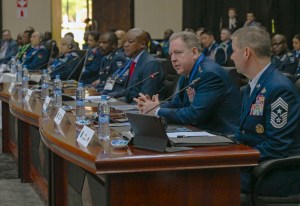
Military leaders, Air Chiefs, Liaison Officers, Women, Peace and Security Representatives, Senior Enlisted Representatives, and U.N Representatives, from 38 nations convened in African Air Chiefs Symposium 2025 to discuss crucial continental defense issues, and addressed challenges that threaten regional security, The symposium also assessed the existing capabilities and explored avenues to increase partnerships between African nations and the United States. 

Among symposium’s key delivered outcomes:

  • Strengthening partnerships and collaborations between U.S-African air forces, fostering mutual understanding and shared strategies to address common security challenges.
  • Operational excellence:
    1. Improving the operational capabilities through joint multinational training exercises and interoperability;
    2. The exchange of best practices;
    3. And enhancing the air operations across the continent particularly in the natural disaster scenarios.

Additional:  Digital Press Briefing State Department Feb. 19, 2025: U.S Air Forces Africa Commander Gen. James B. Hecker and Zambia Air Force Commander Lt. Gen. Oscar Nyoni.

 Acknowledgments: Sources ©U.S. Air Forces in Europe – U.S. Air Forces Africa. Image:  U.S. Air Force Gen. James Hecker, U.S. Air Forces in Europe – Air Forces Africa commander and Association of African Air Forces co-chairman, during the opening ceremony for the 14th African Air Chiefs Symposium in Lusaka, Zambia, Feb. 17, 2025, by Senior Airman Seleena Muhammad-Ali ©U.S. Air Forces in Europe -U.S. Air Forces Africa. Article by Catherine S. Schmidt, Editor in Chief. 

Special Edition Interview with the European Union Naval Force in Operation Atalanta Series-6

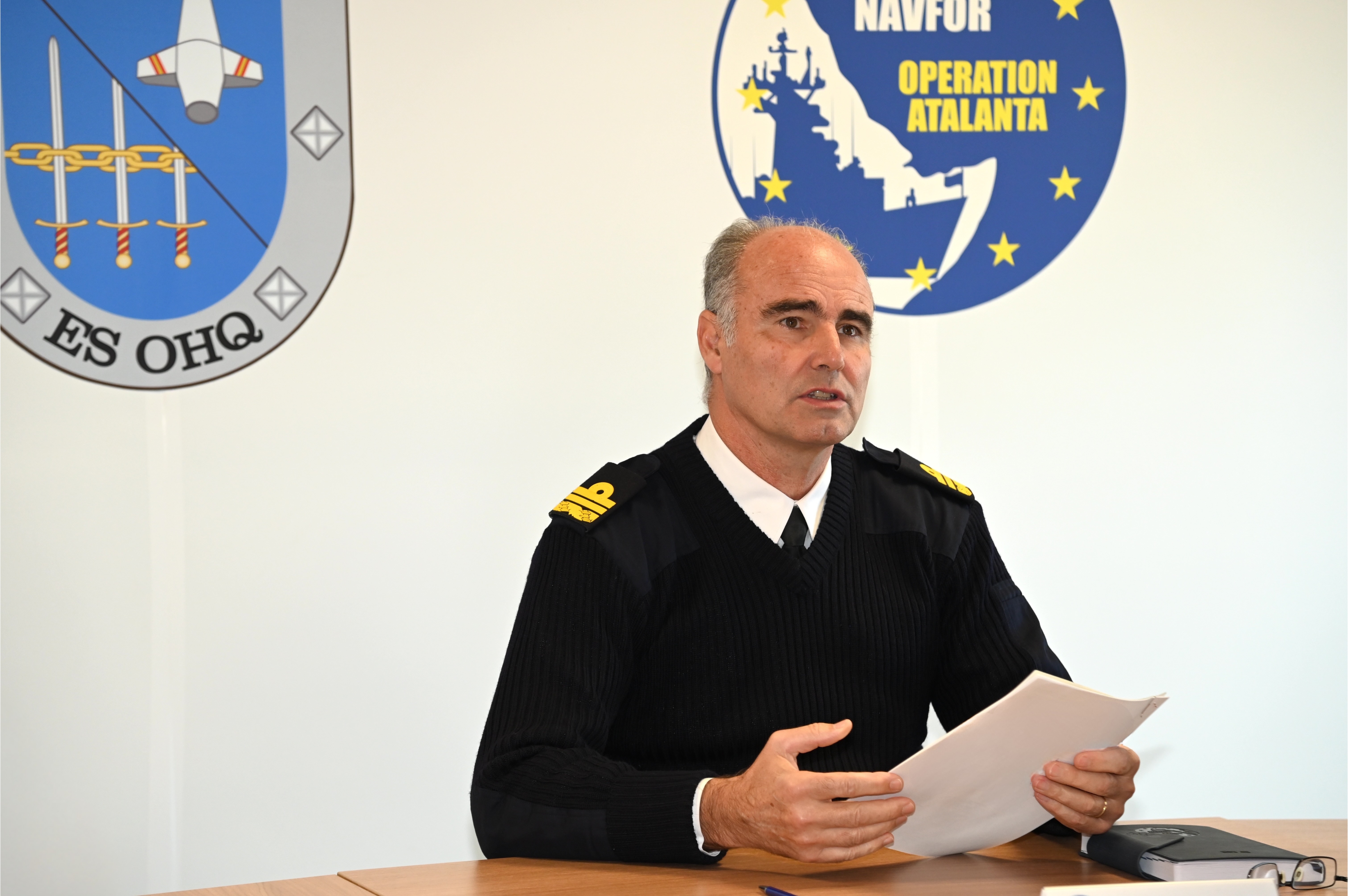
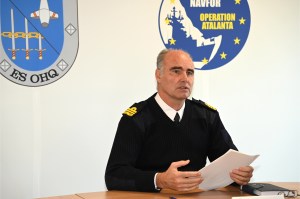
An exclusive interview with Hon. Vice Admiral Ignacio Villanueva Serrano, EUNAVFOR ATALANTA Operation Commander, conducted by Editor in Chief, Catherine S. Schmidt

Biography of Vice Admiral Ignacio Villanueva Serrano
Honorable Vice Admiral, it is a great honor to have the occasion of this interview with you. Thank you for your time Sir. 

Q 1: The Indian Ocean, Gulf of Aden, and Red Sea are vital maritime corridors for global trade. These waterways have historically faced significant security challenges, including piracy, illicit activities, and in the recent years the climate change. Improving security conditions in these regions requires a multifaceted approach, involving international cooperation, regional initiatives, and technological advancements. How is EUNAVFOR ATALANTA adapting its operational capabilities to address these challenges?

Vice Admiral Ignacio Villanueva Serrano: On 8 December 2024, we marked 16 years of operation since ATALANTA was launched by the EU in 2008. Over time, the Operation has evolved and adapted to changing circumstances due to several factors: regular updates to our mandate by the Common Security and Defence Policy (CSDP), improvements in information sharing, the strengthening of our position within the maritime security architecture, communication with nations on how to better prepare for the challenges they may face in the Area of Operations, expanded relations and cooperation with other nations and naval operations, and the incorporation of new capabilities, such as anti-drone systems.

All of these changes are vital in addressing the challenges faced by Operation ATALANTA. Over the years, we have been able to improve our information-sharing processes, to ensure that threats are taken into account at the right time and enhance the effectiveness of our efforts in the region.

As you mentioned, these threats require a multifaceted approach that calls for regional cooperation. That is why another line of action that is particularly important to me is to ensure that our actions are in line with regional dynamics, what we call the “maritime security architecture”. Over time, we have been able to build solid ties with regional institutions, nations and naval operations, which allowed us fostering deeper cooperation.

We are always ready to respond to changing circumstances in the region where we operate, incorporating new capabilities as needed.

And what are the key priorities and strategic objectives for moving forward?

Vice Admiral Ignacio Villanueva Serrano: Precisely, we have just presented the activity of the Operation during the last 6 months and the way forward for 2025. The core of our mission —the fight against piracy— remains the basis of everything we do, and that is always in coordination and cooperation with the other stakeholders in the area. On another note, we will continue to advocate for agreements regarding the transfer of apprehended persons, drugs, and arms to regional countries. Furthermore, we will keep optimizing our monitoring of IUU fishing, which is a threat to the livelihood of coastal populations, and the root of many other illicit activities. 

We will maintain close coordination and cooperation with our EU sister organizations, the EU Capacity Building Mission (EUCAP-S), EU Training Mission (EUTM-S), both in Somalia, and the EU naval operation ASPIDES. We will strengthen cooperation with other maritime security partners, such as India, consolidating the work done up to date.  ATALANTA will also continue to develop existing projects to consolidate its established profile in the area.

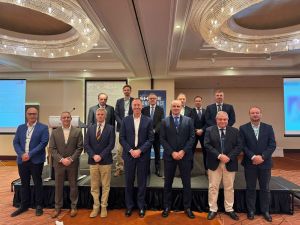
Q 2: The 52nd edition of the SHADE (Shared Awareness and De-confliction) Conference, co-chaired by Combined Maritime Forces (CMF) and Operation ATALANTA, was held in December 2024, in Bahrain. This crucial gathering brought together a diverse range of stakeholders, including military personnel, industry representatives, and academic experts, to address and strengthen the maritime security in the Western Indian Ocean region. 
Could you please share the main takeaways from this conference?

Vice Admiral Ignacio Villanueva Serrano: During the 52nd SHADE (Shared Awareness and De-confliction) Conference, the transformation of the Maritime Security Centre Horn of Africa (MSCHoA) into the Maritime Security Centre Indian Ocean (MSCIO) was presented. This is a significant advancement, as it will serve as a hub for maritime awareness and security operations, focused on enhancing data analysis, intelligence sharing, and engagement with the shipping industry, and thus, contribute to strengthening maritime security across the Red Sea, Gulf of Aden, Indian Ocean, and Persian Gulf.  A major milestone in information sharing was achieved by formalizing standardized Best Management Practice, as well as sharing reporting forms between MSCIO, JMIC and United Kingdom Maritime Trade Operations (UKMTO) This strategic partnership is now fully operational, enhancing maritime security coordination by facilitating seamless information exchange, standardized vessel registration, and report forms.

It represents a significant step forward in regional maritime security capabilities in support of the shipping industry, while maintaining a constant and fluid relationship with the maritime industry.

Q 3: Regional cooperation is crucial for effective maritime security. What initiatives is EUNAVFOR undertaking to strengthen further partnerships with regional navies and maritime agencies? How can these collaborations be leveraged to address shared security challenges and improve maritime domain awareness?

Vice Admiral Ignacio Villanueva Serrano: Only during the second half of 2024, the Operation has conducted seven focused operations – targeted operations addressing specific areas of the mandate – and six joint activities at sea with other operations and navies to enhance interoperability. These activities at sea, combined with numerous capacity-building and enhancement exercises with local forces in the Area of Operations, and big regional exercises, have further strengthened existing relationships. Regular engagements with maritime security centers in the region continues to be a crucial point in bolstering ATALANTA’s footprint in the area. 

The presence of ATALANTA, along with its ability to offer training, expertise, participation, and support for addressing other needs of regional countries, is a key strength in integrating into the maritime architecture, which is fundamental for the operation.

Q 4: Please tell us how do you see the year 2025 ahead for EUNAVFOR in Operation ATALANTA? Does EUNAVFOR consider to increase its presence in the area of its operation or beyond?

Vice Admiral Ignacio Villanueva Serrano: We wrapped up 2024 with the news that the European Union had extended the Operation until 28 February 2027, which demonstrates the strong support of the EU member states and contributing nations to our efforts and commitment to maritime security in the Western Indian Ocean. With this in mind, we face 2025 with great enthusiasm, committed to maintain our role as reference in maritime security, and keeping the threat of piracy deterred in this region. The new mandate for the Operation further strengthens our position as a key tool for the EU’s foreign actions in the Indo-Pacific, complemented by the recent launch of our MSCIO website. Additionally, our objective of contributing to the development and enhancement of maritime security architecture in the area of operations gives us valuable opportunities to deepen cooperation with the coastal states in the area of operations, particularly Somalia. We have an exciting year ahead.

Operation ATALANTA is more relevant and necessary than ever. It will remain a key tool in the EU’s strategy for the Indo-Pacific. We will continue with our ongoing  efforts, as we have done so far. The Operation is ready to evolve as the security situation requires.


Acknowledgments: Image-1 Vice Admiral Ignacio Villanueva Serrano, EUNAVFOR ATALANTA Operation Commander. Image-2 the 52nd edition of SHADE Conference, in Bahrain 16-17 December 2024. Media images © EUNAVFVOR Atalanta. The interview is subject to Copyright Law ©EUNAVFVOR Atalanta/Spanish NAVY/U.S Europe World Affairs. 
The first Special Event of 2025

U.S Army-led Exercise Arctic Forge 25


  • Enhancing Operational Readiness;
  • Fostering more Interoperability between U.S Forces and NATO allies; 
  • Providing the Environmental Adaptability, inter alia, extreme temperatures, limited daylight and unpredictable weather conditions, which of all necessitate the implementation of specific military strategies to ensure missions’ effectiveness;
  • Demonstrating the continuation of the U.S commitments in safeguarding peace and security in the Arctic region.

More news from U.S Army Europe and Africa

U.S European Command                        U.S-Arctic Affairs  

Acknowledgments: Sources U.S Army Europe and Africa. Logo of the Arctic Forge © U.S Army Europe and Africa. Article by Catherine S. Schmidt, Editor in Chief. 

The United States-NATO Allies and European Partners in Combined Resolve 25-1 

Starting January 17 through Feb. 16, 2025, Exercise Combined Resolve 25-1 will be taking place at the 7th Army Training Command and Joint Multinational Readiness Center in a U.S. Army Base in the south of Germany.       

This exercise facilitates opportunities for U.S- NATO allies and partners to experience, and immerse themselves in each other’s military cultures and frameworks. It as well strengthens their partnerships in a profound way.

Announced by 7th Army Training Command, the participating armed forces in the Combined Resolve 25-1 are from: Albania, Armenia, Belgium, Georgia, Greece, Italy, Kosovo, Lithuania, Moldova, North Macedonia, Norway, Poland, Slovakia, Spain, the United Kingdom, and the United States.

Acknowledgments: Sources and the Combined Resolve 25 logo: 7th Army Training Command/ U.S Army Europe and Africa. Article by Catherine S. Schmidt, Editor in Chief. 

The year it Snowed By Chaplain (Major) Patrice Borne

By Chaplain (Major) Patrice Borne, 41st Infantry Brigade Combat Team, Oregon Army National Guard, deployed to Kosovo in support of the NATO KFOR mission

          Growing up in the deep south, we wore summer clothes in the month of December. I remember waking up on a Christmas morning putting on shorts and sweating as I walked downstairs to our multicolored lite Christmas tree with silver streamers blowing around from the window unit above it. I would hear the weather man say that morning that it was going to be a sunny 85 degrees for the day with no change for the week.  During Christmas season my parents were often busy in the kitchen cooking for our large family. The house smelled divine and the heat from the oven of pies made it scorchingly hot inside, but this extra heat meant it was Christmas in the Borne house. This was the best season of the year because my brothers and extended family would be together. The house was hot, but somehow watching the snowy Christmas shows on TV each year made me feel like temperatures were cooler. I dreamt of snowy mornings with everything white and fresh. I wanted to build a snowman and make ice angels like what I saw on TV.  I wanted it to be cold were we lived for Christmas.  I hoped for it so bad that I recall praying for it to snow. I remember waking up and before I got up I would plead with God for it to be all white outside. I believed that if I just had enough faith and prayed, I could somehow have snow on Christmas morning.

         I wonder what the shepherds in the field from the Bible thought as they witnessed an angel of the Lord appearing to them with a message?  Did Mary have certain thoughts as she was told she would carry a baby born of the Holy Spirit?  Josheph, Mary’s betrothed was with child and what was Joseph’s response?  All of these scenarios seem shockingly impossible. These seem as unbelievable as snow in 85 degree weather, yet their outcome required a measure of trust for their faith to be revealed. The shepherds did indeed go at the advisement of a host of angels informing them of a Savior being born in the town of David; Bethlehem. The shepherds heeded the message and by faith witnessed what had been promised to them for many generations.  “A shoot will come up from the stump of Jesse; from his roots a branch will bear fruit. The Spirit of the Lord will rest on him.” Isaiah 11.  Mary too received the news of her pregnancy and expressed, “I am the servant of the Lord.  Let this happen to me as you say.” Scriptures add that as the baby grew her friend  told her, “You are blessed because you believed (have faith) that what the Lord said to you would really happen.” Luke 1:45. Josheph struggled to believe and was ready to divorce Mary quietly. His faith deepened as the Lord revealed the truth of the circumstance in a dream. By faith Joseph married Mary and believed she carried the Savior of the World. 


Today I am deployed in a place that could use some faith.  In the short time I have been here I have witnessed the people of Kosovo strive to better their days with hope and resilience for a brighter tomorrow. I see the courage in their eyes as restaurants and other businesses open and patiently serve their patrons. I watched as young adults study for test for degrees in professions such as lawyers, doctors, and social workers that will enhance their cities. Additionally, I have met with Imams that open their doors to all and promote peace and hope. These actions take faith that moves mountains and there is no shortage of that faith in this place. 

            During those years as a young child clinging to hope of seeing snow paid off.  One year my parents brought us to magical place where snow was as tall as the height of my dad that stood at 5’7. The snow didn’t happen in my town or state but I did see it and made snowmen and snow angels. Faith may not have an outcome that way we think it should, but it may come in other ways of vacations to Pikes Peak, and courage to move in impossible circumstances, or taking a stand to believe life will be better one day. Faith can and will always move mountains.     

          This year during our rotation of KFOR 34, hope is in the air.  In the short time TF Jungleer has been boots on the ground Soldiers and leaders have been eager to bring hope in the communities by providing conversational English, building relationships with community leaders, and supporting the people that live here with kindness. Tonight is one such night.  Soldiers are gathering to bring gifts to a community of children. Coordination for this effort has been in progress for a month.  Additionally, an ecumenical service will take place in the Peace Keepers Chapel around this holiday season.  All are invited from every belief to participate. This time of year hope is shining bright on Camp Bondsteel, Kosovo, and RC-East is front and center.

Get more news from NATO-KFOR Regional Command East

Acknowledgments: Article by Chaplain (Major) Patrice Borne, 41st Infantry Brigade Combat Team, Oregon Army National Guard, in NATO KFOR mission. Image : KFOR Chapel Christmas 2024 © Army Chaplain (Major) Patrice Borne/ U.S Army in NATO-KFOR.

U.S Air Force in Operation Christmas Drop, the world’s longest humanitarian airlift operation

Initiated in 1952, Operation Christmas Drop “OCD” is a longstanding humanitarian U.S Air Force mission taking place every year in the Indo-Pacific region. The operation is conducted by the U.S Andersen Air Force base from Guam and the Yokota U.S Air Force base in Japan. With over 70 years of mission and backed by the Department of Defense, Operation Christmas Drop is the ongoing….. longest-running humanitarian airlift operation in the world.

Every year across the Indo Pacific region, the Christmas and New Year holiday season starts with the Operation Christmas Drop, as the inhabitants of over 58 islands eagerly await for the arrival of  U.S. Air Force planes to deliver significant quantities of Christmas gifts and packages of essential supplies via parachute. The operation is also  known “the Love From Above”

In recent years an increasing number of partner countries have participated in this mission. 

Additional:  Operation Christmas Drop 2024: U.S Air Force, Allies and Partners Integrating to Deliver Donated Supplies

Acknowledgments: Sources: DoD, U.S Air Force,Yokota Air Base.Video ©Yokota Air Base. Image published in the X: A C-130J Super Hercules assigned to the 36th Airlift Squadron, Yokota Air Base, Japan, in Operation Christmas Drop 2019 at Andersen Air Force Base, Guam, Dec.6, 2019. ©U.S Air Force by Staff Sgt. Kyle Johnson. Article by Catherine S. Schmidt, Editor in Chief. 

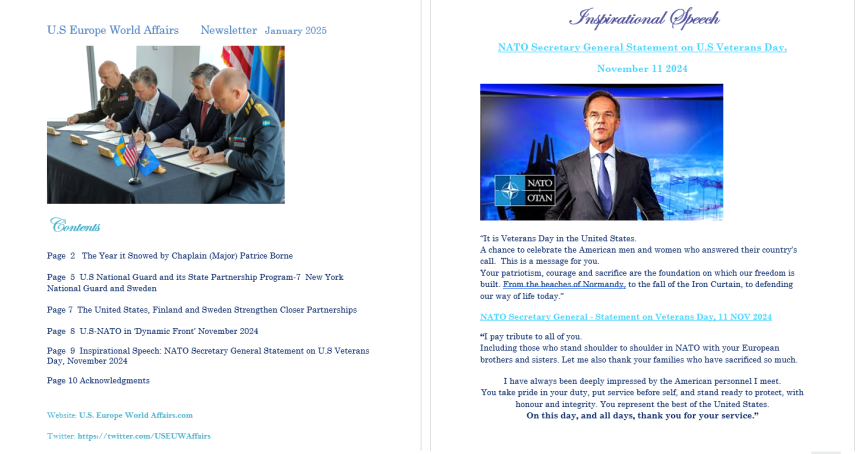
NATO SECRETARY GENERAL MARK RUTTE’S MESSAGE ON VETERANS DAY

From the beaches of Normandy, to the fall of the Iron Curtain, to defending our way of life today. I pay tribute to all of you. Including those who stand shoulder to shoulder in NATO with your European brothers and sisters. Let me also thank your families who have sacrificed so much.    

Acknowledgments: Video and the statement of Secretary General Mark Rutte  ©NATO. With special thanks to the media team at NATO for the permission.

U.S-NATO in ‘Dynamic Front’ November 2024

The exercise is led by U.S 56th Artillery Command, and hosted by Finland. It projects NATO’s capabilities across the continent, from the Black Sea to the Arctic region. 

‘Dynamic Front’ is one of the largest multinational training exercise bringing military personnel from  28 NATO Allied and partners’ armed forces including: Brazil, Bulgaria, Canada, Croatia, Czechia, Estonia, Finland, France, Georgia, Germany, Greece, Hungary, Italy, Kosovo, Latvia, Lithuania, North Macedonia, Poland, Portugal, Romania, Slovakia, Slovenia, Spain, Sweden, Switzerland, Türkiye, UK and the U.S.

Acknowledgments, source and logo ©U.S Army Europe and Africa. Article by Catherine S. Schmidt, Editor in Chief. 

« Older Entries Recent Entries »