Category Archives: US-EU Partnerships

The Royal Danish Navy in NATO

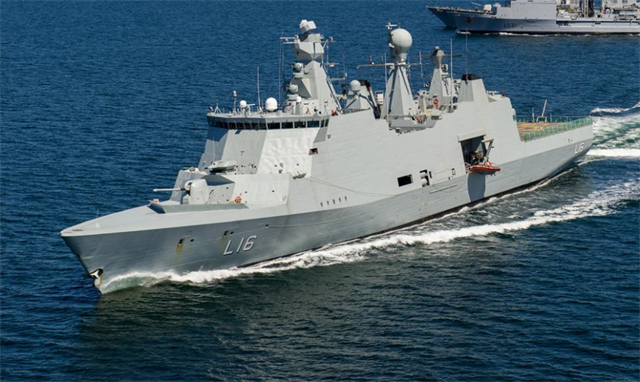
                          HDMS ABSALON of Denmark 2015 NATOHDMS ABSALON of Denmark 2015 ©NATO

On October 1st, the HDMS ABSALON of Royal Danish Navy joined NATO Counter-piracy Operation Ocean Shield. The Operation is to keep the region safe from the threats of piracy and to maintain the Maritime Security at all level.

The Royal Navy Ship will visit the port of the Mediterranean Dialogue Partner Nations and meet with the high level Military Leaders including the Royal Jordanian Naval Force.

By Catherine Stella Schmidt  (Copyrighted material)


The USS Carney in NATO Missile Defense

The U.S Navy Multi-Mission USS Carney has arrived in Europe, in south of Spain, to strengthen the NATO and European Missile Defense capability.

The Battle Ship as a part of NATO forces is missioned for a wide range of Operational Task for Security, Search and Rescue, and the NATO Multinational Training and Exercise.

U.S Navy Multi-Mission USS Carney arrived in EU Sep.2015USS Carney. 25 September 2015 ©NATO 

NATO Secretary General Jens Stoltenberg welcomed the US Navy USS Carney by affirming:

“The arrival of the USS Carney marks an important step for European Security and for Transatlantic cooperation,” 

The four Missile Defense ships are key for building up Europe’s protection against Ballistic Missile threats. I thank the United States for their significant contribution to keeping our Nations safe©NATO

  ©NATO

NATO Ballistic Missile Defense was established and launched in 2010, by the NATO Member States to counter the threats poised by the proliferation of Ballistic Missile in various regions, countries and radical groups (possibly). The strategy is based on Protecting Europe from any sorts of perceived or unseen threats which had been multiplied in the last fifteen years.

By Catherine S. Schmidt, Editor in Chief  (Copy righted material) 

The UN General Assembly 2015

New York, 28 September-3 October 2015

Liechtenstein

The Speech of H.E. Minister of Foreign Affairs Aurelia Frick of Liechtenstein, at the UN General Assembly. NY 2 October 2015

Iceland

The Speech of H.E. Minister of Foreign Affairs Gunnar Bragi Sveinsson of Iceland, at the UN General Assembly. NY 2 October 2015

Austria

The Speech of H.E. Federal Minister for Europe, Integration and Foreign Affairs Sebastian Kurz of Austria, at the UN General Assembly. NY 1 October 2015

Germany

The speech of H.E. Minister of Foreign Affairs Frank-Walter Steinmeier of Germany at the UN General Assembly. NY 1.October 2015

Read more

US-EU Law-Enforcement

US-EU furthering partnerships on Law-Enforcement

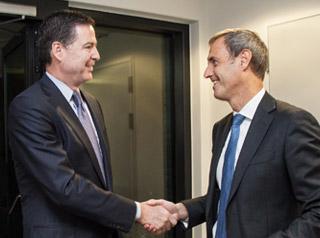
Europol Director Rob Wainwright with the Director of FBI James Comey 2015Director of FBI James Comey during a meeting with Director of EUROPOL Rob Wainwright. The Hague 24.September 2015 ©EUROPOL

The Director of U.S Federal Bureau of Investigation James Comey travelled to The Hague to meet with the Director of EUROPOL to discuss rage of subjects including furthering the  partnerships between the FBI and the Europe Law-Enforcement to the closer level on combating with Cybercrime.

In the European Police Chiefs Convention (EPCC) at Europol HQs the Director of FBI spoke on Global Threats ( Cybercrime and Terrorism) and highlighted:

“The perception that terrorism only happens in big cities like New York, London, or Paris is not true.There are troubled people all across the United States and in every country around the world. That’s why partnerships are critical. We all share a common interest in keeping our nations safe from both crime and terrorism.  Together, we can identify common threats and common needs, and by joining forces, we’re all better able to protect the people we serve,”

“No law enforcement or intelligence agency alone – no country alone – can defeat crime and terrorism and keep its streets safe. But all of us, standing together – we are strong, unbending, and unbreakable.”

On the same Subject during the convention the Director of Europol Rob Wainwright stated:

Now more than ever we understand the importance of cross-border Law-Enforcement cooperation to tackle global threats, such as terrorism and Cybercrime. In this challenging time, building up strong partnerships among international law enforcers, and ensuring fast and efficient information exchange, are key to safeguarding our citizens and our collective security.”

“In this respect, cooperation between Europol, the FBI and other international partners, has proved to be exemplary, in particular in combatting cyber attacks and the sexual exploitation of children online. This strong collaboration demonstrates what Law Enforcement agencies can achieve together when trusted relationships are established.”


La France on Syrian crisis

27 Septembre 2015

Declaration of la France on launching a Military strike on radical groups in Syria.  As President François Hollande had already stated before that la France will act on the Syrian crisis at the root. 

A policy that Germany needs to be allied with.

The Declaration of President Holland at the UN General Assembly, New York 27 September 2015

Watch the Declaration of President Holland at the UN General Assembly, New York 27 September 2015, Elysee


The Czech Republic and NATO

 NATO Secretary General Jens Stoltenberg visited Czech Republic

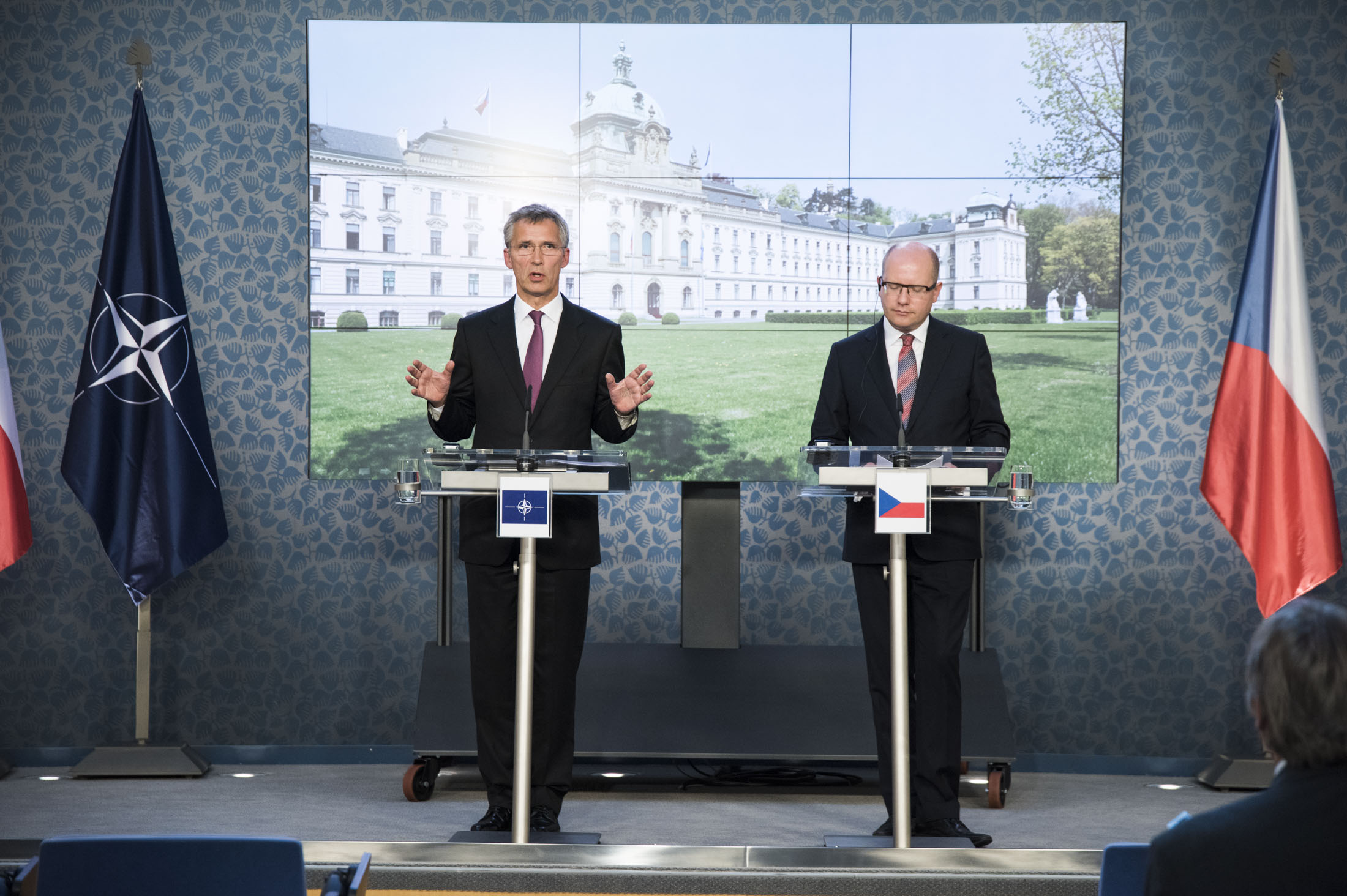
Joint press point with NATO Secretary General Jens Stoltenberg and the Prime Minister of the Czech Republic, Bohuslav SobotkaNATO Secretary General Jens Stoltenberg and the Prime Minister of the Czech Republic Bohuslav Sobotka. Prague 9.September 2015 ©NATO

During an official visit to Prague , on September 9th,  the Secretary General of NATO met with Prime Minister Bohuslav Sobotka, Foreign Minister Lubomir Zaorálek, Defence Minister Martin Stropnický, and other Officials.

Secretary General expressed his gratitude to Czech Republic for its continuous commitment and contributions to NATO and European Security, by spending 2% of GDP on  Defence :                                         “The Czech Republic is really contributing to our Alliance and collective Defence, and we are very grateful for that.”

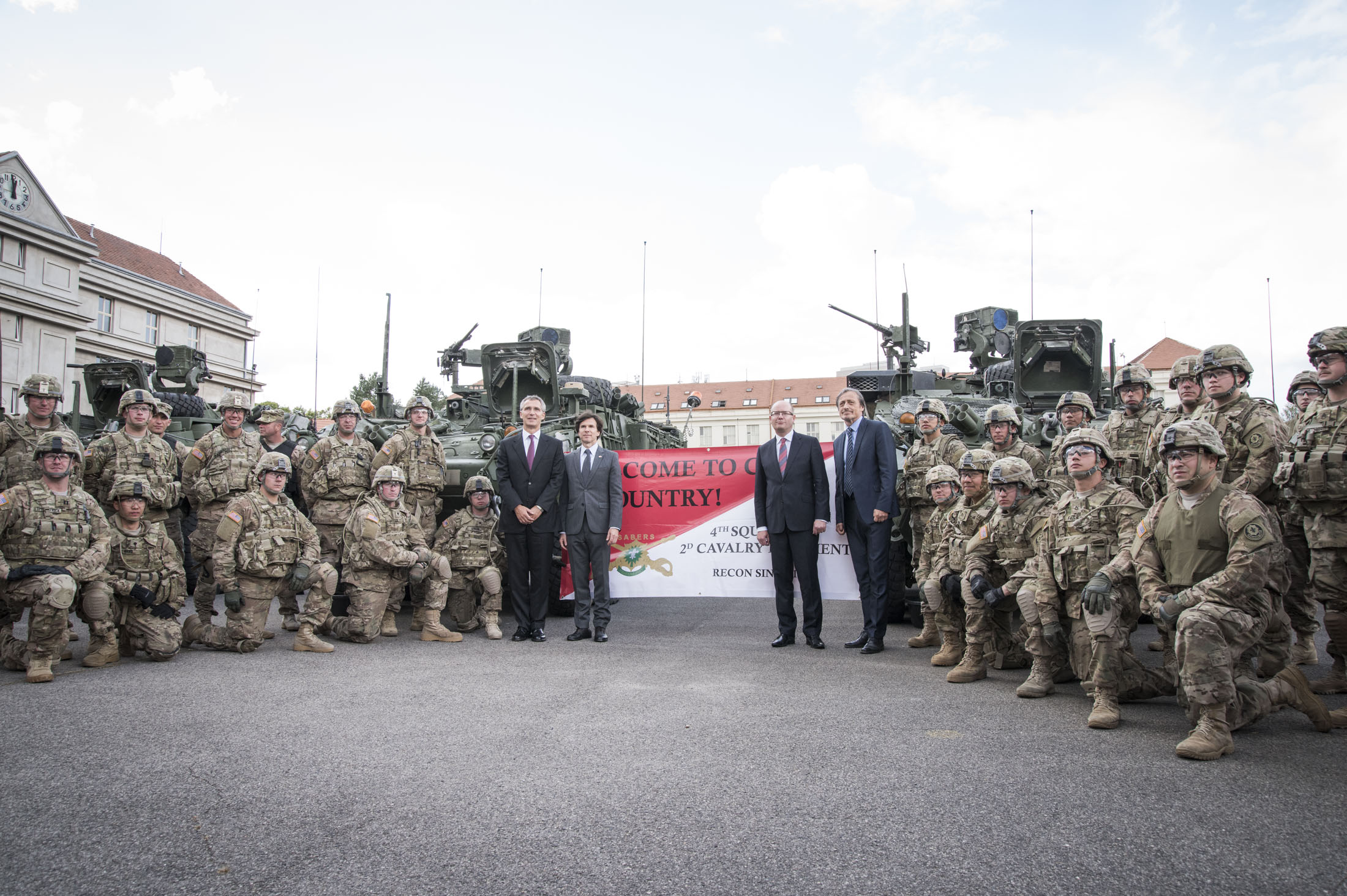
NATO Secretary General Jens Stoltenberg, the US Ambassador to the Czech Republic, Andrew H. Shapiro, the Prime Minister of the Czech Republic, Bohuslav Sobotka and the Minister of Defence of the Czech Republic, Martin Stropnicky with soldiers of the US military convoyNATO Secretary General Jens Stoltenberg with Prime Minister Bohuslav Sobotka, Minister of Defense of the Czech Republic Martin Stropnicky , the U.S Ambassador to Czech Republic  Andrew H.  Shapiro and the US Army Convoy. 9.September 2015 ©NATO

He also urged all NATO Member States to increase their investment on Defence and Security:  

“As  Security challenges grow, it is also vital that we invest more in our Defence.”


Europe needs one voice


In the mass influx of refugee crisis, all EU States need to remain in one voice and apply an objective strategic measures that could be sustainable in a long term.

In this scope United Kingdom, France, Poland, Czech Republic and Hungary are presenting the best solutions to the long term crisis.    As it is, evidently,  the German solution will not work for European problems.

In the frame work of European Union the crisis in our Territory need to be worked out with a team-work of all European governments, not a solo policy of one Land which could de-stabilize the others and the rest.  Hence Germany must listen to all EU States and act accordingly:

1- Protect its borders

2- Help other EU States to do the same

3- Deal with Crisis in Syria at the root just as France has declared yesterday.

Statement of the Heads of Governments of the Visegrad Group ( the Czech Republic, Slovakia, Hungary and Poland )

Press Conference by President Hollande (President de la Republique Francaise)

UK will work with UNHCR not the Human trafficking groups that have taken so many life.


By Catherine Stella Schmidt

The US and European Armed-Forces in a joint Exercise

Rapid Trident the U.S. Army Europe-led Cooperative Training Exercise

From 20-31 July 2015 the U.S Army in Europe conducted a joint Exercise with its European Counterparts. 

Rapid Trident, was part of U.S Army Europe that had its Training intensity on Peacekeeping and Stability Operations.

There were over 1800 members of Armed-Forces from 18 EU States as well as Canada.

Participating Armed-Forces were from:  Azerbaijan, Belgium, Bulgaria, Canada, Estonia, Georgia, Germany, Great Britain, Latvia, Lithuania, Moldova, Norway, Poland, Romania, Spain, Sweden, Turkey, Ukrainian and the U.S.


©The US Army Europe

By Catherine Stella Schmidt  (Copy righted material) 


United Kingdom and the EU Reform

Britain’s four-point package for EU reform

By the Foreign Secretary of the United Kingdom Philip Hammond

LONDON — Right across the continent, anti-EU parties have made huge gains in recent years — in local, national and European elections. We need to respond by making the EU more democratic and far better equipped to help deliver the growth and jobs its citizens expect.

Since the UK joined, the EU has changed beyond recognition. The fall of the Iron Curtain has seen the EU expand with 16 new countries becoming members; the Euro has been created, and EU rules now regulate our affairs across a huge area stretching from environment to social policy.

There is no doubt that EU membership has brought clear benefits to Britain in some areas. But in others it has led to loss of national sovereignty and an increase in bureaucratic burdens on business that has resulted in the British people’s consent for membership wearing wafer thin.
So what does the UK government want from this negotiation? To restore the confidence of the British people in the EU we need to work with our European partners to agree a package of reform that will ensure the EU is fit for the 21st century; reforms that will benefit not only the UK, but all 28 member states.

First, on jobs and growth, the uncomfortable truth is that the EU’s growth rate is far below that needed to reduce unemployment to acceptable levels and is being challenged not only by Asia, but also by the US. If we are to preserve European living standards, we need to empower our businesses to compete more effectively in the world by enhancing the single market, especially in services, digital, and energy. We have to be open to world trade and complete trade agreements with the US, Japan, and other developed economies, as well as with the fast growing economies of Asia and South America. And we must create a regulatory framework that supports, not hinders, business to create the growth and jobs we need.

Secondly, we seek reforms that will allow those countries that want to integrate further to do so, while respecting the interests of those that do not. This applies most clearly to the Eurozone where the UK does not seek to prevent further euro-integration — indeed supports it — but does need guarantees that the interests of those not in the euro will be protected. This concept of a two-pillar Europe, with a properly defined relationship between the Eurozone and non-Eurozone within a single market, and sharing the same institutions, builds on the existing architecture of Schengen and Banking Union and is good for everyone. It allows Eurozone integration to progress, respecting the interests of the non-Eurozone Member States. And it recognises that, while the concept of ever-closer union appeals to some Member States, it is not right for all.
Thirdly, we think national parliaments must have a greater say, both in connecting citizens to EU decisions and in properly implementing the concept of subsidiarity — the idea that decisions should be made as close as possible to the citizens they affect. All too often the EU has exercised power in areas where decision-making could be done at national, regional, or local government level without interfering with the operation of the single market or the effective functioning of the EU. We want to strengthen the role of national parliaments, for example, by allowing groups of them to be able to block regulations in future. The EU must respect the layers of government that are closest and most accountable to European citizens. We agree with the Dutch Government: “Europe where necessary, national where possible.”
Fourthly, while we accept that the free movement of people to work is one of the four fundamental freedoms of the EU and these negotiations do not seek to curtail this freedom, we do want to protect the UK’s welfare system from abuse and reduce the incentives that encourage highly skilled workers to travel to the UK to do low-skilled jobs. This undermines economic growth in their countries of origin and belief in the fairness of free movement in destination countries. We must also develop the other freedoms, in particular freedom of movement of services and of capital, to ensure that it is not just free movement of people that contributes to convergence of living standards across Europe.

We approach these reforms in a positive and engaged manner, listening to our partners and intending to agree reforms that will help all Member States to thrive in the 21st century.
We will negotiate a package of reform and will then ask the British people their view, in a straightforward “in or out” referendum by the end of 2017, and earlier if we can.

The stakes are high: the UK is a large and open economy with a long history and a significant role on the world stage which can contribute hugely to Europe’s success. If we can resolve the issues that have so troubled the British people and achieve a

“Yes” vote in the referendum, we will settle the question of Britain’s place in Europe and enable the UK to play a fully engaged role in a more competitive, prosperous, outward-looking and confident EU in the future.
That is an outcome that really will be in the best interest of Europeans on both sides of the English Channel.

This Article was originally published in Politico.EU on June 2015: http://www.politico.eu/article/britains-four-point-package-for-eu-reform/
 

« Older Entries Recent Entries »