Category Archives: US-European Leadership

U.S-NATO Member, Partner Nations’ Armed-Forces in Defender Europe 21

28,000 Multinational Participants of 26 Nations’ Armed Forces from:

Albania, Bosnia and Herzegovina, Bulgaria, Canada, Croatia, Estonia, Georgia, Germany, Greece, Hungary, Italy, Kosovo, Latvia, Lithuania, Moldova, Montenegro, The Netherlands, North Macedonia, Poland, Romania, Slovenia, Spain, Turkey, Ukraine, United Kingdom, and the United States with the U.S Army, U.S Navy, U.S Air Force in: Defender Europe 2021.

There are also participants of 2,100 National Guard from: Alabama, Florida, Ohio, Tennessee, West Virginia added with 800 Army Reserve joining in this U.S-led military exercise from March until mid June when Defender 21 finalizes its activities and training  


As the continuation of the previous year, Defender Europe 2021 is to emphasize NATO’s Collective Defense. 
Its objectives underline: 

  • To train and exercise together for establishing the much higher scope of readiness;
  • To fortify the synchronous interoperability of U.S-NATO member and partner nations’ Armed–Forces.

Announced by the Army earlier this March, Defender 2021 also incorporates several linked exercises including: Swift Response, Immediate Response, Saber Guardian, Command Post Exercise.

More news: Defender Europe 2021, U.S Army Europe and Africa

Acknowledgments: Image: DEFENDER-Europe 21. Soldiers from the 82nd Airborne Division conduct static-line training with Royal Army soldiers from 2nd Battalion, Parachute Regiment. May  6, 2021 ©DoD/ U.S Army Europe and Africa/ Staff Sgt. Christopher S. Muncy.  Sources: U.S Army Europe and Africa               

By Catherine S. Schmidt, Editor in Chief (Copyrighted material)

The U.S Air Force with France and UK in Atlantic Trident 2021

From May 17-28 next month, the multinational joint training exercise ‘Atlantic Trident 2021’ will be held in France, marking the third military event of the Atlantic Trident. The participants are the U.S Air Force, French Air and Space Force, the Royal Air Force of the United Kingdom– presenting with them, to challenge and test, the most advanced proven fighter aircrafts in a range of air combat scenarios.

The two previous Atlantic Trident 2015 and 2017 were hosted by the U.S Air Force, and in a trilateral joint exercises with the same two major NATO airpower, France and the United Kingdom.

This year the objective of Atlantic Trident will place the focus on re-enhancing the interoperability, to level up the coalition’s operational capabilities, and to transform the readiness in all areas of airpower by applying and improving the fourth and fifth generation of the aircrafts.

Announced by the U.S Air Force (USAFE-AFAFRICA) : Aircraft planned to participate in the exercise include U.S. Air Force F-35A Lightning II and KC-135 Stratotanker aircraft, and U.S. Marine Corps F-35B Lightning II aircraft; French Air and Space Force Rafale, KC-135 Stratotanker, A330 Phenix and E3-F Airborne Warning and Control System aircraft; and Royal Air Force F-35B Lightning, Eurofighter Typhoon, E-3D Sentry and A330 Voyager aircraft.”

News from   U.S Air Force                                                                             Royal Air Force                               French Air and Space Force

Acknowledgment: Image of the fourth and fifth-generation aircraft from the U.S. Air Force, French Air Force and Royal Air Force fly during ATLANTIC TRIDENT 17 near Joint Base Langley-Eustis, VA, April 26, 2017. By U.S. Air Force/Staff Sgt. Natasha Stannard. Sources: U.S Air Force (USAFE-AFAFRICA)

Article By Editor in Chief, Catherine S. Schmidt (Copyrighted material)    

U.S. Air Force in NATO Exercise Trident 2021

With the aim of of fortifying alliances and enhancing interoperability among the NATO allies and partners nations, the annual NATO Baltic region exercise Trident was executed from 15-19 of March. 

As every year the U.S Air Force has been the indispensable components of this training event since the start of this exercise. This year the U.S Aircraft from the 492nd and 493rd Fighter Squadrons, and a number of Airmen from Royal Air Force Lakenheath, England, took part in the Trident 2021. 

  • The core of Trident 2021 was to signify and expand the operational concept of the Agile Combat Employment (ACE), the U.S Air Force highlighted.

“The exercise was an incredible success,”  “The team overcame every challenge we faced and achieved every objective for the exercise.” explained Captain Aaron Hieronymus, 429nd Fighter Squadron weapons and tactics flight commander. ©U.S Air Force Europe and Africa/ Airman 1st Class Jessi Monte. March 22,2021.


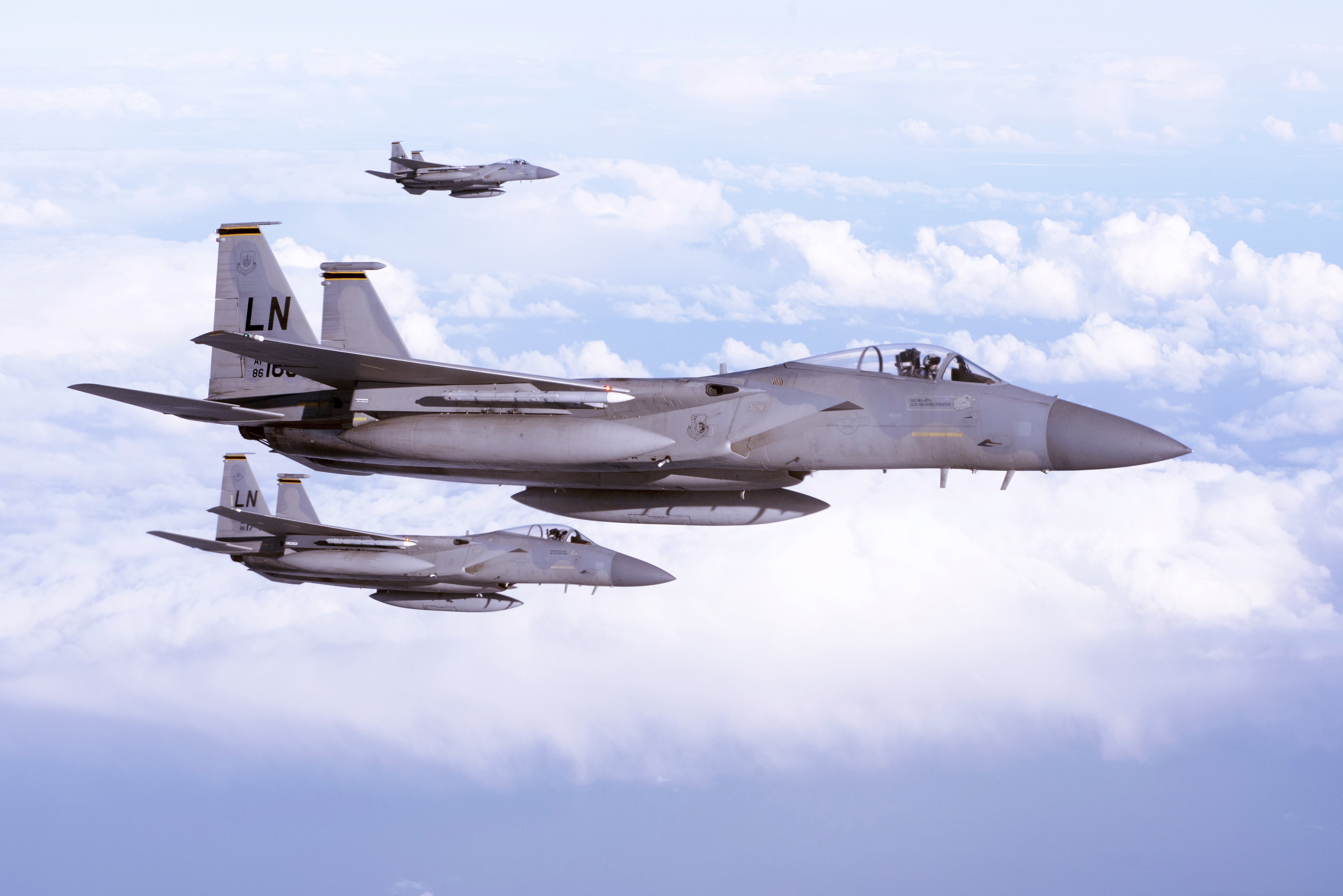
U.S 493rd Fighter Squadron F-15C Eagles fly back to Royal Air Force Lakenheath, England, from  Estonia after completion of Baltic Trident March 19, 2021  


See more on NATO Trident:  U.S solidifies NATO, allied partnership at Trident Juncture 2015

NATO Secretary General briefs on exercise Trident Juncture 2018

News from:  U.S KFOR Regional Command East                   NATO-KFOR

Acknowledgment: Image by U.S. Air Force photo by Airman 1st Class Jessi Monte, March 2021.  Article by Editor in Chief, Catherine S. Schmidt   

Special Edition Interview with NATO Deputy Spokesperson, the Hon. Mr. Piers Cazalet,


Interview with NATO Deputy Spokesperson, the Hon. Mr. Piers Cazalet, conducted by Editor in Chief


Sir,  it is a great  honor to have you in this interview. Thank you very much indeed for accepting it.

Q 1:  With respect to NATO 2030, can you discuss the key elements identified and expounded in the meetings of the Defense Ministers at NATO Headquarters, 17-18 February 2021?

NATO Deputy Spokesperson, Mr. Piers Cazalet: Thank you for this opportunity to speak to U.S Europe World Affairs. The meeting of NATO Defence Ministers in February was the first with Secretary of Defense Lloyd Austin. It represented an important milestone in our preparations for our summit later this year.

As for the NATO 2030 initiative launched by Secretary General Stoltenberg, it is informed by two fundamental premises. First: in the current historical juncture we have a unique opportunity to open a new chapter in relations between Europe and North America. Second: the number and scope of global challenges are such that no country and no continent can tackle them alone. Ultimately, the goal of the NATO 2030 initiative is to make NATO fit for the future.

Under the NATO 2030 initiative, Secretary General Stoltenberg has put forward a number of ambitious proposals. They cover key areas.

    • Strengthen our commitment to deterrence and defence, by providing incentives to Allies to contribute more capabilities, and ensure fairer burden sharing;
    • Raise our level of ambition when it comes to resilience, which is our first line of defence;
    • Boost transatlantic cooperation on defence innovation, so that NATO keeps its technological edge;
    • Improve our ability to train and build capacity in NATO partner countries, because this is a more sustainable way to contribute to stability in our neighbourhood, and to fight terrorism;
    • Enhance political coordination among Allies, so that NATO can consolidate itself as a platform for consultation and coordination, on more issues and in more formats;
    • Strengthen our political and practical cooperation with like-minded democracies around the world, so that we can do more to protect the rules-based order, which is undermined by countries that do not share our values, like Russia and China;
    • Bolster our efforts to address the security implications of climate change, notably by reducing vulnerabilities in and emissions from the military sector.
    • Start work on updating NATO’s Strategic Concept, in order to address existing and emerging challenges, recommit to our values, and reinforce the bond between Europe and North America.

Overall, the recent meetings of NATO Defence Ministers represented a great start to our discussion to build a substantial and forward-looking agenda for the NATO summit and to secure a more peaceful and prosperous future through a strong transatlantic Alliance.   

Q 2: Security challenges have been recorded by NATO as counter terrorism, weapons of mass destruction, ballistic missile defense, cyber defense, improvised explosive devices, energy security, environment, hybrid threats. Under the NATO alliance setting, could you elaborate on Hybrid threats and Cyber defense, as they seem quite related?

NATO Deputy Spokesperson, Mr. Piers Cazalet: Cyber threats are becoming more frequent, complex and destructive. NATO takes this threat very seriously, and we are constantly stepping up our cyber defences. NATO protects its own IT networks from cyber-attacks 24 hours a day. The Alliance has also created a new Cyberspace Operations Centre. NATO cyber experts actively share information, including through our Malware Information Sharing Platform. Furthermore, NATO has cyber rapid reaction teams on standby to assist Allies; and every year, cyber defenders from across the Alliance test their skills in Cyber Coalition, NATO’s biggest cyber defence exercise. Allies are also bolstering their national cyber defences through NATO’s Cyber Defence Pledge.

We must keep strengthening our cyber defences as we learn from recent attacks. NATO and the EU have been cooperating closely on cyber security for years; and our cyber experts exchange information and warnings in real-time, keeping us all safer.

With respect to hybrid threats, at the Brussels Summit in 2018, NATO Leaders agreed to establish Counter Hybrid Support Teams to assist Allies in preparing for and responding to this kind of threat. If requested by an Ally, a team of experts can be deployed to support national efforts in variety of areas, including cyber defence, energy security, counter-terrorism, civil preparedness or strategic communications.

I would like to highlight two more points. First: having a strong military is fundamental to our security, but strong militaries depend on strong societies. NATO is playing an important role in this respect, including by setting minimum resilience standards for Allies; and looking to the future, we need to do even more. We need a broader, more integrated and better coordinated approach to resilience, with concrete national targets – for communications, including 5G and undersea cables, and energy and water supplies; and a joint assessment of any vulnerabilities.

Countries like China are investing strategically in ports and airports, and our telecommunication networks remain vulnerable to attacks from the outside, and compromise from the inside. So we must continue to build up our resilience; and we welcome that resilience is an area where we work closely with the EU; NATO staff have shared with their EU counterparts our updated baseline requirements on resilience. This is also an important part of the NATO 2030 agenda, and Allied leaders will address it at our Summit later this year.

Second: The rapid pace of technological change is a challenge. Artificial intelligence, autonomous weapon systems, big data, and biotech can significantly change our lives; but these developments also present risks, and we must remain at the forefront of these changes to understand what they mean for us. We can no longer take our technological edge for granted. For example, China intends on becoming the world’s leading power in artificial intelligence by 2030, less than 10 years away. 

So we must research, invest in and adopt emerging technologies. NATO plays a key role. It coordinates defence planning among Allies, ensuring we are developing the best technologies. NATO defence ministers recently agreed an implementation strategy to ensure we stay ahead of the curve when it comes to innovative technologies. NATO can also serve as a forum for Allies to consider practical, ethical and legal questions that arise from new technologies. Furthermore, emerging technology is an important topic in our dialogue with the EU.

Q 3: In response to Covid-19 pandemic over the past year, NATO has mobilized to provide tremendous assistance to allied and partner countries. Could you please describe future mitigation and strategies in place?

NATO Deputy Spokesperson, Mr. Piers Cazalet: COVID-19 has changed our lives in many ways and it has magnified existing security trends and tensions. There has been a severe economic impact. Supply chains have been interrupted and the digital revolution has been accelerated. At the same time, challenges to our collective security have not disappeared. On the contrary. Russia continues its military activities unabated; ISIS and other terrorist groups are emboldened; we have seen an increase in disinformation; and the rise of China is fundamentally shifting the global balance of power.

Against this backdrop, since the start of the pandemic NATO has been addressing two parallel needs. On one hand to stand in solidarity and help each other out. On the other, to prevent this health crisis from turning into a security crisis.

In the first half of 2020, almost half a million troops from NATO militaries have supported civilian efforts, building field hospitals, helping with testing, transporting patients, distributing medical equipment, conducting repatriation, helping with decontamination, making available laboratories and quarantine facilities, establishing triage centres, and supporting border security across the Alliance.

In June 2020, NATO Defence Ministers decided on a new Operations Plan to ensure that the Alliance remains ready to continue helping Allies and partners. We have also established a NATO Pandemic Response Trust Fund to enable us to quickly acquire medical supplies and services. This Fund maintains an established stockpile of medical equipment and supplies to be able to provide immediate relief to Allies or partners in need.

Allied militaries and NATO can also provide help with the rollout of the vaccine, if needed.

Overall, COVID has shown us how unpredictable our world is and why boosting resilience is a key task for NATO. COVID-19 has also shown us that we are stronger and safer when we work together. Europe and North America must continue to stick together. That’s why we need a strong NATO – now, and in the future.

Q 4: In the context of the same subject, I’d like to ask you about the valuable contributions of NATO’s Euro-Atlantic Disaster Response Coordination Centre, and its timely operations.  Please tell us about the center’s founding and essential objectives, and what constitute its primary operational tasks and scope? 

NATO Deputy Spokesperson, Mr. Piers Cazalet: The Euro-Atlantic Disaster Response Coordination Centre (EADRCC) has been playing a crucial role throughout NATO’s response to the Coronavirus crisis. Since the start of the pandemic, it has coordinated requests from the United Nations Office for the Coordination of Humanitarian Affairs and 18 NATO and partner countries, garnering more than 130 responses in return. Since the beginning of this year, the Centre has coordinated new donations to Allies and partners in need. Most recently, Albania, North Macedonia and Montenegro received sets of ventilator supplies to sustain the operation of the ventilators received from NATO’s stockpile earlier in 2020. Additionally, Slokavia donated and delivered four pulmonary ventilators to North Macedonia in response to an urgent request for assistance received in January 2021.

The EADRCC is NATO’s main civil emergency response mechanism. It is active all year round; it operates on a 24/7 basis; and it involves all NATO Allies and partner countries. The Centre functions as a clearing-house system for coordinating both requests and offers of assistance, mainly in case of natural and man-made disasters. Its tasks are carried out in close cooperation with the United Nations Office for the Coordination of Humanitarian Affairs (UN OCHA), which retains the primary role in the coordination of international disaster relief operations. Furthermore, its principal function is coordination rather than direction. In the case of a disaster requiring international assistance, it is up to individual NATO Allies and partners to decide whether to provide assistance, based on information received from the EADRCC.

The Centre is located at NATO Headquarters in Brussels, Belgium. It is staffed by secondees from NATO and partner countries and members of NATO’s International Staff. The Centre liaises closely with UN OCHA, NATO Military Authorities and other relevant international organisations. When a disaster occurs, the EADRCC can temporarily be augmented with additional personnel from NATO and partner delegations to NATO, or NATO’s international civilian and military staff. In addition, the EADRCC has access to national civil experts that can be called upon to provide the Centre with expert advice in specific areas in the event of a major disaster.

In addition to its day-to-day activities and the immediate response to emergencies, the EADRCC conducts large-scale field exercises to improve interaction between NATO and partner countries, as well as between NATO and international organisations. Regular major disaster exercises have been organised in different participating countries to practise procedures, provide training for local and international participants, build up interoperability skills and capabilities and harness the experience and lessons learned for future operations. Since 2000, the EADRCC has conducted on average one large consequence-management field exercise every year and started in 2016 a new set of exercises using virtual reality technology. Virtual reality is a big part of the future and NATO is using it to complement its conventional table-top and field exercises.

News from:  U.S KFOR Regional Command East

 *The Interview is subject to Copyright Law. ©NATO/ U.S Europe World Affairs. 

The V Corps in Poland Made the Long-Awaited U.S Army Presence to be Materialized

With about 635 soldiers on a rotational deployment, the V Corps Headquarters (Forward) was officially inaugurated in November 2020 in Poznan, Poland.  The plan was decided as the  continuation of comprehensive military cooperation between the U.S Army and its counterpart.

“The primary mission of the new forward headquarters will be to conduct operational planning, mission command and oversight of the rotational forces in Europe. It will also provide additional capability to support allies and partners in the region.announced U.S Army in September 2020

“The permanent presence of the US Army in Poland is crucial. American troops will be here permanently, not only occasionally. – The Forward Command of the V Corps is a contribution to security and stability in the region. We will increase our cooperation and we will act hand in hand with our allies from Poland” – highlighted the deputy commander of the 5th Corps,  Maj. Gen. Terrence McKenrick, November 20, 2020 ©MOD of Poland 

Excerpts form the speech of Minister of Defense of Poland during the inauguration ceremony of the V Corps Headquarters Forward in Poznan, Poland, November 20, 2020:

“Cooperation within NATO is the best guarantee of security and stability. We can say that we have become one of the main allies of the USA. Our cooperation is exemplary. We provide security, we not only use the security that other allies give, but we ourselves guarantee security through our participation in the entire system created within NATO – emphasized the minister.
The command will play a key role in the integration of American troops deployed in Poland and the synchronization of their cooperation with the Polish armed forces. This is a real increase in the interoperability of Polish and American troops.”

“This is undoubtedly our common success. It is visible through our very close relations and through our mutual exercises. Together we are stronger”

“The commencement of the operation of the forward command of the V Corps on the territory of the Republic of Poland is the result of the efforts made so far to increase the American military presence in Poland.”  emphasized Minister Mariusz Błaszczak.  November 20, 2020 © Ministry of Defense of Poland 

More related news: 

Secretary of Defense Lloyd J. Austin with Polish Minister of Defence Mariusz Błaszczak to reinforce the importance of longstanding U.S.-Poland strategic alliance.   U.S Embassy PL

V Corps Headquarters (Forward) in Poland to be located in Poznan   U.S Army

Minister of National Defense of Poland and Lloyd Austin, the US secretary of defense confirmed the development of the intense military cooperation.    MOD of Poland

Acknowledgment : video ©U.S Defense/©V Corps/© Staff Sgt. Scott Longstreet November 11, 2020. By Catherine S. Schmidt, Editor in Chief (Copyrighted material)

U.S National Guard State Partnership Program-3 Iowa National Guard

The National Guard’s State Partnership Program (SPP) aspires to accentuate on building mutual, and enduring relationships between the National Guard states and territories with the partner countries. Under this program, the United States provides a wide range of assistance and aids to the partner countries, including: 

  • Capacity building;
  • Military and security training;
  • Helping to establish and develop the democratic and accountable civil and governmental institutions and offices;
  • Public safety; 
  • Assisting in economic development and growth.

©The National Guard

The Iowa National Guard and its SPP with Kosovo dates back to 2011. The partnership’s goals are additionally in the fields of military and security cooperation, education, economic and business development in both public and private sectors, agriculture and market. Along with this program, the Iowa National Guard has been serving in  KFOR , the NATO-led Operation for peace and stability in Kosovo since 1999.                                                                         

As the recent fruition of this partnership, in January 2021 the government of Kosovo signed a memorandum to deploy the Kosovo Security Force to missions overseas jointly with the IOWA National Guard.

More news on Iowa National Guard its SPP with Kosovo: 

News from:  U.S KFOR Regional Command East                Iowa National Guard                            KFOR Regional Command East Religious Support Teams                     NATO-KFOR

*Acknowledgment: The historical facts in this article are from U.S National Guard, Iowa National Guard, U.S Army.  By Catherine S. Schmidt, Editor in Chief (Copyrighted material)

The U.S National Guard and its State Partnership Program with the World-1

Established in 1993, the State Partnership Program (SPP) is the Department of Defense initiative that enables the National Guard of every U.S State to form a long term and mutual partnerships and a military to military engagements with a specific country across the globe. This partnership encompasses all areas of civil and military components, opening the pathway to robust engagements between the U.S Armed Forces and the military of the partner countries.  

Spanning nearly three decades of achievements and connectivity with the world, the SPP has materialized the valuable partnerships with one third of the world countries, building the most enduring international cooperation and bonds with over 89 nations in:

  • Africa;
  • Asia;
  • Central Asia;
  • Europe (Eastern, Western, Central, and the Baltic Region); 
  • Western Hemisphere.

In the framework of the National Guard State Partnership Program this time we introduce Alabama National Guard. 

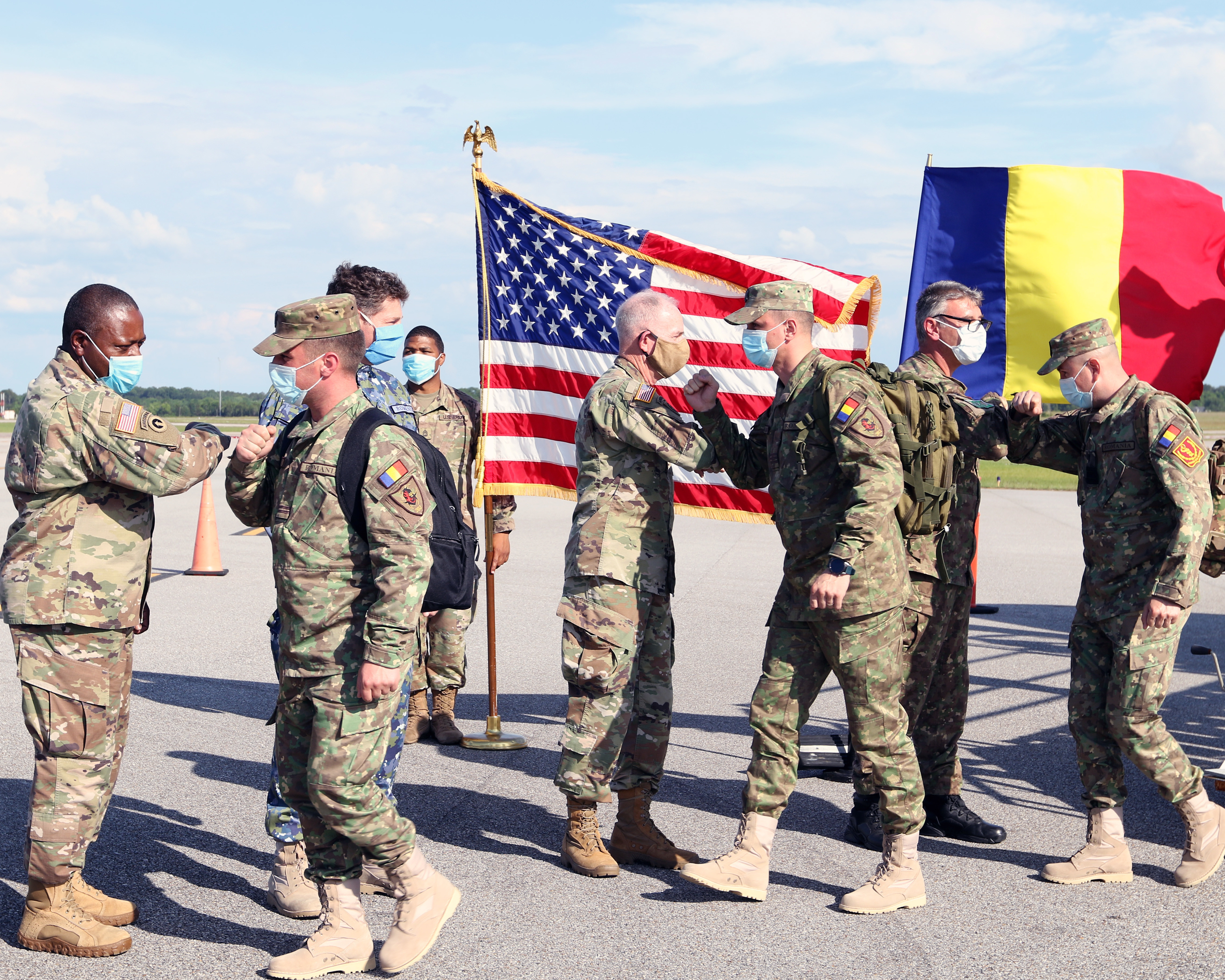
From community works like building schools, bridges, hospitals, combing the medical teams of covid-19 response in 2020, to international disaster training and readiness, Alabama National Guard has been strengthening its partnership with Romania since 1993.

Through the SPP, Alabama and Romani have achieved over 200 crucial engagements which benefited both sides of the Atlantic.


Members of the Alabama National Guard welcome a team of specialists from the Romanian Ministry of National Defense at Montgomery Aviation. May 25, 2020

©National Guard /1SG Sandra D. Lucas. 

More news on Defense cooperation: 

European multinational disaster response exercise Blonde Avalanche 2020

Romanian defense chief visits Alabama National Guard

News from:   U.S Army Europe and Africa       U.S National Guard          U.S Embassy Romania

                                             follow us:   @USEUWAffairs     

*Acknowledgment: The historical facts in this article are from U.S National Guard

The U.S Flag Day June 14

Uncommon, paramount and brave, for centuries the U.S flag has been standing as the pillars of the Human Rights and Democracy…..transcending every political thoughts and the form of governments.                     

The U.S flag not only illustrates the red, white, and the blue blended with the splendorous stars, but above that it presents and magnifies the ideal of Freedom and Liberty on the world-dimensional setting. It is the  unparalleled, first… and the final aspirations of hope.

June 13, 2018 © U.S Army

News from:   U.S. Army Garrison Bavaria              News from U.S Army Europe and Africa 

The Story of the United States Armed-Forces in Europe

Happy Birthday U.S. Army Europe


The Story of the United States Armed-Forces in Europe,

…….is the story of General George Washington’s continental Army …..and the French idealistic commander, Gen. de Lafayette.                                                                                                                                                         It is the story of greatest Army in the World, the United States Army,  who has defended Europe from long centuries ago…..until the present time in an unconditional ways. 

It is the story of the greatest partnerships of U.S-European Armed-Forces, the formation of the closest allies fighting in the same battlegrounds for keeping the light of freedom …….and humanity alive.  It is the story of U.S-European shared values….shared ideals and belief that unite us beyond the time and the geographical regions.

The story of the United States Armed Forces in Europe is the story of Freedom Defenders, …the tale of bravery….sacrifices….and heroism that project the well destined triumph, the winning of the hearts and minds.        


U.S Army Europe and its 7th Training Command

Activated first in 1943,  the 7th Army Training Command  is the largest U.S Army Training Command outside of the United States, based in Germany, Europe.   With its leading role in training the Military Forces of allied and partner nations, the 7th Army Training Command has an expanded scope that goes well beyond the NATO– covering the globe. 

The 7th Army Training Command trains how to enhance the joint multinational interoperability, it trains to maintain the high readiness in the event of land operations, it trains how to combat…….how to liberate……, how to place the lasting cornerstone that asserts and upholds the global Security and Peace in every region.  


@7thATC


Article by Catherine S. Schmidt, Editor in Chief

« Older Entries Recent Entries »