Newsletter September 2023
Dear all our September’s Newsletter is available online. Please view it on the Newsletters page or click on the image below. Have a happy, safe, and blessed autumn. We love you all, Editor in Chief.

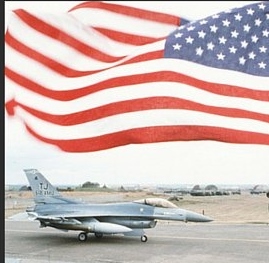
Special Edition Interview with the Spokesperson of U.S. Air Forces in Europe, Air Forces Africa (USAFE-AFAFRICA) conducted by Editor in Chief, Catherine S. Schmidt
Q 1: On April 4th Finland became the 31 member of NATO Alliance. How do you see the Future of NATO with Finland and the upcoming membership of Sweden? And how that can strengthen even more the partnership of U.S. Air Forces in Europe, Air Forces Africa (USAFEAFAFRICA) with Finland.
USAFE-AFAFRICA Spokesperson: USAFE-AFAFRICA welcomes Finland to NATO. We have worked together in the past, and look forward to working together in the future, demonstrating our collective resolve as NATO Allies. We see a strong future for NATO and anticipate continued development of our interoperability and military partnerships.
Q 2: About 40 African nations participated in the 12th annual African Air Chiefs Symposium, sponsored by U.S. Air Force Africa, in Senegal from February 27 – March 3, 2023. Can you talk about this Symposium and the importance it represented?
USAFE-AFAFRICA Spokesperson: The African Air Chiefs Symposium is a multinational security cooperation initiative intended to foster more effective military relationships between participating nations. The symposium’s goal is to improve in areas that are affecting partner nations in attendance and across Africa. The event features a diverse range of workshops as well as cultural activities. The African Air Chief Symposium is hosted each year by a different member of the Association of African Air Forces. The symposium first started in 2011 in Ethiopia and had its last in-person event in Dakar, Senegal. AACS 23 focused on various small-group sessions to foster a spirit of collaboration, a senior enlisted leader forum, and cultural events to strengthen the partnership between all nations involved.
The 38 participating nations included: Algeria, Angola, Benin, Botswana, Burundi, Cameroon, Central African Republic, Chad, Côte d’Ivoire, Democratic Republic of Congo, Egypt, Equatorial Guinea, Eswatini, Gabon, Ghana, Guinea-Bissau, Kenya, Lesotho, Libya, Madagascar, Malawi, Mauritania, Morocco, Mozambique, Niger, Nigeria, Republic of Congo, Rwanda, Senegal, Sierra Leone, Somalia, Tanzania, Togo, Tunisia, Zambia, Uganda and the United States.
Q 3: In early February this year another important military event ‘Nordic Regional Engagement’ was held in Europe with the participation of U.S. Air Forces in Europe and Air Forces Africa, NATO Allied Air Command, and most European Air Forces. Please elaborate on the objectives and the magnitude of this military engagement?
USAFE-AFAFRICA Spokesperson: Earlier this year, command senior enlisted leaders from U.S. Air Forces in Europe and Air Forces Africa, NATO Allied Air Command, the Royal Danish, Royal Norwegian, Finnish, and Swedish air forces participated in a Nordic regional engagement to Sweden, Denmark, Norway and Finland. The two-week engagement provided a platform for the CSELs to discuss Agile Combat Employment across the Nordic nations, explore multinational, professional military education exchange opportunities and discuss the operational environment in the High North. In addition to discussing strategic importance of the NATO region, the engagement focused heavily on the development of the enlisted corps, specifically the non-commissioned officers in the four nations, as well as professional military education exchanges across the allied nations and partners.
Q 4: The U.S. military and the Spanish Armed Forces have a special partnership across the entire military spectrum, from EU NAVFOR Operation Atalanta to NATO AIRCOM. Could we have your thoughts on this partnership and please discuss the Spanish Exercise Chasing Sol and the participation of the U.S. Airmen in this joint training?
USAFE-AFAFRICA Spokesperson: USAFE-AFAFRICA is proud to train with Allies and partners across Europe and Africa. Hosted by the Spanish air force, Chasing Sol is a great example of this. Members of the U.S. Air Force and U.S. Army in Zaragoza, Spain, participated in Chasing Sol from Jan. 23 to Feb. 3, 2023. The exercise was a bilateral flying training deployment between the 86th Airlift Wing and 435th Air Ground Operations Wing assigned to the U.S. Air Force, 21st Theater Sustainment Command’s 5th Quartermaster Company assigned to the U.S. Army, and 31st and 35th Tactical Airlift Wings assigned to the Spanish air force to increase readiness, responsiveness and interoperability between NATO allies. Chasing Sol, and other similar exercises, train and develop coordination between allies and partners to ensure a timely and effective response during peacetime and crisis.
Q 5: One of the greatest U.S. military accomplishments has been always in the area of Humanitarian Relief Operations worldwide in which the U.S. Air Force holds the lead. In the aftermath of the devastating earthquake in February 6th 2023 in Turkey, the U.S. Air Forces Europe and Air Forces Africa played a vital role on a large scale of Humanitarian Relief Aid Operations. Could you brief us on that?
USAFE-AFAFRICA Spokesperson: In response to the tragic earthquake in Türkiye on February 6th, the 39th Air Base Wing supported the bed-down of over 1,440 foreign military and civilian relief personnel who arrived at Incirlik Air Base for relief efforts. These personnel originated from more than 10 partner nations. Contributions from the 39th ABW also included the coordination, planning, and installation of a 100-bed field hospital in Hatay Province to help offset the 1,500-bed hospital loss as a result of the earthquakes. USAFE-AFAFRICA rapidly responded to the natural disaster with critically needed capabilities and life-saving equipment, delivering assistance to aid areas the government of Türkiye deemed most necessary. We worked in support of USAID, the government of Türkiye and our Allies and partners to provide significant relief to the victims impacted.
Additional: U.S. Air Force tankers moved to NATO’s Eastern Flank, strengthen collective defense, March 2023
Acknowledgments: Image 1: A KC-46A Pegasus from the Command’s 514th Air Mobility Wing and a KC-135 Stratotanker from the Mississipi Air National Guard’s 186th Refueling Wings refueled Polish F-16 from Powidz Air Base, Poland, March 28 2023 ©U.S Air Forces in Europe & Air Forces Africa/Air Force Reserve. The Interview is subject to Copyright Law. ©U.S. European Command/ U.S Air Forces in Europe and Air Forces in Africa (USAFE-AFAFRICA)/U.S. Army Europe and Africa /U.S Army/ U.S Air Force/ U.S Europe World Affairs.
Dear all our latest Newsletter is available online. Please view it on the Newsletters page. Have a great month of June. We love you all, Editor in Chief
U.S and Nordic States are re-strengthening defense and security cooperation to enhance interoperability between NATO allies and partner nations, and to counter the emerging challenges in the High North and the Arctic region.
On March 1st 2023, the outcome of the Trilateral Enhanced Cooperation study, initiated originally in 2021, was finalized by the endorsement of Finland, Sweden, and the United States. Hosted by the U.S European Command the event took place at the USEUCOM HQ in Stuttgart, Germany by Defense representatives of the three contracting parties.
“The security challenges in the Arctic and Baltic Sea are greater and more complex than ever before,”…….. “The finalization of this collaborative study reaffirms the importance of continuously working together to identify opportunities for strengthening our collective deterrence capabilities to counter the current and emerging threats that could impact our shared security interests in the region.” elaborated ©U.S. European Command Deputy Commander Lt. Gen. Steven Basham March 1, 2023
The finalized Trilateral Enhanced Cooperation study is another milestone in the Transatlantic partnership. And it signifies forthright the United States unwavering commitments to Europe particularly in the High North, the Baltic Sea and the Arctic region.
Acknowledgments: sources: USEUCOM. Article by Catherine S. Schmidt, Editor in Chief.
Special Edition Interview with Col. Troy V. Alexander, U.S Army NATO Commander, conducted by Editor in Chief, Catherine S. Schmidt
Q 1: U.S Army NATO is the Army’s support element for 44 NATO organizations across 81 locations in 22 countries. Can you give us a broad view into USANATO Brigade?
Col. Troy V. Alexander, U.S Army NATO Commander: Since GEN Dwight D. Eisenhower first established this organization in December 1950, our job has been to provide training, logistics and human resources to produce ready and resilient Soldiers (and families) for NATO Land Force organizations across the alliance. We have four categories of personnel based on the type of assignment.
About 80% of our formation (over 800 folks) are what we call Peacetime Establishment, or PE Soldiers, directly assigned to 38 NATO warfighting and support organizations in 20 countries. Some examples of these types of organizations include Joint Forces Command Brunssum, NATO Rapid Deployable Corps – Spain, 1st German-Netherlands Corps, the CBRN Centre of Excellence in Czechia, the Joint Warfare Centre in Stavanger, Norway, and the 2nd NATO Signal Battalion in Naples. These Soldiers work directly for their NATO chain of command filling key leader and support roles across the alliance.
We also have 70 Military Personnel Exchange Program (MPEP) and Schools of Other Nations (SONs) Soldiers at 60 locations in 12 countries. They support cooperative security program objectives to build partner nation capacity, strengthen relationships, and increase confidence and security measures across the Alliance. Our MPEP’s are exchange Soldiers between the U.S. Army and similar units in NATO militaries. Schools of Other Nations Soldiers are assigned to national level NATO military schools like those in the United States. A great example is the professional military education program taught at Ecole Militaire, in the heart of Paris.
Supporting our geographically dispersed cadre of warfighters and exchange officers are a 250 strong contingent we call National Support Element Soldiers, stationed mostly in Italy, Germany and Belgium. The primary purpose of the NSE Soldiers is to ensure PE, MPEP and SONs meet individual readiness requirements and to help ensure resources are available to meet the needs of their families, including housing, medical and quality of life. We are also currently building deployable forward area warfighter support teams at the Headquarters, to provide agile and responsive Administrative Agent support to meet any emerging readiness and combat support requirements in this dynamic and rapidly changing theater of operations.
Q 2: In early February U.S soldiers in the NATO Rapid Deployable Corps visited the Spanish Army’s 1st Military Police Battalion. What inspired this visit? And how do you describe the collaboration and the partnerships between the U.S. Armed Forces/ USANATO Brigade and Spanish military?
Col. Troy V. Alexander, U.S Army NATO Commander: Our visit to the Spanish Army’s 1st Military Police Battalion was conceived and organized by the U.S. Senior National Representative at NRDC-Spain, Col. Jerzy Zubr, who sought to strengthen bi-lateral and multi-national relationships and give U.S. Soldiers an opportunity to learn more about the battalion’s unique capabilities. Their objective was to witness the agility and dedication of Spain’s military police maneuver forces and bring that knowledge back to better integrate it into contingency response planning. The visit was an effort to strengthen bonds, and the long-standing relationship with a key strategic ally.
For more than 60 years, the United States and Spain, along with our other NATO allies, have maintained a mutual commitment to regional peace and stability. No nation can confront today’s challenges alone. As the European security environment continues to shift in response to illegal aggression and malign influence, the U.S. continues to develop interoperability and cooperative capabilities to deter aggression…or if called upon, restore the peace. This visit was another example of our deep commitment to maintaining a strong and unified Europe. Ready, capable and stronger together.
Q 3: Can you discuss the Multinational Exercise Loyal Leda 2022 and the crucial role that the U.S. Soldiers held in it?
Col. Troy V. Alexander, U.S Army NATO Commander: Exercise Loyal Leda is one of NATO’s most important annual combat readiness evaluation exercises, and our Soldiers were embedded at every echelon of the NATO command structure, serving alongside of over 700 service members from 25 NATO and partner nations at the Joint Force Training Centre (JFTC) in Bydgoszcz, Poland.
At the heart of Loyal Leda 2022 was the JFTC-led Exercise Control (EXCON) headquarters, commanding and controlling thousands of troops across Europe in an Allied Land domain campaign exercise. The exercise was based on a compelling Article 5 scenario that encompassed a wide range of modern warfare challenges, including space and cyber domains, as well as hybrid warfare.
Its successful execution would not have been possible without the tremendous support of various commands, such as Headquarters Supreme Allied Command Transformation, Supreme Headquarters Allied Powers Europe, NATO Allied Air Command, Joint Force Command Brunssum, United States Army Europe, NATO Rapid Deployable Corps Spain, U.S. Army V Corps, NATO Communications and Information Agency, U.S. Navy Reserve, numerous MODs and more. Bottomline is that Loyal Leda delivered new levels of cohesion, a center of gravity for NATO adversaries. Opportunities like this, which improve and strengthen our capabilities and partnerships, continue to reinforce why NATO is the most powerful alliance on the planet.
Q 4: U.S Army NATO Brigade hosted consolidated readiness training for Europe-based military personnel exchange soldiers, in November 2022. Announced by USANATO Brigade ‘the U.S. Army NATO Brigade provides support to 55 MPEP Soldiers at 44 locations in Belgium, France, Germany, Italy, the Netherlands, Poland and the United Kingdom’. What categories of the exercises were parts of those readiness training?
And please tell us about the main responsibilities that the U.S Army NATO Brigade has within the Allied Forces North Battalion, and the Allied Forces South Battalion?
Col. Troy V. Alexander, U.S Army NATO Commander: During the event, we focused on individual readiness training for MPEP Soldiers to ensure they met U.S. Army deployment readiness requirements. The event also gave the cadre the opportunity to exchange best practices, and work with the USA NATO headquarters staff to recommend improvements to the MPEP program. With deployment training complete, our MPEPs were once again free to work with their various partner-nation organizations to deploy and support movements without restrictions, to a variety of local, national and regional exercise events. In the short few months since our MPEP training, our Soldiers have already led the Germany Army’s 1st Airborne and 23rd Mountain Brigade’s to Alaska for Artic Training at Joint Base Elemendorf-Richardson and certified the Italy’s Garibaldi Brigade during exercise Pegaso 22-4, in preparation to join NATO’s Joint Rapid Reaction Force this year (to name a few efforts).
Our Allied Forces South Battalion and Allied Forces North Battalion are responsible for providing support to PE Soldiers and their families across Southern Europe/Eurasia and Northern/Central and Eastern Europe respectively. Most of the day-to-day execution to support PE Soldiers across the theater falls on the shoulders of these two battalions and their assigned companies. AFNorth commands four Army companies in Belgium, Germany and Poland, while AFSouth commands three Army companies in Italy and Turkey and one company in the United States. Together with the capabilities of the Brigade headquarters, this forms the National Support Element structure for USANATO.
Two Battalions, one Brigade. Steady! NATO Strong!
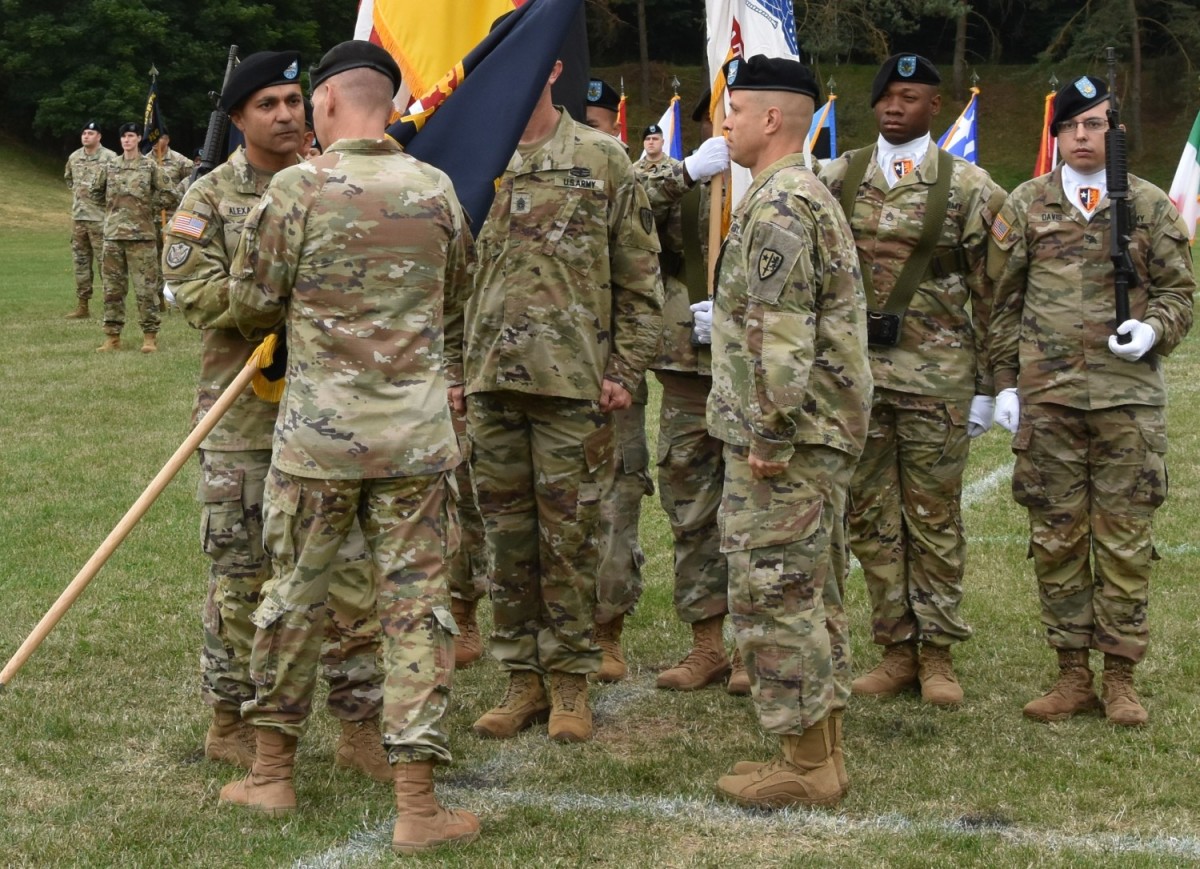
Acknowledgments: Image 1, Maj. Gen. Michael D. Wickman passes the U.S. Army NATO Brigade colors to Col. Troy V. Alexander during a change of command ceremony July 7, 2022 © Army. Interview is subject to copyright © U.S NATO Brigade/U.S Army Europe and Africa/U.S Army/ U.S Europe World Affairs.com
The National Day of Prayer is a special annual event observed on the first Thursday of every May in the United States.
Although the day was established and declared by a joint resolution of Congress and President Harry S. Truman in 1952, the history of this significant yearly event goes back to the first prayer which was held in 1774 at the request of the Continental Congress to pray for wisdom and spiritual guidance for establishing the United States of America.
“On this day, may our faiths enable us to sow the seeds of progress in our ever-changing world. Let us resolve to guide our children and grandchildren to embrace freedom for all, to see God in everyone, and to remember that no matter what differences they may have, they, just like we, will always be united by their common humanity.” Excerpt from Presidential Proclamation — National Day of Prayer, President BARACK OBAMA ©White House National Day of Prayer, 2016.
Additional: Chaplains announce plans for May ‘Spiritual Readiness Month’ events
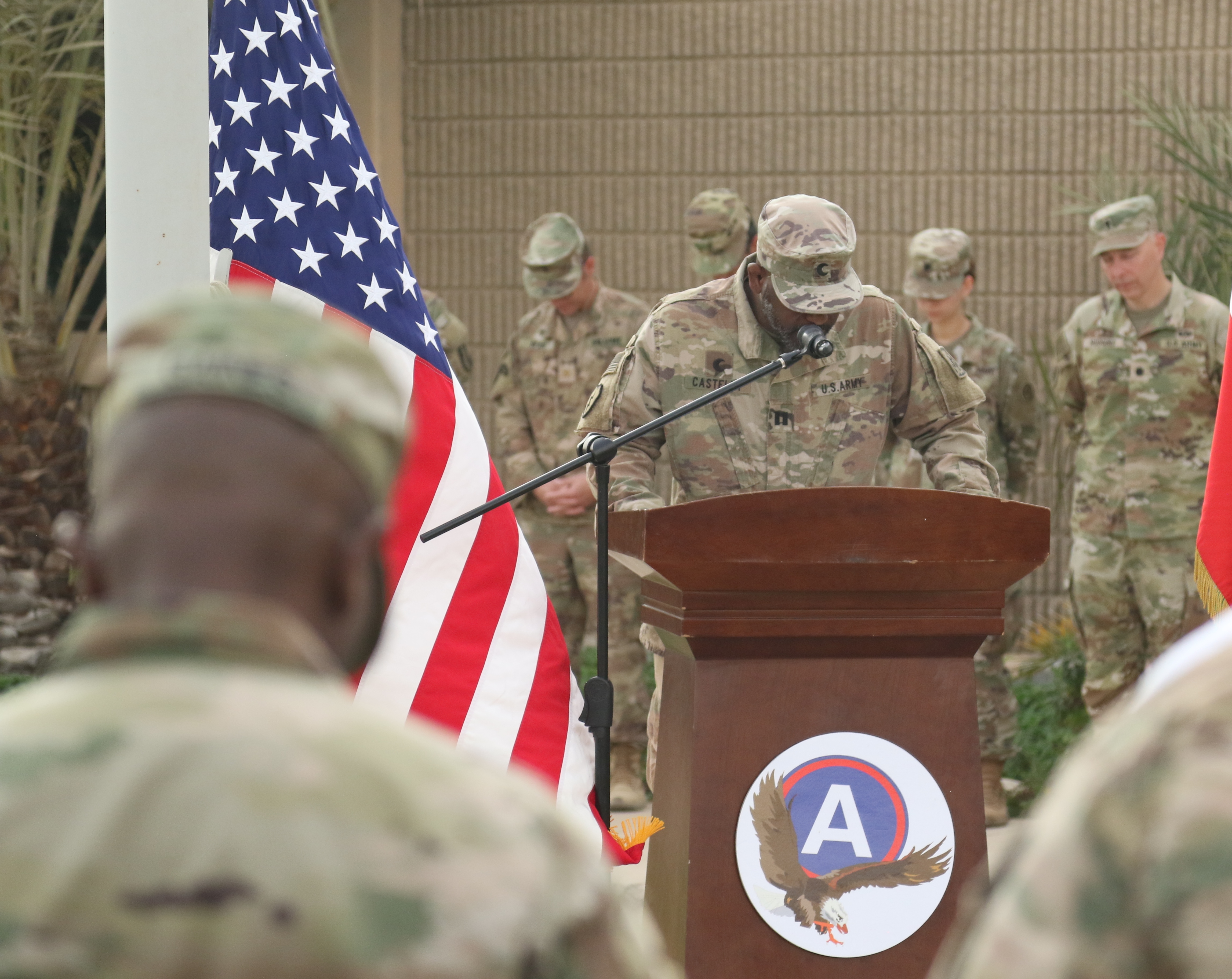
Acknowledgments: Sources: U.S Army, The White House. Image Chaplain (Maj.) Castelly prays for the command teams during the National Day of Prayer. Soldiers from various faiths joined together in prayer to strengthen their spiritual wellbeing. May 5th, 2022, ARIFJAN, KUWAIT. Photo by Capt. Joshua Sik, 135th Expeditionary Sustainment Command © DoD/U.S Army. Article by Catherine S. Schmidt, Editor in Chief.
Dear all, we have updated the U.S National Guard SPP. You can view it on the menu under U.S National Guard SPP page. Have a safe, happy and blessed weekend. Editor in Chief, Catherine S. Schmidt
Special Edition Interview with NATO Allied Maritime Command Spokesperson,
conducted by Editor in Chief, Catherine S. Schmidt
Q 1: Could you please walk us through the landscape of Allied Maritime Command (MARCOM) – the structure, the missions, and the importance of MARCOM’s Maritime Security, 360° Deterrence and Defence at Sea?
NATO Allied Maritime Command Spokesperson: NATO Allied Maritime Command (MARCOM) is the central command of all NATO’s standing maritime forces. The Commander of MARCOM is the principal maritime advisor to the Supreme Allied Commander Europe (SACEUR) and for a decade we have been the sole Maritime Component Command for the Supreme Headquarters of the Allied Powers Europe (SHAPE).
Located in Northwood, United Kingdom, MARCOM is a multinational headquarters manned by over 400 officers, petty officers and civilians from NATO countries and representatives from NATO partner nations. MARCOM’s area of responsibility ranges from the Arctic, to the North Atlantic, to the Baltic, Mediterranean and Black Seas.
There are four permanent Task Groups under its command – Standing NATO Maritime Group One and Two (SNMG1 and SNMG2) and Standing NATO Mine Countermeasures Group One and Two (SNMCMG1 and SNMCMG2). These four Maritime Groups are NATO’s integrated maritime force, made up of Allied Nations’ contributions. Under continuous full NATO operational command, these warships are assigned a variety of tasks; from compiling and maintaining a comprehensive maritime picture and situational awareness, to operational missions and vigilance activities to ensure Alliance readiness to respond if needed.
In addition, under Operation Sea Guardian, an operation that has been stood up to enhance security in the Mediterranean, MARCOM is contributing to capacity building for partner nations and conducts six focused operations each year with a specific focus on areas of interest in the Mediterranean Sea.
Under direction of the Commander, three one-star Admirals/Commodores command NATO Maritime assets. The Commander Surface Forces NATO coordinates the overall operational effort. In peacetime, they are the Commander of the Standing NATO Naval Forces. Through the NATO Shipping Centre, they directly liaise with the commercial shipping community and maritime security agencies.
Commander Submarines NATO commands submarines under NATO operational control. Commander Maritime Air NATO commands the activities of Maritime Patrol Aircraft under NATO operational control. Through Command of NATO forces, and coordination with Allied navies, MARCOM ensures NATO maintains its operational superiority at sea, protecting the Alliance. MARCOM is eternally vigilant, helping secure our world at sea.
Alongside counterparts in Land Command and Air Command, the three Joint Forces Commands ensure that NATO is ready to anticipate threats and respond to any situation in any environment. Together, they implement Deterrence and Defence in the Euro-Atlantic Area (DDA). DDA is a new concept adopted by NATO Allies in response to a myriad of complex challenges. It represents a significant breakthrough in the level of integration and planning of Allied military activities. It seeks to counter threats by providing a common framework for deterrence and defence in peace, crisis, and war.
The increased integration of national and NATO maritime plans, alongside constant coordination between national and MARCOM maritime operational centres, leads to synchronised effects, which are amplified across the seas.
This clear demonstration of Alliance cohesion, capability, and resolve seeks to deter challengers from spreading destabilization, widening disorder, or accruing decisive military advantage that would damage Euro-Atlantic security. The ‘deter and defend’ concept reflects the alliance’s defensive nature, its war prevention aims, and its commitment to a rules-based international order.
Q 2: How the naval operations and exercises between MARCOM, SNMG1 and SNMG2 are coordinated?
NATO Allied Maritime Command Spokesperson: Exercises led by MARCOM either focus on a specific area of warfare, or test NATO assets’ capacity to execute NATO plans throughout the whole spectrum of maritime operations. All the main competencies are covered by the current exercise menu, maintaining the right level of proficiency across every skillset.
They are designed to allow personnel to train in collective competencies so they achieve readiness for operations. Exercises send strong messages on Alliance capability and resolve, and they’re transformative to support the establishment of new capabilities.
For exercise coordination between MARCOM and SNMGs, there is always an Exercise Director (EXDIR) at MARCOM HQ. They have significant freedom to use Exercise Control (EXCON) structures to control how the exercise is executed, in order to set the conditions to achieve the approved objectives.
For exercise coordination between MARCOM and participating assets the procedures, staff (under the assigned Exercise Director – EXDIR) and structures are always in place to control how the exercise is executed, in order to set the conditions to achieve the approved objectives, and identify lessons and areas for improvement. The role of coordination between the teams responsible for training, experimentation, analysis and evaluation rests with the Exercise Direction as the overarching execution coordinating authority.
Exercises have value because they bring together personnel from different backgrounds and nations to learn from each other, and by training together they become more than the sum of their parts. The returns are far greater compared with exercising as a standalone nation. They also lead to increased coordination and interoperability, and the ships in the Standing NATO Forces learn to operate efficiently together. NATO Maritime exercises support DDA vigilance activities by demonstrating NATO naval forces’ interoperability and readiness in the full spectrum of naval operations, therefore supporting NATO’s collective defense.
Q 3: The multi-domain exercise of ‘Neptune Strike 22’ was executed in January 2022 in the Mediterranean Sea. How that exercise helped NATO allies and partners to enhance their integration ability at the operational level? Could you also tell us about Neptune Strike 2022.2, which took place in October last year?
NATO Allied Maritime Command Spokesperson: Neptune Strike 2022 highlights NATO’s ability to integrate the high-end maritime capabilities of a carrier strike group, ensuring high operational readiness across the Alliance and the defence and protection of all Allies.
Naval Striking and Support Forces NATO (STRIKFORNATO) and U.S. Sixth Fleet (SIXTHFLT) carried out Neptune Strike in February 2022. It was a vigilance activity exercise in the Adriatic Sea, involving missions at sea and in the air across most of Europe, supporting both Allied Joint Force Command Naples and Brunssum.
It included the long-planned transfer of command and control of the Harry S. Truman Carrier Strike Group (CSG) to the NATO Alliance – thereby demonstrating NATO’s ability to integrate the high-end maritime warfare capabilities of a carrier strike group to support the defense of the Alliance.
STRIKFORNATO led a maritime force composed of two carriers, 15 ships and approximately 90 aircraft, including forces from the Harry S. Truman CSG, the Italian Navy CAVOUR CSG, Standing NATO Maritime Group 2 and Mine Counter Measure Group 2.
Neptune Strike 22 levered the combat power of a U.S. carrier strike group, promoted interoperability with Allies and allowed operators to train on NATO networks, train to NATO procedures and become familiar with operating in the European Theatre. Overall, forces and personnel from 28 NATO countries participated in Neptune Strike.
The Supreme Headquarters Allied Powers Europe coordinated the activity, integrating NATO Allied Maritime Command and NATO Allied Air Command, while STRIKFORNATO executed command and control of Neptune Strike 22 from USS Mount Whitney (LCC 20), the SIXTHFLT and Commander STRIKFORNATO’s flagship.
In October 2022 and February 2023, the eighth and ninth phases respectively of NATO’s long-planned Project Neptune series were carried out. They were built on previous phases including Neptune Challenge in October and November 2021, Neptune Strike activities and Neptune Shield in May 2022. As in previous phases of Project Neptune, NEST 22.2 brought NATO commands throughout the Alliance together to plan and execute multi-domain real-world vigilance activities.
During Neptune Strike 22.2, SIXTHFLT conducted a transfer of authority of the George H.W. Bush CSG to STRIKFORNATO. While under STRIKFORNATO command and control, the CSG and other allied units delivered effects in Allied Joint Forces Command (JFC) Naples and JFC Brunssum joint operating areas, demonstrating Alliance cohesion and the ability to simultaneously operate throughout European waters. The latest iteration, Neptune Strike 23.1, was centered on the George H.W. Bush Carrier Strike Group, Italian aircraft carrier ITS Cavour, and Spanish amphibious assault ship ESPS Juan Carlos I, all operating in the Mediterranean Sea. Supporting units from Greece, Türkiye, Croatia, Hungary, the Netherlands, and Albania all contributed forces, underscoring cohesive alliance integration.
The Neptune Series of peacetime vigilance activities, integrating carrier strike and amphibious strike capability into NATO operations, has become routine work for this battle staff – generating effects in the maritime, air and land domains, providing deterrence and reassurance, and offering powerful opportunities for Allied interoperability.
Q 4: The Standing NATO Maritime Group 1 conducted an exercise with Finland and Sweden in the Baltic Sea in late November 2022. Stated by MARCOM: the exercise aimed to strengthen and improve the interoperability between the NATO Allies’ Maritime Forces. In your view how far that maritime goal has been achieved? And how crucial do you see the roles that Finland and Sweden have in NATO’s Maritime Forces particularly at the Baltic Sea region?
NATO Allied Maritime Command Spokesperson: The Baltic Sea region is of great strategic importance to all bordering nations. Co-operation in the area is of particular interest for NATO, as six Allied and two Partner Nations border the Baltic Sea. NATO deploys maritime forces in the Baltic Sea in order to maintain a credible and capable defensive capability in accordance with treaty obligations.
In November 2022, Standing NATO Maritime Group 1 (SNMG1) conducted maritime operations at sea and port visits with NATO partner nations Finland and Sweden to improve interoperability and understanding between maritime forces.
On Nov. 7, Finnish Navy missile boat FNS Tornio sailed with SNMG1 and participated in maneuvering, air defence, and force protection exercises. After exercising with the Finnish Navy SNMG1 met at sea with Swedish Navy corvette HSwMS Malmo. They conducted intensive training including replenishment-at-sea approaches, high-speed maneuvering, anti-surface warfare, force protection, and hoisting exercises. The last training was part of a medical evacuation exercise, during which a helicopter retrieved patients without actually landing on the ship. Medics transferred the simulated patients to the hospital facility on board HNoMS Maud, adding to a mutual understanding of tactics and methods as well as interoperability.
In late November, SNMG1 and Standing NATO Mine Countermeasures Group 1 (SNMCMG1) joined 12 nations for Finnish Navy exercise Freezing Winds in the Baltic Sea. The exercise focused on interoperability between the multinational joint forces. Twenty-three vessels and nearly 5,000 troops participated in different scenarios throughout the exercise in the Gulf of Finland and Archipelago Sea areas. This provided participants a challenging program in a broad range of maritime warfare skillsets from air defense to mine countermeasures, and submarine warfare to counter-surface measures. Regional topography and seasonal weather conditions also provided intense training opportunities from a maritime navigational perspective.
Finland, Sweden and NATO Allies share the same values and face many of the same challenges. They are two of NATO’s closest partners, with considerable military capabilities. Our forces have trained together for many years and are already fully interoperable.
Q 5: One of the MARCOM-led annual exercises is ‘Dynamic Mercy’ designated for Atlantic Ocean as well as the Baltic Sea. Could you please brief us about this exercise?
NATO Allied Maritime Command Spokesperson: Exercise Dynamic Mercy is an annual multinational maritime search and rescue (SAR) exercise held in the Atlantic or Baltic Sea. Throughout the exercise, the personnel and units from the participating countries train together, in compliance with the procedures and standards in the International Aeronautical and Maritime Search and Rescue (IAMSAR) manual.
It consists of several one-day aeronautical and maritime training scenarios.
SAR agencies (joint, maritime and air Rescue Coordination Centres), SAR units both military and civilian, a number of national authorities such as police forces, and commercial agencies all participate in the exercise. Scenarios might include helicopter at sea rescue, sea rescue and a simulated casualty clearing area, as well as simulated casualties being treated by various medical personnel.
The Dynamic Mercy exercise is an opportunity for the participating nations to develop cross-boundary and inter-regional cooperation between the Rescue Coordination Centres of NATO’s allies in the Northern region, also strengthening the coordination between NATO and regional partners.
Acknowledgments: Image 1, Ships from Harry S. Truman Carrier Strike Group (CSG) 8, Standing NATO Maritime Group (SNMG) 2, the Italian Navy Cavour-class aircraft carrier ITS Cavour (CVH 550),the Andrea Doria-class air defense destroyer ITS Andrea Doria (D 553), and the Blue Ridge-class command and control ship USS Mount Whitney (LCC 20) transit the Adriatic Sea in support of Neptune Strike 22, Feb. 2, 2022. ©DoD/U.S Navy/Mass Communication Specialist 3rd Class Tate Cardinal. Interview is subject to copyright @NATO/MARCOM/ U.S Navy/U.S Europe World Affairs.com
It has been long years since 2015 that we’ve started to campaign for Finland’s accession to NATO. And this month on April 4th the history has been just flourished. We all made it
Welcome Finland to the NATO Alliance. Editor in chief, Catherine S. Schmidt
©Ministry of Defence of Finland
Finnish Armed-Forces (U.S Europe World Affairs)
Dear all, the first edition of 2023 Newsletter has been just posted online. Please view it in the Newsletters section. Have a happy and blessed Spring, Editor in Chief Newsletter