Newsletter Announcement
Dear all the first Newsletter, April-May issue, is online under the section of Newsletters. The next one will be published in mid July. Thank you for following us. Editor in Chief
Dear all the first Newsletter, April-May issue, is online under the section of Newsletters. The next one will be published in mid July. Thank you for following us. Editor in Chief
Interview with Hon. VICE ADMIRAL JOSÉ M. NÚÑEZ TORRENTE, Operation Commander of the European Union Naval Force Somalia Operation ATALANTA, conducted by Editor in Chief.

Q 1: In December 2020 the EU NAVFOR celebrated its 12 years of Operation Atalanta. Could you please briefly outline the main achieved success of this operation in the last ten years.
Hon. VICE ADMIRAL JOSÉ M. NÚÑEZ TORRENTE: When EU member states launched Operation Atalanta in December 2008, piracy in Somali waters was increasing dramatically. Container ships plying the east-west trade routes between Europe and Asia were under constant and very real threat.
Over the past 12 years, EU NAVFOR has managed to work hand in hand not only with other multinational naval forces operating in this region, such as the US-led CMF, and NATO until 2016, which is one of our most important partners in the region, but also with the navies of independently deployed nations such as Japan and South Korea, all of which have significant maritime interests present. As a result, piracy has been drastically suppressed, with the last confirmed act of piracy taking place in April 2019.
This significant success does not mean, however, that piracy has been eradicated. Operation ATALANTA has forced criminal networks associated with piracy to diversify their activities and engage in other illicit maritime crimes, keeping piracy as a dormant activity waiting for the right opportunity to reemerge.
This extremely complicated context has led to the modifications in Operation ATALANTA´s new mandate, approved in December 2020 to enable the Operation to strengthen maritime situational awareness and counter maritime threats beyond piracy.
Q 2: In January 2021 the Operation Atlanta received its new mandate. With this new mandate how long the Operation Atalanta has been further extended in time and expanded in its mission?
Hon. VICE ADMIRAL JOSÉ M. NÚÑEZ TORRENTE: First of all, I must say that due to the success of Operation Atalanta and other international initiatives, the situation today is very different. The last incident of piracy in our area of operations was in April 2019. However, it must always emphasize that although piracy is contained, it has not been eradicated. Incidents that we can classify as “suspicious approaches” continue to occur in the area of operations and the networks that were engaged in piracy have adapted their activities to other illegal activities with less risk, retaining their ability to carry out acts of piracy, as soon as the situation is favorable to them.
This is the main reason why the mandate of Operation ATALANTA has been extended every two years, and why the last extension in December 2020 for another two years included additional tasks. Now, besides combating piracy and protecting UN World Food Program (WFP) ships and other vulnerable vessels in the area of operations, which has been and is our main mission, we also contribute to eradicating other illegal activities, such as drug trafficking, arms smuggling and illegal charcoal trafficking, activities in which these pirate networks are becoming involved due to the presence of anti-piracy naval forces in the area.
Q 3: Air assets have been recognized highly valuable in Operation Atalanta from its start. Could you please speak about the EU NAVFOR and its Air operations (Maritime Patrol Reconnaissance)?
Hon. VICE ADMIRAL JOSÉ M. NÚÑEZ TORRENTE: The air assets make an essential contribution with their specific capabilities, adding range and flexibility to the joint effort. They are mainly used to carry out Maritime Patrol Reconnaissance, as you said, and collect data which is processed by our analysts. This contributes to all aspects of Op ATALANTA and supports the full spectrum of maritime operations, especially those related to maritime security.
Additionally, we have to highlight that they can be tasked for other activities, such as SAR (Search and Rescue) missions, in response to an emergency or other situation’s demanding immediate assistance.
Fortunately, we can count not only on our own resources but also on the MPRA of our partners in the area of operations, sharing information and distributing action zones to guarantee the maximum effectiveness and efficiency of our resources.
Hon. VICE ADMIRAL JOSÉ M. NÚÑEZ TORRENTE: Since the beginning of the Operation, the number of deployed MPRA during rotations has been the same with the P-3 ORION as core asset. These assets are one of the reasons for our success, together with the deployed Air Detachments supporting their every need, every step of the way. The means and characteristics of the P-3 ORION offer us a wide range of capabilities that cover all operational requirements.
Unmanned aerial vehicles like the embarked Scan Eagle also reinforce our ISR capabilities. Therefore, we are more than pleased to continue with this outstanding asset as part of our operation and, at the same time, be able to offer its capabilities to those of our partners who may need them.
Q 4: The United States Navy has been the supporting partner for the EU NAVFOR in Operation Atalanta from the beginning of this Operation. Could you please comment on the significance of this partnership.
Hon. VICE ADMIRAL JOSÉ M. NÚÑEZ TORRENTE: As we have been already saying, trying to make the best use of the maritime assets already present in the area, EU NAVFOR ATALANTA has created a specific framework, the Cooperation Concept of Operation ATALANTA (COCOA), which provides for enhanced cooperation in our area of operations and foresees various types and durations to contribute and support the Operation. Currently, we are cooperating with the US Navy in several different frameworks.
An example could be the increased coordination between Operation EU NAVFOR ATALANTA and Combined Task Forces 150 and 151 of the Combined Maritime Forces (CMF) under command of a Vice Admiral of the US Navy and a considerable U.S. participation in means and capabilities. As already mentioned in the first question, we maintain the best of relations with both of them and we can coordinate our efforts, if necessary for maximum effectiveness and efficiency with our available assets.
On the other hand, the US Navy has regularly supported the assets of Operation ATALANTA. As an example, we could mention the Replenishment at Sea (RAS) operations that, on recent occasions, ATALANTA naval assets have carried out with the USNS Big Horn of the U.S. Sixth Fleet.
Q 5: Please tell us about the crucial role that the Spanish Naval Force is playing in the Operation Atalanta.
Hon. VICE ADMIRAL JOSÉ M. NÚÑEZ TORRENTE: Spain is fully committed to the EU’s external action. We understand that EU NAVFOR Somalia Operation ATALANTA is a tool that offers a vital service to Member States by providing maritime security and sending a message of protection, stability and support to both WFP vessels and the maritime community. At the same time, we support different institutions in Somalia, together with our two EU sister missions: EUCAP Somalia and EUTM Somalia within the EU framework of the “Integrated Approach” for Somalia, in order to reach the desired situation that will allow local authorities to take responsibility for sustainable development and security in the area, as soon as possible.
In this vein, Spain is making a great effort to lead the Operation by dedicating means and permanent personnel out of our strong commitment to those principles of security, stability and support to Somalia.
News from: VICE ADMIRAL JOSÉ M. NÚÑEZ TORRENTE
Additional news: Spain’s contributions and leadership in EU NAVFOR
Acknowledgment: Image Hon. VICE ADMIRAL JOSÉ M. NÚÑEZ TORRENTE, Operation Commander of the European Union Naval Force Somalia Operation ATALANTA, April 2021©EUNAVFOR. The Interview is subject to Copyright Law. ©EU NAVFOR/ Spanish Naval Force / U.S Naval force/ U.S Europe World Affairs.
28,000 Multinational Participants of 26 Nations’ Armed Forces from:
Albania, Bosnia and Herzegovina, Bulgaria, Canada, Croatia, Estonia, Georgia, Germany, Greece, Hungary, Italy, Kosovo, Latvia, Lithuania, Moldova, Montenegro, The Netherlands, North Macedonia, Poland, Romania, Slovenia, Spain, Turkey, Ukraine, United Kingdom, and the United States with the U.S Army, U.S Navy, U.S Air Force in: Defender Europe 2021.
There are also participants of 2,100 National Guard from: Alabama, Florida, Ohio, Tennessee, West Virginia added with 800 Army Reserve joining in this U.S-led military exercise from March until mid June when Defender 21 finalizes its activities and training.

Announced by the Army earlier this March, Defender 2021 also incorporates several linked exercises including: Swift Response, Immediate Response, Saber Guardian, Command Post Exercise.
More news: Defender Europe 2021, U.S Army Europe and Africa
Acknowledgments: Image: DEFENDER-Europe 21. Soldiers from the 82nd Airborne Division conduct static-line training with Royal Army soldiers from 2nd Battalion, Parachute Regiment. May 6, 2021 ©DoD/ U.S Army Europe and Africa/ Staff Sgt. Christopher S. Muncy. Sources: U.S Army Europe and Africa
By Catherine S. Schmidt, Editor in Chief (Copyrighted material)
Dear all, we are creating our first online Newsletter soon.
An exclusive Interview with Captain Erik Anthony, USAFE-AFAFRICA Public Affairs Spokesperson, conducted by Editor in Chief.
Sir, it’s a great pleasure to have this interview with you. Thank you very much indeed for accepting our invitation.
As the air component for both U.S. European Command and U.S. Africa Command, USAFE-AFAFRICA executes the Air Component missions with forward-based airpower and infrastructure to conduct and enable theater and global operations. USAFE-AFAFRICA directs air operations in a theater spanning three continents, covering more than 19 million square miles, and containing 104 independent states. Our mission is: “to forward project power across air, space and cyber domains, defend United States interests, demonstrate warfighting readiness, and forge partnerships in support of United States European Command and United States Africa Command Campaign objectives.”

The alignment of strategic security of the Baltic and Arctic regions is crucial to our mission. We remain committed to security throughout the Baltic and Arctic regions and a Europe that is whole, free, prosperous, and at peace. Strong relationships and continued interoperability with our allies and partners in these regions increases defense cooperation, improves the independent defense capabilities of Baltic nations and contributes to strengthening NATO’s deterrence and defense postures in the High North and on NATO’s Eastern Flank.
Through continued training, exercises and exchanges, we work alongside our allies and partners to build interoperability across all domains and bolster stability and security in the Baltics and in the Arctic. In recent years, the bonds between the U.S. and our friends in these regions have only grown stronger, and our long-standing relationships span a broad range of mutual security, economic, and global interests.
Yes. Spartan Warrior is a multinational exercise that strengthens distributed training capabilities among NATO nations. Spartan Warrior 20-9 utilized the USAFE-AFAFRICA Warfare Center’s facility and various facilities around the world. This allowed for robust simulation assets to introduce air and ground scenarios for U.S. and NATO participants. The scenarios tested the players’ abilities in countering threats while building cohesive protocol for real-world events.
Q 4: In mid-January, U.S. Air Forces in Europe and Air Forces Africa participated in a Joint All-Domain Command and Control (JADC2) with NATO allies and partners in the Black Sea region.
It’s increasingly crucial that we maintain the decision advantage and turn data into information quicker. JADC2 seeks to create agile and resilient command and control systems, capable of operating through degraded environments. The inherent flexibility and capability of our forces, bolstered by JADC2, allow us to maintain the right presence where we need it, when we need it.
B-2 Spirit aircraft from the 509th Bomb Wing, Whiteman Air Force Base, Missouri, flew the final mission of the most recent Bomber Task Force deployment on March 25, 2021. This iteration of the BTF consisted of B-2s and B-1B Lancers from the 7th Bomb Wing, Dyess Air Force Base, Texas.
The B-1s accomplished a number of historic firsts and operational goals during this deployment. They were the first bomber to deploy to Norway, land in the Arctic Circle and land in Poland where they conducted the first hot-pit refuel of a B-1 in Europe, demonstrating a critical Agile Combat Employment capability. From Norway, the B-1s flew nine sorties, integrating with ally and partner assets to include Norwegian F-35 Lightning aircraft, Swedish JAS-39 Gripens, Danish F-16 Fighting Falcons, Polish F-16s and German and Italian Eurofighter Typhoons which also supported NATO’s Baltic Air Policing. The B-1s also worked alongside U.S. special operations forces to provide critical support to Norwegian and Swedish joint terminal attack controller training.
On March 16, B-2s joined this iteration of the BTF, flying their first of four missions in the High North. The B-2s integrated with the B-1s and the Norwegian F-35s that supported NATO’s Icelandic Air Policing mission off the coast of Iceland. The aircraft carried out complex operations at night after beginning the mission from three different bases on two continents. The sortie provided an opportunity for the aircraft to advance their cross-platform data-sharing capabilities, improving 5th generation interoperability.
Strategic bomber missions enhance the readiness of the U.S. Air Force, which is necessary to respond to any potential crisis or challenge across the globe.
The U.S. and Norway collaborate closely on many global, regional and bilateral issues. Norway is an exceptional NATO ally thanks to its investment in high-end capabilities and commitment to peace and stability in Europe and the Arctic. Norway generously contributes to regional leadership and global stability, to include serving as NATO’s sentinels in the North as well as its continuing support of NATO’s Resolute Support Mission in Afghanistan and the Defeat-ISIS Coalition.
Additional: Spartan Warrior 20-9: NATO strengthens air power
Acknowledgment: Image F-15E Strike Eagle assigned to the 492nd Fighter Squadron takes off for exercise Agile Liberty at Royal Air Force Lakenheath, England, April 19, 2021. ©U.S. Air Force/Airman Jacob Wood. The Interview is subject to Copyright Law. ©U.S. European Command/ U.S Air Forces in Europe and Air Forces in Africa (USAFE-AFAFRICA)/ U.S. Army Europe and Africa /U.S Army/ U.S Air Force/ U.S Europe World Affairs.
 An exclusive Interview with the Spokesperson of U.S. European Command conducted by Editor in Chief (Part-2)
Q 4: Earlier in March in support of NATO Exercise “Dynamic Manta” and other operations, guided-missile destroyer USS Donald Cook (DDG 75) provided overall defense for the “Charles de Gaulle Carrier Strike Group” (CDG CSG) in the Mediterranean.
U.S. European Command Spokesperson: In the beginning of March, the Arleigh Burke-class guided missile destroyer USS Donald Cook (DDG 75) provided multi-warfare defense to France’s Charles de Gaulle Carrier Strike Group (CDG CSG) in the Mediterranean to support NATO Exercise Dynamic Manta and other operations. High-end integration is only facilitated through trust, sharing and cooperation. This level of operational interchangeability is unique to the NATO Alliance, and we maintain our asymmetric advantage through participation in exercises like Dynamic Manta, which takes place off the coast of Sicily.
This was not the first time the two vessels trained together. In 2019, USS Donald Cook joined CDG in exercise FANAL 19, which involved operations across all maritime warfare disciplines. In recent history, the U.S. Navy has worked side-by-side with the French Navy throughout the European and African theater of operation. In 2016, USS Ross (DDG 71) operated with CDG as part of Combined Task Force 473 in the Mediterranean. In April 2018, France, the UK and the U.S. conducted strikes into Syria in response to the Syrian regime’s use of chemical weapons against its own people. In 2020, the Ross operated with CDG in eastern Mediterranean as part of Operations Chammal and Inherent Resolve, the overarching missions against the expansion of ISIS in Iraq and Syria.
France is one of America’s oldest allies dating back to 1781 with their support in the U.S. Revolutionary War. This strong bond between our two nations reinforced our relationship and tested our joint combat skills during both World Wars. Today, this relationship continues in that great tradition of exceptional partnership between the U.S. and French militaries.
Q 5: USEUCOM maintains a crucial role in assisting allies and partner nations in the fight against Covid-19.
U.S. European Command Spokesperson: USEUCOM support to our Allies and partners during the unprecedented COVID-19 pandemic has been unwavering and resolute. A mere nine days after the World Health Organization declared COVID-19 a global pandemic on March 11, 2020, USEUCOM’s crisis and humanitarian response professionals identified and facilitated the swift transfer of $150,000 worth of medical equipment and related supplies from a military warehouse in Livorno to hospitals and clinics throughout Italy. The first Italian assistance mission on March 20, 2021 was USEUCOM’s first formal support to NATO Allies during the pandemic.
Since then, the command has programmed more than $21 million in assistance across 24 European nations, spanning the continent from Latvia to Greece and the Czech Republic to Azerbaijan. From delivering personal protective equipment and sanitizing solutions for schools and assisted-living facilities to donating medical equipment for first responders, hospitals and clinics, USEUCOM personnel supported these life-saving efforts.
In addition, USEUCOM turned to its existing relationships established through the U.S. Department of Defense’s State Partnership Program (SPP.) The SPP pairs a U.S. state’s National Guard with a partner nation in a cooperative, mutually beneficial relationship.
In November 2020, a six-member National Guard medical team from U.S. states Texas and Nebraska deployed to their SPP partner nation, the Czech Republic, to provide medical support as that nation faced threatening levels of nationwide infection.
Two SPP nations also provided COVID-19 support to the United States, as two separate teams – one from Poland, the other Romania – deployed to the U.S. to provide support in their partner states.
News from: U.S KFOR Regional Command East U.S European Command
The Interview is subject to Copyright Law. ©U.S. European Command/U.S. Army Europe and Africa /U.S Army/ U.S Europe World Affairs.
An exclusive Interview with the Spokesperson of U.S. European Command conducted by Editor in Chief (Part-1)
Sir, we are greatly honored to have the occasion of this interview with you. Thank you very much for your time.
Q 1: With your permission I would like to start with an overview of the U.S European Command, and the vital role it plays in European stability, security, and defense.
U.S. European Command Spokesperson: U.S. European Command is one of 11 U.S. Department of Defense combatant commands, each with a geographic or functional mission that provides command and control of military forces in peace and war. Headquartered in Stuttgart, Germany, USEUCOM’s mission is to execute a full range of multi-domain operations in coordination with Allies and partners to support NATO, deter Russia, assist in the defense of Israel, enable global operations and counter trans-national threats to defend the U.S. homeland and fortify Euro-Atlantic security.
USEUCOM plays an important role to meet the emergent challenges and opportunities in an era of great power competition as the U.S.’ principal military instrument in Europe. Our presence in Europe provides the U.S. military with the strategic access vital to meet our NATO commitment to respond to threats against our Allies. With both permanent and rotational forces in Europe, we are better positioned to deter current and potential threats, assure our Allies and respond in a timely way should deterrence fail.
Our rotational forces allows for more flexibility to deter threats when and where they arise, and are deliberate and defensive in nature. We have established a joint, persistent rotational presence of air, land and sea assets in the region to support our Allies and deter Russia from aggressive actions in the European theater.
An example of our rotational force posture is the Marine Corps Rotational Force – Europe, which focuses on regional engagements throughout Europe by conducting various exercises, arctic cold-weather and mountain warfare training and military-to-military engagements, which enhance overall interoperability of the U.S. Marine Corps with our Allies and partners. Another example of our rotational forces is the Joint Multinational Training Group-Ukraine (JMTG-U), which is the name given to the mission of training, equipping, training center development and doctrinal assistance to the Ukrainian armed forces.
In regards to our force posture in Europe, the U.S. Secretary of Defense recently announced that the U.S. will base an additional 500 U.S. Soldiers in Wiesbaden, Germany as part of two new units, a Multi-Domain Task Force and a Theater Fires Command. The Multi-Domain Task Force-Europe, expected to activate Sept.16, 2021, will be comprised of field artillery; composite air and missile defense; intelligence, cyberspace, electronic warfare and space; aviation and a brigade support element. The Theater Fires Command, expected to active Oct. 16, 2021, will improve readiness and multi-national interoperability by integrating joint and multi-national fires in exercises and operations, in support of U.S. Army Europe and Africa.
Additionally, the U.S. Army announced in February 2020 the reactivation of an additional corps headquarters, the historic V Corps, to be located in the United States at Fort Knox, Kentucky, with a forward command post in Europe. The V Corps Headquarters (Forward) was officially established in Poznan, Poland, Nov. 20, 2020. The primary mission of the new forward headquarters is to conduct operational planning, mission command and oversight of the rotational forces in Europe. It will also provide additional capability to support Allies and partners in the region.
U.S. European Command Spokesperson: USEUCOM is deeply rooted in the common values and strong relationships between our European partners and NATO Allies. Our commitment to the NATO alliance is ironclad. We are committed to standing side-by-side with our Allies to ensure the independence, sovereign territory and security of NATO members.
U.S. Air Force Gen. Tod D. Wolters, is dual-hatted as the USEUCOM commander and as the Supreme Allied Commander Europe (SACEUR), one of NATO’s two strategic commanders. SACEUR is the head of Allied Command Operations and, as such, is responsible to the NATO Military Committee for the conduct of all NATO operations. Though these are two separate positions with distinct responsibilities, the fact that they are led by the same commander ensures that USEUCOM and NATO priorities are closely aligned.
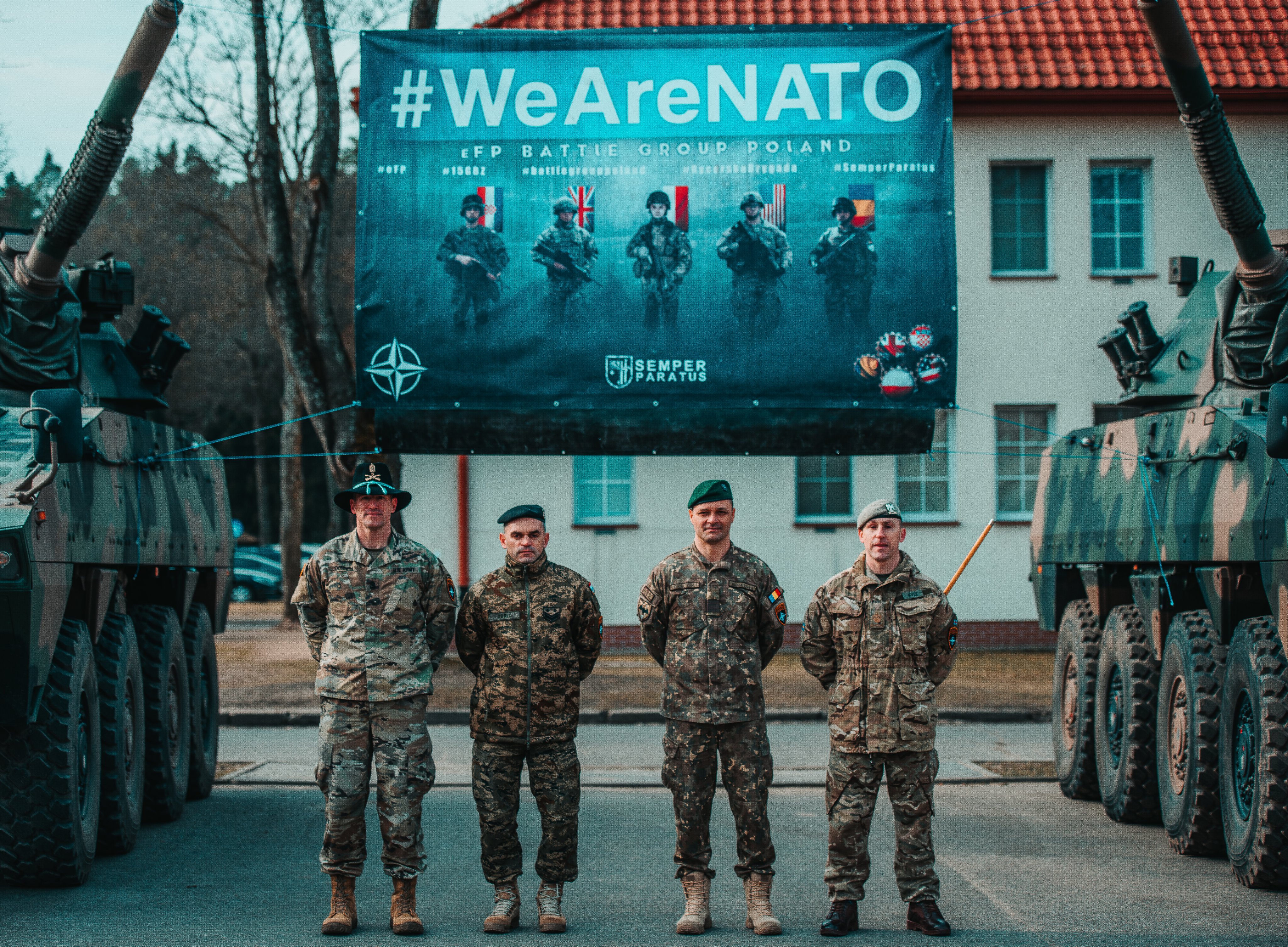 USEUCOM contributes to NATO’s success in a number of ways, and exercises are one of our more visible activities. Exercising with NATO and non-NATO partners demonstrates readiness, interoperability and capability. These exercises ultimately contribute to deterring our adversaries from threatening European security and the homeland. Additionally, NATO elements often participate in U.S.-led multinational exercises, such as Defender Europe and leaders from the two organizations regularly meet to ensure efforts are synchronized. One example of regular coordination is the yearly USEUCOM and NATO staff talks, which began in 2018 and strengthens transparency and understanding between the two organizations. Throughout 2021, we will continue to work alongside NATO and our Allies and partners to ensure the safety and security of the Euro-Atlantic.
Q 3: “DEFENDER-Europe 21” is considered as one of the most robust military exercises in the history of the U.S. Armed Forces in Europe and its NATO allies.
U.S. European Command Spokesperson: DEFENDER-Europe 21 is a U.S. Army Europe and Africa-planned and executed multinational exercise. It demonstrates USAREUR’s ability to command and control large-scale ground operations across more than a dozen nations simultaneously.
Although DEFENDER-Europe 21 is a U.S. Army exercise, it will include significant involvement of the U.S. Air Force and U.S. Navy. Key ground and maritime routes bridging Europe, Asia and Africa will be utilized. Other high-end capabilities will be exercised, such as the new U.S. Army Security Force Assistance Brigades, air and missile defense assets and the recently reactivated V Corps.
In March, equipment and personnel began moving from the United States. In April, participating units will draw Army Prepositioned Stock from sites in Germany, Italy and the Netherlands. The bulk of training activities will occur in May and the exercise will conclude in June with the redeployment of U.S.-based forces and equipment.
The exercise will build readiness and interoperability by exercising the command’s ability to integrate approximately 28,000 U.S., Allied and partner forces from 26 nations conducting concurrent exercises across more than 30 training areas.
DEFENDER-Europe 21 will demonstrate our ability to serve as a strategic security partner in the western Balkans and Black Sea regions, while sustaining our abilities in northern Europe, the Caucasus, Ukraine and Africa.
 To be continued in part-2 on Wednesday May 5th
News from: U.S KFOR Regional Command East U.S European Command
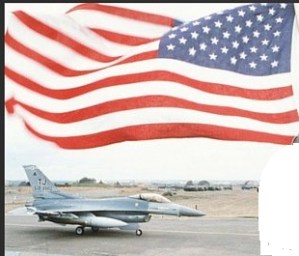
Acknowledgments: Image-1 U.S flag ©U.S Air Forces Europe-Africa 2016. Image-2 ©U.S Army Europe and Africa April 4, 2021. The Interview is subject to Copyright Law. ©U.S. European Command/U.S. Army Europe and Africa /U.S Army/ U.S Europe World Affairs.
From May 17-28 next month, the multinational joint training exercise ‘Atlantic Trident 2021’ will be held in France, marking the third military event of the Atlantic Trident. The participants are the U.S Air Force, French Air and Space Force, the Royal Air Force of the United Kingdom– presenting with them, to challenge and test, the most advanced proven fighter aircrafts in a range of air combat scenarios.
The two previous Atlantic Trident 2015 and 2017 were hosted by the U.S Air Force, and in a trilateral joint exercises with the same two major NATO airpower, France and the United Kingdom.

This year the objective of Atlantic Trident will place the focus on re-enhancing the interoperability, to level up the coalition’s operational capabilities, and to transform the readiness in all areas of airpower by applying and improving the fourth and fifth generation of the aircrafts.
Announced by the U.S Air Force (USAFE-AFAFRICA) : “Aircraft planned to participate in the exercise include U.S. Air Force F-35A Lightning II and KC-135 Stratotanker aircraft, and U.S. Marine Corps F-35B Lightning II aircraft; French Air and Space Force Rafale, KC-135 Stratotanker, A330 Phenix and E3-F Airborne Warning and Control System aircraft; and Royal Air Force F-35B Lightning, Eurofighter Typhoon, E-3D Sentry and A330 Voyager aircraft.”
News from U.S Air Force Royal Air Force French Air and Space Force
Acknowledgment: Image of the fourth and fifth-generation aircraft from the U.S. Air Force, French Air Force and Royal Air Force fly during ATLANTIC TRIDENT 17 near Joint Base Langley-Eustis, VA, April 26, 2017. By U.S. Air Force/Staff Sgt. Natasha Stannard. Sources: U.S Air Force (USAFE-AFAFRICA)
Article By Editor in Chief, Catherine S. Schmidt (Copyrighted material)
Dating back to 1993, the National Guard’s State Partnership Program (SPP) started with only 3 Baltic States. The initial objective of the program though was to improve the economic conditions and to give support and facilitate democracy in the Eastern European States devastated under communist law, the SPP developed rapidly and enlarged to a wide range of programs from economic aid to military training and joint exercises, civilian projects and humanitarians assistance.
“Our effort today to broaden and deepen our mutual relations [is] an effort that can make an important contribution to our ultimate goal of a united, free, and peaceful Europe.” elaborated Secretary of Defense Cheney in his speech at NATO Headquarters in Brussels in April 1992.¹
In the course of almost three decades the National Guard (SPP) evolved, has expanded to 82 partnerships in 6 geographic Combatant Commands with 89 nations across the world. In today’s world not only in Europe but also in diverse parts of the world fostering democracy, stability, peace and building security and defense in many ways have been intertwined and connected to the U.S National Guard State Partnership Program.
The Maryland (MD) National Guard is one of the pioneer States’ National Guard that formed the ‘SPP’ with one of the three Baltic countries, Estonia, from the beginning of the program in 1993.

MD National Guard has two State Partnership Programs (SPP) in Europe:
Both State Partnership Programs have been expanding through years. Just in 2019 the MD National Guard finalized successfully 84 projects, military exercises, events and training with its two SPP partner countries, announced by the National Guard.
“It’s all about sharing our experiences as the National Guard and building trust and confidence in the citizens of their country” expressed Army Maj. Gen. James A. Adkins, Maryland’s adjutant general. ©MD National Guard 2013
“Marylanders are always the consistent face when we need advice or assistance,” said at the seminar. “Whenever we have major challenges, we know that we can always count on our Maryland friends.” explained Estonian Ambassador Vseviov at the MD National Guard leaders assembled at the Dundalk Readiness Center Feb. 2020 ©National Guard/ Maj. Kurt Rauschenberg
At the civilian level, Maryland has additionally 10 partner cities with Estonia (Ref. US Embassy Estonia)
MD National Guard Visit Maryland
  University of Maryland
Acknowledgments: Image of U.S. Army Gen. Paul E. Funk II, United States Army Training and Doctrine Command commanding general, speaks at the graduation of Class 21-01 from the Maneuver Captains Career Course at the United States Army Maneuver Center of Excellence at Army Base in Columbus, Ga. ©175th WG – Maryland Air National Guard/Master Sgt. Christopher Schepers. April 2021
¹ ©The National Guard State Partnership Program Forging and Maintaining Effective Security Cooperation Partnerships for the 21st Century, page 14. By William B. Boehm. Published by National Guard Bureau office of Public Affairs
By Catherine S. Schmidt, Editor in Chief (Copyrighted material)
With 28,000 multinational military personnel, Defender Europe 21 is the largest multinational U.S Army Europe and Africa-led exercise to augment, enhance and fortify the U.S and NATO allies and partner nations’ interoperability and readiness. This year the exercise started in March, with the participants of U.S Air Force , U.S Navy, over 2000 U.S National Guard, 800 Army Reserve, and will continue through June.
The exercise plan for April:
Acknowledgment: the fact and video courtesy of U.S Army Europe and Africa
By Catherine S. Schmidt, Editor in Chief (Copyrighted material)
 US-Europe World Affairs