Embracing the Light: Religious Spiritual Resiliency in Kosovo By U.S Army Chaplain Maj. Daniel Leslie, NATO-KFOR Regional Command-East

In the heart of Europe lies a land steeped in history, where cultures converge and faiths intertwine. Kosovo stands amidst a history marked by conflict and turmoil. The land has borne witness to centuries of trials and tribulations, from the Ottoman Empire’s rule to the conflicts of the 20th century. Through it all, religious faith has been the cornerstone, providing solace, guidance, and a source of inner strength. It is a nation that is a testament to the indomitable spirit of its people.  Nestled between Albania and Serbia, this small yet culturally rich region has faced and continues to face its fair share of challenges. The remarkable qualities of the Kosovar people, with their unwavering faith and spiritual resiliency, shine as beacons of hope and strength. In this article, we will explore the inspiring journey of religious communities in Kosovo and how their faith has been a guiding light through even the darkest times.

While Kosovo is predominantly Muslim, it is a medley of religious diversity that exists within its borders where Islam, Christianity, and other faiths coexist harmoniously. Islam, mainly practiced by the Albanian majority, has been an integral part of Kosovar identity for centuries. Likewise, the Christian Orthodox community, primarily of Serbian descent, has deep historical roots in the region. 


The ability of Orthodox  Christianity, Catholicism, and various denominations of Islam to cohabit, creates a unique mosaic of spiritual traditions and truths. This religious mosaic is a powerful wellspring of resilience as faith transcends borders and unites people in their shared pursuit of a higher purpose. In times of crisis, faith is a binding force, connecting communities across religious lines. Houses of worship become sanctuaries where individuals seek solace, find hope, and share in the collective strength of their fellow believers. In these sacred spaces, prayers transcend language and ritual, echoing a common plea for peace and prosperity.

The late 20th century was a period of profound upheaval for Kosovo. The scars of war, displacement, and loss are still fresh in the collective memory of its people. However, amid the devastation, the religious communities of Kosovo emerged as pillars of strength. Churches and mosques, though damaged, became symbols of hope and resilience, standing tall amidst the ruins as testaments to the unwavering faith of their congregants.

The power of prayer and community played a pivotal role in sustaining the spirits of the people. Churches and mosques were not merely places of worship but sanctuaries of solace, where individuals sought refuge from the chaos of the outside world. Through collective prayer and acts of kindness, the faithful found comfort, strength, and the conviction to rebuild their lives.

In Kosovo, the younger generation plays a pivotal role in advancing religious and spiritual resiliency. They are the custodians of a future where unity transcends the scars of the past. These young leaders are forging a path toward a more harmonious society through education, open-mindedness, and a shared commitment to peace. 

Empowered by the wisdom of their elders and driven by an innate sense of justice, Kosovo’s youth are shaping a narrative of hope. They are bridging divides, dismantling stereotypes, and envisioning a Kosovo where diversity is celebrated as a source of strength.

Religious leaders from different religious communities come together, promoting compassion, empathy, and mutual respect. Through open conversations and shared experiences, they sow the seeds of harmony, demonstrating that a shared humanity binds them despite their differences. This harmonious coexistence is not without its challenges, but the commitment of leaders and believers to dialogue with mutual respect has paved the way for a more inclusive and tolerant society.

These dialogues serve as a powerful antidote to division, countering the seeds of hatred with the roots of understanding. They provide a platform for individuals to recognize the shared values that underpin their faiths: compassion, justice, and love for one’s neighbor. This interfaith harmony is not merely a symbolic gesture but a tangible force for positive change. Through joint initiatives, such as humanitarian projects, cultural exchanges, and educational programs, religious communities in Kosovo have shown that unity is possible and the key to building a prosperous and peaceful future.

The religious and spiritual resiliency story in Kosovo is a testament to the human capacity to find strength and hope in even the most difficult circumstances. The faith that courses through the veins of this land has been a guiding light, illuminating the path toward healing, reconciliation, and progress. In the face of adversity, the people of Kosovo have shown us that, regardless of our faith or background, we can find common ground in our shared humanity.

As we reflect on the journey of Kosovo, let us draw inspiration from the steadfastness of its religious communities. Let us remember that, in the darkest moments, our faith, our shared values, and our commitment to one another will lead us toward a brighter, more harmonious world. Kosovo’s story is a testament to the enduring power of faith and the resiliency of the human spirit; it is a reminder that in the most significant storms of disagreements, faith has the ability to illuminate our path forward.

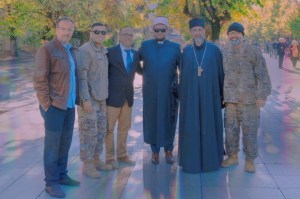
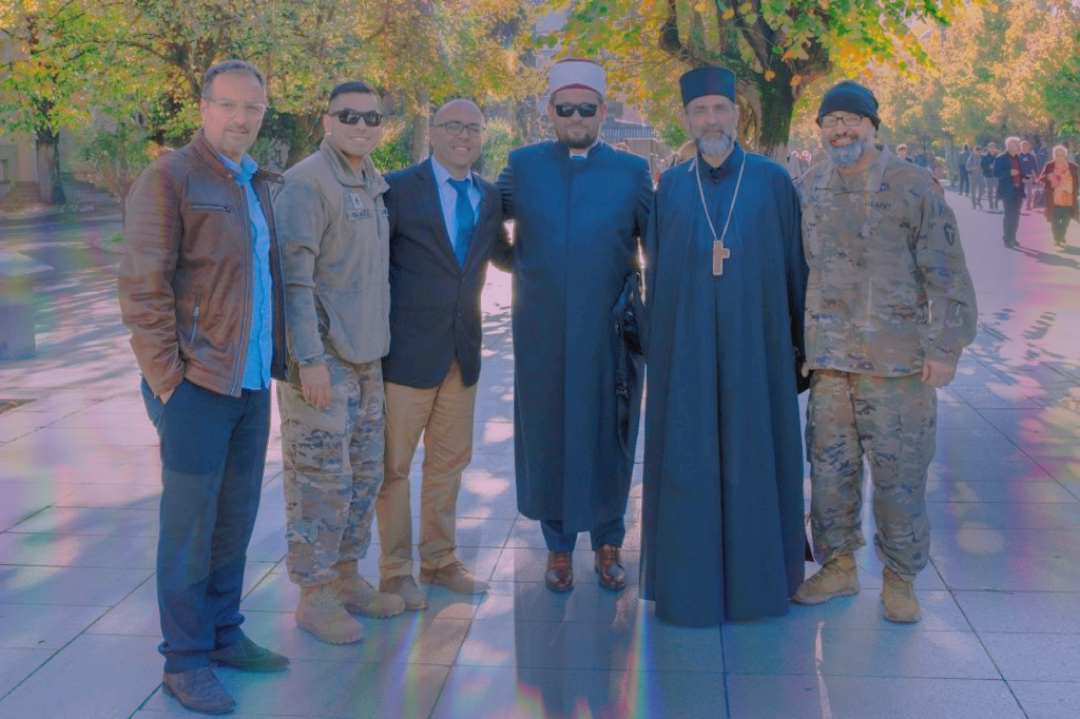
Acknowledgments: Image: first from right U.S. Army Chaplain Maj. Daniel Leslie with religious leaders of the various faiths around Kosovo, Nov. 13, 2023 © U.S Army National Guard/ U.S Army/ KFOR Regional Command-East, photo by Sgt. Gauret Stearns. The article is subject to copyright law.
SPECIAL EDITION INTERVIEW WITH U.S ARMY, National Guard in NATO-KFOR REGIONAL COMMAND EAST (SERIES-4)

Special Edition Interview with Col. Ross Walker, KFOR Regional Command-East and TF Texans Commander, conducted by Editor in Chief, Catherine S. Schmidt

Sir, we are honored to have this special occasion with you. Thank you for your time.  

Q 1: Could you give us the overview of the current U.S Army, the National Guard, and the European troops contingents posture in KFOR Regional Command East ? 

Col. Ross Walker: Regional Command-East is headquartered by the 56th Infantry Brigade Combat Team from the Texas National Guard. We are fortunate to also have with us a Maneuver Battalion element from the Texas National Guard, an Aviation Battalion from the Rhode Island National Guard, a Medical Detachment from the South Carolina National Guard, a Military Police element from the Alabama National Guard and a Public Affairs Detachment also from the Rhode Island National Guard. As Regional Command – East, we stay ready to support KFOR objectives throughout our region in order to maintain a safe and secure environment for all communities in Kosovo and freedom of movement for lines of communication throughout our area of responsibility.

Q 2: Are there any new measures that the Army, and NG have added to KFOR RC- East in the recent months to bolster NATO’s Kosovo Force? 

Col. Ross Walker:  NATO has increased KFOR and RC-East with the Operational Reserve Force and the Strategic Reserve Force to assist with ensuring we maintain a safe and secure environment for all people within Kosovo. The Operational Reserve Force is a multi-national battalion with forces from Greece, Bulgaria, Romania and Albania. The Strategic Reserve Force is led by the Princess of Wales’s Royal Regiment out the United Kingdom. We are fortunate to serve alongside service members from more than 11 nations here in Regional Command East. Our current US force contribution remains unchanged.

Q 3: The 1st Battalion, 126th Aviation Regiment, Rhode Island Army National Guard arrived in Kosovo on August 6th this summer. What specific tasks are they assigned? And how do you see the importance of their roles and contributions to KFOR mission? 

Col. Ross Walker: Our aviation task force is a great contributor to not only RC-East but all the Kosovo Force. Their major tasks are to provide troop movements, aerial resupplies and most importantly, medical evacuation wherever needed across KFOR. This task force is made of well-trained and well-equipped service members from the Rhode Island National Guard’s 1st Battalion, 126th Aviation Regiment and they have been supporting operations here in Regional Command East since June of 2023.

Q 4: The U.S Armed Forces have a traditional military culture of working with allies and partners. As the Commander of the NATO KFOR Regional Command-East, can you share with us your experience and views on the aspect of being part of multinational military NATO-led peacekeeping operation? 

Col. Ross Walker: It has been an honor and privilege to work with all contributing partners here in Kosovo. As a National Guardsman, it is rare to lead and work alongside so many partnered nations.  I have been amazed daily at their teamwork, dedication, and technical / tactical capabilities. This opportunity has been the highlight of my deployment.

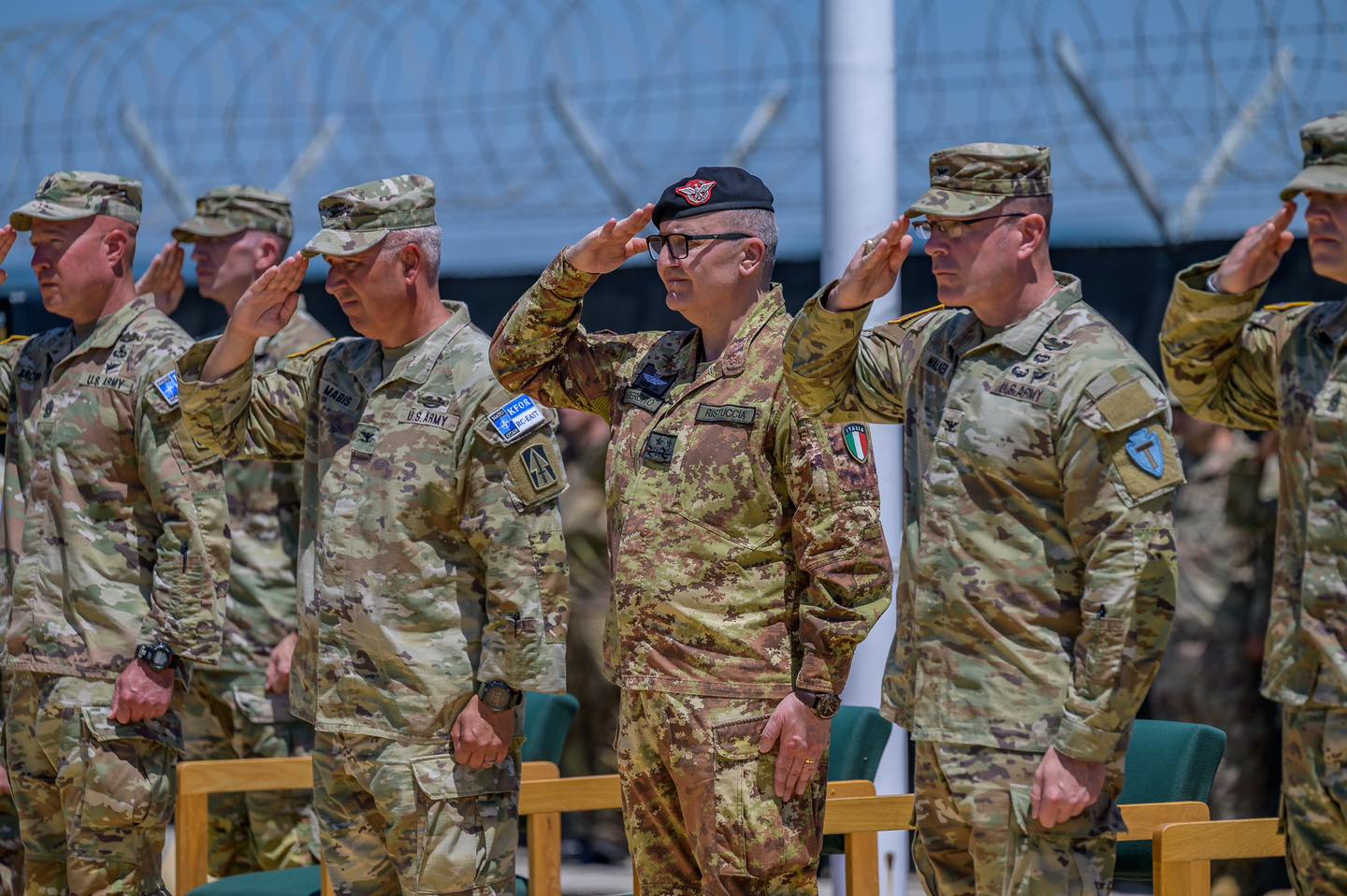
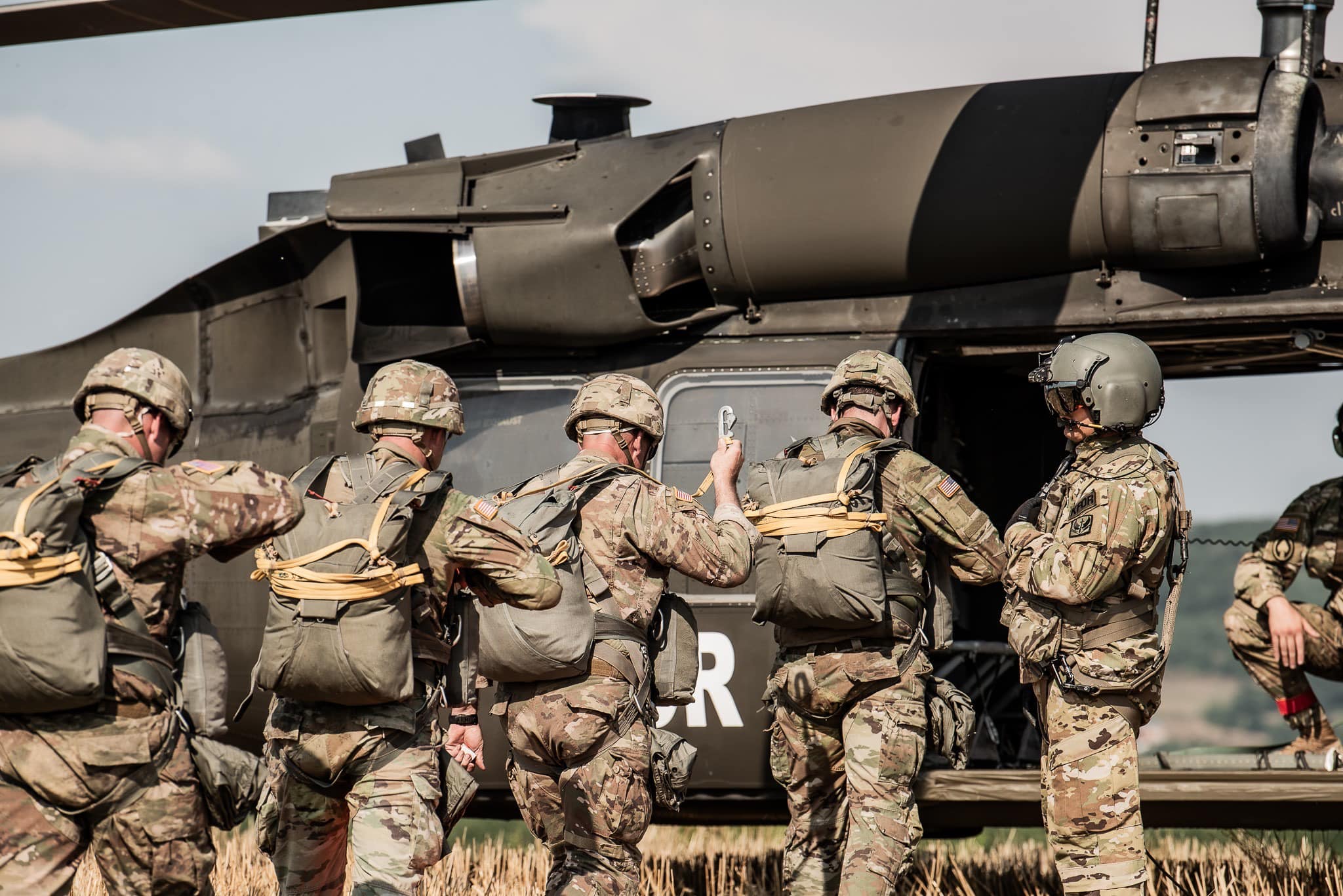
Acknowledgments: Image-1 Major General Ristuccia, Commander of the KFOR, presided over the ceremony of the Transfer of authority of KFOR Regional Command-East between Col. Chris M. Mabis and Col. Kenneth Ross Walker in an official ceremony at Camp Bondsteel, June 30.2023.Image by Sgt. Gauret Stearns ©KFOR RC East/ KFOR/ DoD.  Image-2 U.S Soldiers assigned to the KFOR Regional Command-East conducted their annual airborne training near Polac, in the South Mitrovica municipality, August 2023 ©KFOR/ KFOR  Regional Command East/ DoD/ National Guard/U.S Army. The Interview is subject to Copyright Law © KFOR  Regional Command East/U.S Army/National Guard/ KFOR/ U.S. Army Europe and Africa / U.S Army NATO/ U.S Europe World Affairs.

DEFENDER-Europe 23, the U.S Army Europe and Africa-led exercise

Defender 23, the U.S European Command directed exercise led by the U.S. Army Europe and Africa, started this year on April 22 and was concluded on June 23. The exercise had a wide range of participants of the multinational armed forces from the U.S and 26 other NATO allies and partner nations. 

Some of the main objectives:

  • To build a strategic joint forces readiness between U.S and NATO allies and partners,
  • To support NATO’s security and deterrence objectives,
  • To enhance allies and partners joint interoperability at the operational and tactical level, on the land, in the air, and at sea, 
  • Further to enhance the rapid deployment of combat-credible troops and equipment throughout European continent,
  • And to bolster the host nations’ capabilities 

Defender Europe was originally established as a defensive U.S. Army Europe and Africa-led exercise in 2020. The exercise had the largest deployment of U.S troops to Europe, with over 20,000 U.S military personnel (Army, Air Force, Navy), and 6,000 National Guard Soldiers, marking it as the one of the most significant exercise in the transatlantic history.

In 2021, the Defender Europe 21 was held with the participation of 28,000 troops from 27 NATO allies, partner nations, and the U.S.

As in the previous years, the Defender Europe 23 had as well several other major integral exercises: 

  1. Swift Response 23, from May 7 until May 20 in the Baltic Sea and Mediterranean regions. The participating armed forces in the exercise were: the Czech Republic, Estonia, France, Germany, Greece, Hungary, Italy, Latvia, the Netherlands, Poland, Portugal, Spain, United Kingdom, and the United States.
  2. Immediate Response 23, from May 22, until June 2 in the Balkan region. The participating armed forces were: Albania, Bulgaria, Croatia, Greece, Kosovo, Montenegro, North Macedonia, Slovenia, Türkiye and the United States. 
  3. Saber Guardian 23, from May 29 until June 9. The exercise took place in the Black and Baltic Sea regions. The main participating armed forces were included: Albania, Bulgaria, Belgium, France, Greece, Germany, Italy, Netherlands, Romania, Slovenia and the United States. 

Defender 23 has been the continuation of the United States commitment to Europe. As it was highlighted by the U.S Army Europe and Africa,

“The exercise demonstrates the U.S. military’s ability to rapidly deploy combat-credible troops and equipment to the European theater. This assurance of commitment to our allies deters those who would threaten the peace of Europe.” 

See more on Defender 23  

Acknowledgments,  sources:  U.S Army Europe and Africa and DoD. Article by Catherine S. Schmidt, Editor in Chief.

Special Edition Interview with the U.S Air Forces in Europe, Air Forces Africa (Series-2)


Special Edition Interview with the Spokesperson of U.S. Air Forces in Europe, Air Forces Africa (USAFE-AFAFRICA) conducted by Editor in Chief, Catherine S. Schmidt

Q 1: On April 4th Finland became the 31 member of NATO Alliance. How do you see the Future of NATO with Finland and the upcoming membership of Sweden? And how that can strengthen even more the partnership of U.S. Air Forces in Europe, Air Forces Africa (USAFEAFAFRICA) with Finland.

USAFE-AFAFRICA Spokesperson: USAFE-AFAFRICA welcomes Finland to NATO. We have worked together in the past, and look forward to working together in the future, demonstrating our collective resolve as NATO Allies. We see a strong future for NATO and anticipate continued development of our interoperability and military partnerships.

Q 2: About 40 African nations participated in the 12th annual African Air Chiefs Symposium, sponsored by U.S. Air Force Africa, in Senegal from February 27 – March 3, 2023. Can you talk about this Symposium and the importance it represented?

USAFE-AFAFRICA Spokesperson: The African Air Chiefs Symposium is a multinational security cooperation initiative intended to foster more effective military relationships between participating nations. The symposium’s goal is to improve in areas that are affecting partner nations in attendance and across Africa. The event features a diverse range of workshops as well as cultural activities. The African Air Chief Symposium is hosted each year by a different member of the Association of African Air Forces. The symposium first started in 2011 in Ethiopia and had its last in-person event in Dakar, Senegal. AACS 23 focused on various small-group sessions to foster a spirit of collaboration, a senior enlisted leader forum, and cultural events to strengthen the partnership between all nations involved.

The 38 participating nations included: Algeria, Angola, Benin, Botswana, Burundi, Cameroon, Central African Republic, Chad, Côte d’Ivoire, Democratic Republic of Congo, Egypt, Equatorial Guinea, Eswatini, Gabon, Ghana, Guinea-Bissau, Kenya, Lesotho, Libya, Madagascar, Malawi, Mauritania, Morocco, Mozambique, Niger, Nigeria, Republic of Congo, Rwanda, Senegal, Sierra Leone, Somalia, Tanzania, Togo, Tunisia, Zambia, Uganda and the United States.

Q 3: In early February this year another important military event ‘Nordic Regional Engagement’ was held in Europe with the participation of U.S. Air Forces in Europe and Air Forces Africa, NATO Allied Air Command, and most European Air Forces. Please elaborate on the objectives and the magnitude of this military engagement?

USAFE-AFAFRICA Spokesperson: Earlier this year, command senior enlisted leaders from U.S. Air Forces in Europe and Air Forces Africa, NATO Allied Air Command, the Royal Danish, Royal Norwegian, Finnish, and Swedish air forces participated in a Nordic regional engagement to Sweden, Denmark, Norway and Finland. The two-week engagement provided a platform for the CSELs to discuss Agile Combat Employment across the Nordic nations, explore multinational, professional military education exchange opportunities and discuss the operational environment in the High North. In addition to discussing strategic importance of the NATO region, the engagement focused heavily on the development of the enlisted corps, specifically the non-commissioned officers in the four nations, as well as professional military education exchanges across the allied nations and partners.

Q 4: The U.S. military and the Spanish Armed Forces have a special partnership across the entire military spectrum, from EU NAVFOR Operation Atalanta to NATO AIRCOM. Could we have your thoughts on this partnership and please discuss the Spanish Exercise Chasing Sol and the participation of the U.S. Airmen in this joint training?

USAFE-AFAFRICA Spokesperson: USAFE-AFAFRICA is proud to train with Allies and partners across Europe and Africa. Hosted by the Spanish air force, Chasing Sol is a great example of this. Members of the U.S. Air Force and U.S. Army in Zaragoza, Spain, participated in Chasing Sol from Jan. 23 to Feb. 3, 2023. The exercise was a bilateral flying training deployment between the 86th Airlift Wing and 435th Air Ground Operations Wing assigned to the U.S. Air Force, 21st Theater Sustainment Command’s 5th Quartermaster Company assigned to the U.S. Army, and 31st and 35th Tactical Airlift Wings assigned to the Spanish air force to increase readiness, responsiveness and interoperability between NATO allies. Chasing Sol, and other similar exercises, train and develop coordination between allies and partners to ensure a timely and effective response during peacetime and crisis.

Q 5: One of the greatest U.S. military accomplishments has been always in the area of Humanitarian Relief Operations worldwide in which the U.S. Air Force holds the lead. In the aftermath of the devastating earthquake in February 6th 2023 in Turkey, the U.S. Air Forces Europe and Air Forces Africa played a vital role on a large scale of Humanitarian Relief Aid Operations. Could you brief us on that?

USAFE-AFAFRICA Spokesperson: In response to the tragic earthquake in Türkiye on February 6th, the 39th Air Base Wing supported the bed-down of over 1,440 foreign military and civilian relief personnel who arrived at Incirlik Air Base for relief efforts. These personnel originated from more than 10 partner nations. Contributions from the 39th ABW also included the coordination, planning, and installation of a 100-bed field hospital in Hatay Province to help offset the 1,500-bed hospital loss as a result of the earthquakes. USAFE-AFAFRICA rapidly responded to the natural disaster with critically needed capabilities and life-saving equipment, delivering assistance to aid areas the government of Türkiye deemed most necessary. We worked in support of USAID, the government of Türkiye and our Allies and partners to provide significant relief to the victims impacted.

Additional: U.S. Air Force tankers moved to NATO’s Eastern Flank, strengthen collective defense, March 2023 

Acknowledgments: Image 1: A KC-46A Pegasus from the Command’s 514th Air Mobility Wing and a KC-135 Stratotanker from the Mississipi Air National Guard’s 186th Refueling Wings refueled Polish F-16 from Powidz Air Base, Poland, March 28 2023 ©U.S Air Forces in Europe & Air Forces Africa/Air Force Reserve. The Interview is subject to Copyright Law. ©U.S. European Command/ U.S Air Forces in Europe and Air Forces in Africa (USAFE-AFAFRICA)/U.S. Army Europe and Africa /U.S Army/ U.S Air Force/ U.S Europe World Affairs.

The United States, FINLAND AND SWEDEN RE-STRENGTHEN DEFENSE COOPERATION

U.S and Nordic States are re-strengthening defense and security cooperation to enhance interoperability between NATO allies and partner nations, and to counter the emerging challenges in the High North and the Arctic region.

On March 1st 2023, the outcome of the Trilateral Enhanced Cooperation study, initiated originally in 2021, was finalized by the endorsement of Finland, Sweden, and the United States. Hosted by the U.S European Command the event took place at the USEUCOM HQ in Stuttgart, Germany by Defense representatives of the three contracting parties.

“The security challenges in the Arctic and Baltic Sea are greater and more complex than ever before,”…….. “The finalization of this collaborative study reaffirms the importance of continuously working together to identify opportunities for strengthening our collective deterrence capabilities to counter the current and emerging threats that could impact our shared security interests in the region.” elaborated  ©U.S. European Command Deputy Commander Lt. Gen. Steven Basham March 1, 2023 

The finalized Trilateral Enhanced Cooperation study is another milestone in the Transatlantic partnership. And it signifies forthright the United States unwavering commitments to Europe particularly in the High North, the Baltic Sea and the Arctic region.

Additional: The United States with Nordic and Baltic nations (Denmark, Finland, Iceland, Norway, Sweden, Estonia, Latvia, and Lithuania) in Enhanced Partnership in Northern Europe (E-PINE)

Acknowledgments: sources: USEUCOM. Article by Catherine S. Schmidt, Editor in Chief.

Special Edition Interview with U.S Army NATO Commander (Series-1)

Special Edition Interview with Col. Troy V. Alexander, U.S Army NATO Commander, conducted by Editor in Chief, Catherine S. Schmidt

Q 1: U.S Army NATO is the Army’s support element for 44 NATO organizations across 81 locations in 22 countries. Can you give us a broad view into USANATO Brigade?

Col. Troy V. Alexander, U.S Army NATO Commander: Since GEN Dwight D. Eisenhower first established this organization in December 1950, our job has been to provide training, logistics and human resources to produce ready and resilient Soldiers (and families) for NATO Land Force organizations across the alliance. We have four categories of personnel based on the type of assignment.

About 80% of our formation (over 800 folks) are what we call Peacetime Establishment, or PE Soldiers, directly assigned to 38 NATO warfighting and support organizations in 20 countries. Some examples of these types of organizations include Joint Forces Command Brunssum, NATO Rapid Deployable Corps – Spain, 1st German-Netherlands Corps, the CBRN Centre of Excellence in Czechia, the Joint Warfare Centre in Stavanger, Norway, and the 2nd NATO Signal Battalion in Naples. These Soldiers work directly for their NATO chain of command filling key leader and support roles across the alliance.

We also have 70 Military Personnel Exchange Program (MPEP) and Schools of Other Nations (SONs) Soldiers at 60 locations in 12 countries. They support cooperative security program objectives to build partner nation capacity, strengthen relationships, and increase confidence and security measures across the Alliance.  Our MPEP’s are exchange Soldiers between the U.S. Army and similar units in NATO militaries. Schools of Other Nations Soldiers are assigned to national level NATO military schools like those in the United States.  A great example is the professional military education program taught at Ecole Militaire, in the heart of Paris. 

Supporting our geographically dispersed cadre of warfighters and exchange officers are a 250 strong contingent we call National Support Element Soldiers, stationed mostly in Italy, Germany and Belgium.  The primary purpose of the NSE Soldiers is to ensure PE, MPEP and SONs meet individual readiness requirements and to help ensure resources are available to meet the needs of their families, including housing, medical and quality of life.  We are also currently building deployable forward area warfighter support teams at the Headquarters, to provide agile and responsive Administrative Agent support to meet any emerging readiness and combat support requirements in this dynamic and rapidly changing theater of operations.  

Q 2: In early February U.S soldiers in the NATO Rapid Deployable Corps visited the Spanish Army’s 1st Military Police Battalion. What inspired this visit? And how do you describe the collaboration and the partnerships between the U.S. Armed Forces/ USANATO Brigade and Spanish military?

Col. Troy V. Alexander, U.S Army NATO Commander: Our visit to the Spanish Army’s 1st Military Police Battalion was conceived and organized by the U.S. Senior National Representative at NRDC-Spain, Col. Jerzy Zubr, who sought to strengthen bi-lateral and multi-national relationships and give U.S. Soldiers an opportunity to learn more about the battalion’s unique capabilities.  Their objective was to witness the agility and dedication of Spain’s military police maneuver forces and bring that knowledge back to better integrate it into contingency response planning. The visit was an effort to strengthen bonds, and the long-standing relationship with a key strategic ally.

For more than 60 years, the United States and Spain, along with our other NATO allies, have maintained a mutual commitment to regional peace and stability. No nation can confront today’s challenges alone.  As the European security environment continues to shift in response to illegal aggression and malign influence, the U.S. continues to develop interoperability and cooperative capabilities to deter aggression…or if called upon, restore the peace. This visit was another example of our deep commitment to maintaining a strong and unified Europe.  Ready, capable and stronger together

Q 3: Can you discuss the Multinational Exercise Loyal Leda 2022 and the crucial role that the U.S. Soldiers held in it?

Col. Troy V. Alexander, U.S Army NATO Commander: Exercise Loyal Leda is one of NATO’s most important annual combat readiness evaluation exercises, and our Soldiers were embedded at every echelon of the NATO command structure, serving alongside of over 700 service members from 25 NATO and partner nations at the Joint Force Training Centre (JFTC) in Bydgoszcz, Poland. 

At the heart of Loyal Leda 2022 was the JFTC-led Exercise Control (EXCON) headquarters, commanding and controlling thousands of troops across Europe in an Allied Land domain campaign exercise.  The exercise was based on a compelling Article 5 scenario that encompassed a wide range of modern warfare challenges, including space and cyber domains, as well as hybrid warfare.

Its successful execution would not have been possible without the tremendous support of various commands, such as Headquarters Supreme Allied Command Transformation, Supreme Headquarters Allied Powers Europe, NATO Allied Air Command, Joint Force Command Brunssum, United States Army Europe, NATO Rapid Deployable Corps Spain, U.S. Army V Corps, NATO Communications and Information Agency, U.S. Navy Reserve, numerous MODs and more. Bottomline is that Loyal Leda delivered new levels of cohesion, a center of gravity for NATO adversaries.  Opportunities like this, which improve and strengthen our capabilities and partnerships, continue to reinforce why NATO is the most powerful alliance on the planet.

Q 4: U.S Army NATO Brigade hosted consolidated readiness training for Europe-based military personnel exchange soldiers, in November 2022. Announced by USANATO Brigade ‘the U.S. Army NATO Brigade provides support to 55 MPEP Soldiers at 44 locations in Belgium, France, Germany, Italy, the Netherlands, Poland and the United Kingdom’. What categories of the exercises were parts of those readiness training?

And please tell us about the main responsibilities that the U.S Army NATO Brigade has within the Allied Forces North Battalion, and the Allied Forces South Battalion?

Col. Troy V. Alexander, U.S Army NATO Commander: During the event, we focused on individual readiness training for MPEP Soldiers to ensure they met U.S. Army deployment readiness requirements.  The event also gave the cadre the opportunity to exchange best practices, and work with the USA NATO headquarters staff to recommend improvements to the MPEP program.  With deployment training complete, our MPEPs were once again free to work with their various partner-nation organizations to deploy and support movements without restrictions, to a variety of local, national and regional exercise events. In the short few months since our MPEP training, our Soldiers have already led the Germany Army’s 1st Airborne and 23rd Mountain Brigade’s to Alaska for Artic Training at Joint Base Elemendorf-Richardson and certified the Italy’s Garibaldi Brigade during exercise Pegaso 22-4, in preparation to join NATO’s Joint Rapid Reaction Force this year (to name a few efforts). 

Our Allied Forces South Battalion and Allied Forces North Battalion are responsible for providing support to PE Soldiers and their families across Southern Europe/Eurasia and Northern/Central and Eastern Europe respectively. Most of the day-to-day execution to support PE Soldiers across the theater falls on the shoulders of these two battalions and their assigned companies. AFNorth commands four Army companies in Belgium, Germany and Poland, while AFSouth commands three Army companies in Italy and Turkey and one company in the United States.  Together with the capabilities of the Brigade headquarters, this forms the National Support Element structure for USANATO. 

Two Battalions, one Brigade. Steady! NATO Strong! 

Acknowledgments: Image 1, Maj. Gen. Michael D. Wickman passes the U.S. Army NATO Brigade colors to Col. Troy V. Alexander during a change of command ceremony July 7, 2022 © Army.  Interview is subject to copyright © U.S NATO Brigade/U.S Army Europe and Africa/U.S Army/ U.S Europe World Affairs.com 

The National Day of Prayer in the United States 2023

The National Day of Prayer is a special annual event observed on the first Thursday of every May in the United States.

Although the day was established and declared by a joint resolution of Congress and President Harry S. Truman in 1952, the history of this significant yearly event goes back to the first prayer which was held in 1774 at the request of the Continental Congress to pray for wisdom and spiritual guidance for establishing the United States of America.

“On this day, may our faiths enable us to sow the seeds of progress in our ever-changing world.  Let us resolve to guide our children and grandchildren to embrace freedom for all, to see God in everyone, and to remember that no matter what differences they may have, they, just like we, will always be united by their common humanity.”  Excerpt from Presidential Proclamation — National Day of Prayer, President BARACK OBAMA ©White House National Day of Prayer, 2016.


Additional: Chaplains announce plans for May ‘Spiritual Readiness Month’ events


Acknowledgments: Sources: U.S Army, The White House. Image Chaplain (Maj.) Castelly prays for the command teams during the National Day of Prayer. Soldiers from various faiths joined together in prayer to strengthen their spiritual wellbeing. May 5th, 2022, ARIFJAN, KUWAIT. Photo by Capt. Joshua Sik, 135th Expeditionary Sustainment Command © DoD/U.S Army. Article by Catherine S. Schmidt, Editor in Chief.

« Older Entries Recent Entries »