Special Edition Interview with NATO Allied Maritime Command (SERIES-1)

Special Edition Interview with NATO Allied Maritime Command Spokesperson,    conducted by Editor in Chief, Catherine S. Schmidt
Q 1: Could you please walk us through the landscape of Allied Maritime Command (MARCOM) – the structure, the missions, and the importance of MARCOM’s Maritime Security, 360° Deterrence and Defence at Sea?

NATO Allied Maritime Command Spokesperson: NATO Allied Maritime Command (MARCOM) is the central command of all NATO’s standing maritime forces. The Commander of MARCOM is the principal maritime advisor to the Supreme Allied Commander Europe (SACEUR) and for a decade we have been the sole Maritime Component Command for the Supreme Headquarters of the Allied Powers Europe (SHAPE).

Located in Northwood, United Kingdom, MARCOM is a multinational headquarters manned by over 400 officers, petty officers and civilians from NATO countries and representatives from NATO partner nations.  MARCOM’s area of responsibility ranges from the Arctic, to the North Atlantic, to the Baltic, Mediterranean and Black Seas.

There are four permanent Task Groups under its command – Standing NATO Maritime Group One and Two (SNMG1 and SNMG2) and Standing NATO Mine Countermeasures Group One and Two (SNMCMG1 and SNMCMG2). These four Maritime Groups are NATO’s integrated maritime force, made up of Allied Nations’ contributions. Under continuous full NATO operational command, these warships are assigned a variety of tasks; from compiling and maintaining a comprehensive maritime picture and situational awareness, to operational missions and vigilance activities to ensure Alliance readiness to respond if needed.

In addition, under Operation Sea Guardian, an operation that has been stood up to enhance security in the Mediterranean, MARCOM is contributing to capacity building for partner nations and conducts six focused operations each year with a specific focus on areas of interest in the Mediterranean Sea.

Under direction of the Commander, three one-star Admirals/Commodores command NATO Maritime assets. The Commander Surface Forces NATO coordinates the overall operational effort. In peacetime, they are the Commander of the Standing NATO Naval Forces. Through the NATO Shipping Centre, they directly liaise with the commercial shipping community and maritime security agencies.

Commander Submarines NATO commands submarines under NATO operational control. Commander Maritime Air NATO commands the activities of Maritime Patrol Aircraft under NATO operational control. Through Command of NATO forces, and coordination with Allied navies, MARCOM ensures NATO maintains its operational superiority at sea, protecting the Alliance. MARCOM is eternally vigilant, helping secure our world at sea.

Alongside counterparts in Land Command and Air Command, the three Joint Forces Commands ensure that NATO is ready to anticipate threats and respond to any situation in any environment. Together, they implement Deterrence and Defence in the Euro-Atlantic Area (DDA).  DDA is a new concept adopted by NATO Allies in response to a myriad of complex challenges. It represents a significant breakthrough in the level of integration and planning of Allied military activities. It seeks to counter threats by providing a common framework for deterrence and defence in peace, crisis, and war.

The increased integration of national and NATO maritime plans, alongside constant coordination between national and MARCOM maritime operational centres, leads to synchronised effects, which are amplified across the seas.

This clear demonstration of Alliance cohesion, capability, and resolve seeks to deter challengers from spreading destabilization, widening disorder, or accruing decisive military advantage that would damage Euro-Atlantic security. The ‘deter and defend’ concept reflects the alliance’s defensive nature, its war prevention aims, and its commitment to a rules-based international order.

Q 2: How the naval operations and exercises between MARCOM, SNMG1 and SNMG2 are coordinated?

NATO Allied Maritime Command Spokesperson: Exercises led by MARCOM either focus on a specific area of warfare, or test NATO assets’ capacity to execute NATO plans throughout the whole spectrum of maritime operations. All the main competencies are covered by the current exercise menu, maintaining the right level of proficiency across every skillset.

They are designed to allow personnel to train in collective competencies so they achieve readiness for operations. Exercises send strong messages on Alliance capability and resolve, and they’re transformative to support the establishment of new capabilities.

For exercise coordination between MARCOM and SNMGs, there is always an Exercise Director (EXDIR) at MARCOM HQ. They have significant freedom to use Exercise Control (EXCON) structures to control how the exercise is executed, in order to set the conditions to achieve the approved objectives.

For exercise coordination between MARCOM and participating assets the procedures, staff (under the assigned Exercise Director – EXDIR) and structures are always in place to control how the exercise is executed, in order to set the conditions to achieve the approved objectives, and identify lessons and areas for improvement. The role of coordination between the teams responsible for training, experimentation, analysis and evaluation rests with the Exercise Direction as the overarching execution coordinating authority.

Exercises have value because they bring together personnel from different backgrounds and nations to learn from each other, and by training together they become more than the sum of their parts. The returns are far greater compared with exercising as a standalone nation. They also lead to increased coordination and interoperability, and the ships in the Standing NATO Forces learn to operate efficiently together. NATO Maritime exercises support DDA vigilance activities by demonstrating NATO naval forces’ interoperability and readiness in the full spectrum of naval operations, therefore supporting NATO’s collective defense.

Q 3: The multi-domain exercise of ‘Neptune Strike 22’ was executed in January 2022 in the Mediterranean Sea. How that exercise helped NATO allies and partners to enhance their integration ability at the operational level? Could you also tell us about Neptune Strike 2022.2, which took place in October last year?

NATO Allied Maritime Command Spokesperson: Neptune Strike 2022 highlights NATO’s ability to integrate the high-end maritime capabilities of a carrier strike group, ensuring high operational readiness across the Alliance and the defence and protection of all Allies.

Naval Striking and Support Forces NATO (STRIKFORNATO) and U.S. Sixth Fleet (SIXTHFLT) carried out Neptune Strike in February 2022. It was a vigilance activity exercise in the Adriatic Sea, involving missions at sea and in the air across most of Europe, supporting both Allied Joint Force Command Naples and Brunssum.

It included the long-planned transfer of command and control of the Harry S. Truman Carrier Strike Group (CSG) to the NATO Alliance – thereby demonstrating NATO’s ability to integrate the high-end maritime warfare capabilities of a carrier strike group to support the defense of the Alliance.

STRIKFORNATO led a maritime force composed of two carriers, 15 ships and approximately 90 aircraft, including forces from the Harry S. Truman CSG, the Italian Navy CAVOUR CSG, Standing NATO Maritime Group 2 and Mine Counter Measure Group 2.

Neptune Strike 22 levered the combat power of a U.S. carrier strike group, promoted interoperability with Allies and allowed operators to train on NATO networks, train to NATO procedures and become familiar with operating in the European Theatre. Overall, forces and personnel from 28 NATO countries participated in Neptune Strike. 

The Supreme Headquarters Allied Powers Europe coordinated the activity, integrating NATO Allied Maritime Command and NATO Allied Air Command, while STRIKFORNATO executed command and control of Neptune Strike 22 from USS Mount Whitney (LCC 20), the SIXTHFLT and Commander STRIKFORNATO’s flagship.

In October 2022 and February 2023, the eighth and ninth phases respectively of NATO’s long-planned Project Neptune series were carried out. They were built on previous phases including Neptune Challenge in October and November 2021, Neptune Strike activities and Neptune Shield in May 2022. As in previous phases of Project Neptune, NEST 22.2 brought NATO commands throughout the Alliance together to plan and execute multi-domain real-world vigilance activities.

During Neptune Strike 22.2, SIXTHFLT conducted a transfer of authority of the George H.W. Bush CSG to STRIKFORNATO. While under STRIKFORNATO command and control, the CSG and other allied units delivered effects in Allied Joint Forces Command (JFC) Naples and JFC Brunssum joint operating areas, demonstrating Alliance cohesion and the ability to simultaneously operate throughout European waters. The latest iteration, Neptune Strike 23.1, was centered on the George H.W. Bush Carrier Strike Group, Italian aircraft carrier ITS Cavour, and Spanish amphibious assault ship ESPS Juan Carlos I, all operating in the Mediterranean Sea. Supporting units from Greece, Türkiye, Croatia, Hungary, the Netherlands, and Albania all contributed forces, underscoring cohesive alliance integration.

The Neptune Series of peacetime vigilance activities, integrating carrier strike and amphibious strike capability into NATO operations, has become routine work for this battle staff – generating effects in the maritime, air and land domains, providing deterrence and reassurance, and offering powerful opportunities for Allied interoperability.

Q 4: The Standing NATO Maritime Group 1 conducted an exercise with Finland and Sweden in the Baltic Sea in late November 2022. Stated by MARCOM: the exercise aimed to strengthen and improve the interoperability between the NATO Allies’ Maritime Forces. In your view how far that maritime goal has been achieved? And how crucial do you see the roles that Finland and Sweden have in NATO’s Maritime Forces particularly at the Baltic Sea region?

NATO Allied Maritime Command Spokesperson: The Baltic Sea region is of great strategic importance to all bordering nations. Co-operation in the area is of particular interest for NATO, as six Allied and two Partner Nations border the Baltic Sea. NATO deploys maritime forces in the Baltic Sea in order to maintain a credible and capable defensive capability in accordance with treaty obligations.

In November 2022, Standing NATO Maritime Group 1 (SNMG1) conducted maritime operations at sea and port visits with NATO partner nations Finland and Sweden to improve interoperability and understanding between maritime forces.

On Nov. 7, Finnish Navy missile boat FNS Tornio sailed with SNMG1 and participated in maneuvering, air defence, and force protection exercises. After exercising with the Finnish Navy SNMG1 met at sea with Swedish Navy corvette HSwMS Malmo. They conducted intensive training including replenishment-at-sea approaches, high-speed maneuvering, anti-surface warfare, force protection, and hoisting exercises. The last training was part of a medical evacuation exercise, during which a helicopter retrieved patients without actually landing on the ship. Medics transferred the simulated patients to the hospital facility on board HNoMS Maud, adding to a mutual understanding of tactics and methods as well as interoperability.

In late November, SNMG1 and Standing NATO Mine Countermeasures Group 1 (SNMCMG1) joined 12 nations for Finnish Navy exercise Freezing Winds in the Baltic Sea. The exercise focused on interoperability between the multinational joint forces. Twenty-three vessels and nearly 5,000 troops participated in different scenarios throughout the exercise in the Gulf of Finland and Archipelago Sea areas. This provided participants a challenging program in a broad range of maritime warfare skillsets from air defense to mine countermeasures, and submarine warfare to counter-surface measures. Regional topography and seasonal weather conditions also provided intense training opportunities from a maritime navigational perspective.

Finland, Sweden and NATO Allies share the same values and face many of the same challenges. They are two of NATO’s closest partners, with considerable military capabilities. Our forces have trained together for many years and are already fully interoperable.

Q 5: One of the MARCOM-led annual exercises is ‘Dynamic Mercy’ designated for Atlantic Ocean as well as the Baltic Sea. Could you please brief us about this exercise?

NATO Allied Maritime Command Spokesperson: Exercise Dynamic Mercy is an annual multinational maritime search and rescue (SAR) exercise held in the Atlantic or Baltic Sea. Throughout the exercise, the personnel and units from the participating countries train together, in compliance with the procedures and standards in the International Aeronautical and Maritime Search and Rescue (IAMSAR) manual.

It consists of several one-day aeronautical and maritime training scenarios.
SAR agencies (joint, maritime and air Rescue Coordination Centres), SAR units both military and civilian, a number of national authorities such as police forces, and commercial agencies all participate in the exercise. Scenarios might include helicopter at sea rescue, sea rescue and a simulated casualty clearing area, as well as simulated casualties being treated by various medical personnel.

The Dynamic Mercy exercise is an opportunity for the participating nations to develop cross-boundary and inter-regional cooperation between the Rescue Coordination Centres of NATO’s allies in the Northern region, also strengthening the coordination between NATO and regional partners.

Acknowledgments: Image 1, Ships from Harry S. Truman Carrier Strike Group (CSG) 8, Standing NATO Maritime Group (SNMG) 2, the Italian Navy Cavour-class aircraft carrier ITS Cavour (CVH 550),the Andrea Doria-class air defense destroyer ITS Andrea Doria (D 553), and the Blue Ridge-class command and control ship USS Mount Whitney (LCC 20) transit the Adriatic Sea in support of Neptune Strike 22, Feb. 2, 2022. ©DoD/U.S Navy/Mass Communication Specialist 3rd Class Tate Cardinal. Interview is subject to copyright @NATO/MARCOM/ U.S Navy/U.S Europe World Affairs.com

Welcome Finland to the NATO Alliance

It has been long years since 2015 that we’ve started to campaign for Finland’s accession to NATO. And this month on April 4th the history has been just flourished.  We all made it

Welcome Finland to the NATO Alliance. Editor in chief, Catherine S. Schmidt 

©Ministry of Defence of Finland

Finnish  Armed-Forces  (U.S Europe World Affairs)

Finland’s World Affairs (U.S Europe World Affairs)


News from Ministry for Foreign Affairs of Finland

U.S NATIONAL GUARD AND ITS STATE PARTNERSHIP PROGRAM-6 Minnesota National Guard

With over 100 partner-countries in the State Partnership Program (SPP) the U.S  National Guard has one of the most extensive cooperation and partnerships of the U.S armed forces with the entire world. 

The State Partnership Program (SPP) engages not only in military capacity building and modernization to support its host nations but also facilitates wide range of economic and social development programs. The SPP simultaneously supports NATO members and partner nations by various programs, training and exercises.

Minnesota National Guard and Croatia have been partners through ‘SPP’  since 1996 with many ongoing active projects like the recent aviation training from 2021.  

“The Croatian and Minnesota aviation teams have spent about 160 hours of familiarization on technical inspections, flight crew tasks, maintenance shop management, standard operating procedures, and aircrew training program development.” announced by the National Guard

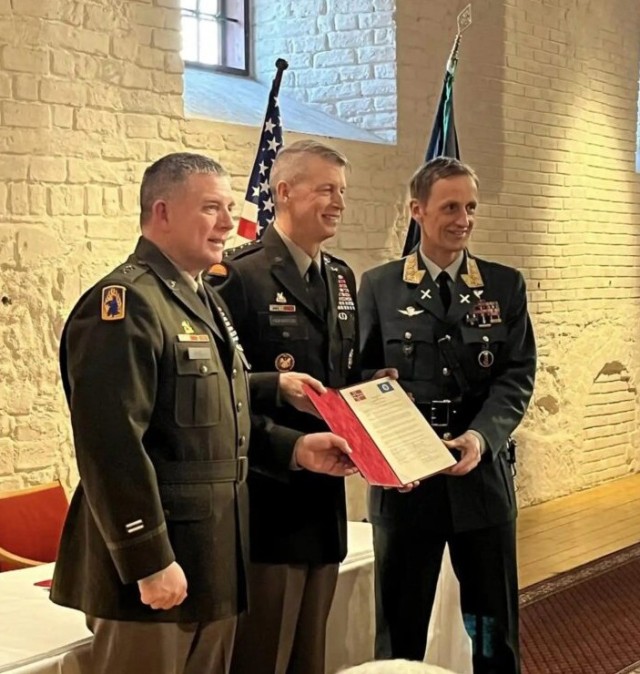
  With so much to share and build upon, on February 15, 2023 after five decades of close defense and security cooperation, Minnesota National Guard and Norway singed the State Partnership Program in an official ceremony in Trondheim, Norway. 

But this was not the beginning, in fact the close partnership between Minnesota and Norway dates back to over the past half century. Minnesota and Norway enjoyed 50 years of military partnership in the wide ranging NOREX program.

“Being able to execute this mission and strengthen bonds between our two countries was a very special experience,”………“We started the exercise off as partners and allies but left it as something more — true friends.”   highlighted in the 49th troops exchange Minnesota National Guard Army Maj. Tracy Mankowski, in charge of the American contingent that traveled to Norway for NOREX 22.  April 19, 2022 ©Minnesota National Guard Public Affairs 

In State Partnership Program Minnesota National Guard and Norway Armed Forces will have the opportunity to strengthen their continued partnership in the far more broader scope.

“The U.S.-Norwegian Reciprocal Troop Exchange, or NOREX, was already the world’s longest-running military exchange partnership,” 

“Today signals an even deeper relationship, built on a mutual commitment to global security, economic cooperation, shared democratic values, and cultural exchange.”   elaborated Army Gen. Daniel Hokanson, Chief of National Guard Bureau in the signing ceremony of SPP, February 2023 ©National Guard Bureau 

Acknowledgments: Image- Gen. Eirik Kristoffersen, chief of Defence of Norway; Army Gen. Daniel R. Hokanson, chief of the National Guard Bureau; and Army Maj. Gen. Shawn Manke, Minnesota National Guard’s adjutant general Feb. 15, 2023 ©Army/National Guard.  Sources: U.S. European Command public affairs, Department of Defense, Minnesota National Guard/ National Guard Bureau/ Master Sgt. Jim Greenhill/Army Sgt. 1st Class Zach Sheely/ Army Capt. Jodine Eells, Minnesota National Guard Public Affairs. Article by Editor in Chief, Catherine S. Schmidt.

U.S. Armed Forces in Multinational Exercise Arctic Forge 23

The U.S and European armed forces are joining in one of the largest multinational exercise, Arctic Forge 23, to demonstrate their shared capabilities and the rapid deployment of combat-credible forces.

The Arctic Forge 23 aims to enhance the joint operational strategies and the modernization of winter warfare and logistics in support of NATO in the north. It is charted to converge in Finland’s Defense Exercise North, and the Exercise Joint Viking in Norway.

Launched in February 16th, the Arctic Forge 23 is a U.S. Army Europe and Africa-led exercise that continues through March 17th. The exercise is the U.S. Army’s Arctic strategy concept in the cold climate and high altitude on building capabilities and cooperation with the Nordic, and NATO allies and partner states for security and defense in the Arctic region. 

The participants from U.S Army are the 11th Airborne Division from Alaska, the 10th Mountain Division, and Virginia Army National Guard to join ‘Defense Exercise North’ with Finland. 

The members of II Marine Expeditionary Force, the U.S Army, and the military personnel from Denmark, Germany, the Netherlands, Norway, and the United Kingdom to take part in ‘Exercise Joint Viking’ in Norway.

Stay tuned for more updates with: U.S Army Europe and Africa 

Acknowledgments: Sources: U.S. Army Europe and Africa, U.S. European Command Public Affairs. Arctic Forge 23 Logo ©U.S. Army Europe and Africa. Article by Editor in Chief, Catherine S. Schmidt   
Special Edition interview with the European Union Naval Force in Operation Atalanta (Series-5)

An Exclusive interview with Major Victor Gallardo (Spanish Army) – Spokesperson and Chief of EU NAVFOR Operation Atalanta Media Branch,   conducted by Editor in Chief, Catherine S. Schmidt

It is a great honor to have you with us in this interview, Sir. Thank you for accepting the invitation. 

Q 1: The European Naval Forces – Operation Atalanta has been implementing continuously series of trainings and maritime capacity building with African partners. Could you speak about some of these recent maritime activities in coordination with the European Union Capacity Building Mission in Somalia (EUCAP)?

First, I would like to thank you for the opportunity given to me by such an outstanding News Media to make EU NAVFOR Operation ATALANTA, our objectives and activities, as well as the deep and robust cooperation with US forces with whom we share areas of operations, a little better known.
Regarding EUCAP Somalia, I must say that our cooperation is very intense and close as we are part, together with EU TM Somalia, of the EU Integrated Approach to Somalia. Thanks to the special structure and capabilities of EUCAP, they have the responsibility to generate all capacity building/enhancing activities with regard to maritime security, in which we cooperate as experts in the field. 

As perfect example, last 19 December, ESPS “Santa María” conducted a Local Maritime Capacity Building activity in international waters. The activity consisted of providing support to EUCAP-Somalia on a three days drill carried out with Somali Police Force and Maritime Police Unit and Coastguard. The training was focused on basic navigation procedures on paper chart, use of radar, communications training, boarding search and seizure procedures and first aid. Remarkably, for the first time, the Somali Police Force and Maritime Police Unit and Coastguard made a transit with two boats over 12 nautical miles in order to embark/disembark their personnel on board ESPS “Santa María”.

Q 2: The U.S Naval force has been also a supporting partner for the EU NAVFOR from the beginning of Op. Atalanta. As of recent time the ESPS Santa Maria participated in a save and rescue exercise with the U.S Navy, U.S Marine Corps, and U.S Airforce.  Could you elaborate on this joint exercise?

As noted in the introduction above, the relationship between EUNAVFOR and the US forces deployed in the region is strong, trusting and permanent. These relations are particularly notable with Combined Joint Task Force Horn of Africa (CJTF HOA), whose HQ is in Djibouti (Djibouti), and the US units associated with the Combined Maritime Force (CMF), whose HQ is in Manama (Bahrain).

Thanks to these partnerships, multitudes of joint activities are realized. For example, on 2 December, ESPS “Santa María” took part in exercise “Bullshark” along with US CJTF HOA, together with the FFDJ (French Forces in Djibouti) and the Djibouti Coast Guard. The Spanish Special Operations Maritime Task Unit performed a “Personnel Recovery” drill in Djibouti territorial waters and inland. This kind of exercises assure the complementarity of efforts with the US forces and rest of maritime security actors in the area and have become one of the distinctive traits of Atalanta’s coordination with CJTF HOA.

And how such a close partnership benefits the both sides?

Our joint actions allow our units to be fully aware of mutual tactics, techniques and procedures (LTT), creating a deep relationship of trust and support. In the example above, a “Personnel Recovery” drill will allow the synchronization between the participating units in a real case to be as appropriate, fast and precise as possible, allowing the best possible chance of success.

Q 3: In November 2022, the EU NAVFOR in partnership with Combined Maritime Forces (CMF) hosted the 50th SHADE Conference in Bahrein. What were the envisaged goals to be accomplished with this forum?

On 16th and 17th November, the 50th iteration of the SHADE conference (Shared Information and De-confliction) was held in Manama (Bahrain), organized by EU NAVFOR Atalanta and co-chaired by the Combined Maritime Forces. So again, a very close cooperation with U.S. forces.

Since its inception in 2009, this forum has become the major platform for de-conflicting the operational activities of the naval forces in the region. Indeed, it is a unique meeting to share information with representatives of the international shipping industry, countries (Oman, India, Pakistan, China, Republic of Korea), international (IMO) and regional organizations (Djibouti Code of Conduct/Jeddah Amendment, Contact Group on Illicit Maritime Activities), and the academia (University of Copenhagen). Thanks to the different workshops and the final plenary session, together with the interventions of relevant attendees through the VTC platforms, these two objectives are achieved in a very productive and associative way.

Q 4: Could you give us an update of recent years challenges and achievements in suppressing piracy in the Horn of Africa and the Western Indian Ocean? And in terms of technological investments does EU NAVFOR see a need for higher investments?

In terms of the challenges, the Operation has faced the previous ATALANTA mandate came into force in January 2020, which called for the operation to become a Maritime Security Provider in the Western Indian Ocean. Once again, as on many occasions over the past 14 years, the Operation was able to adapt to new requirements. But it also adapted to the new reality, when the non-extension of UNSCR 2608, which allowed the operation to enter Somali territorial waters, was adopted.

Moreover, thanks to the valuable assistance of the EEAS and the PSC, ATALANTA was authorized in February 2022 to activate its secondary executive task of “contributing to the fight against narcotics and drug trafficking off the coast of Somalia”. We were proud to note that in a period of just a few days, eight interceptions were made and up to 12.7 tons of narcotics worth more than 250 million euros in street value were seized from criminal networks. And additionally, we continue our unstinting effort to support the Somali government and authorities in contributing to the creation of a regional maritime security architecture.

Finally, the Operation has been greatly strengthened as an integral tool of EU naval diplomacy thanks to the Strategic Operation Review or the Coordinated Maritime Presences Concept itself. Furthermore, we are very proud to confirm that Atalanta’s mandate has recently been renewed for another two years. However, this new mandate has additional challenges: an expanded area of operations; new strengthened responsibilities in the areas of IUU fishing or capacity building; the challenges posed by the unstable situation in the region, aggravated by the undesirable results of Russia’s aggression against Ukraine. This framework makes our commitment stronger than ever. At the Operational and tactical level, it will be necessary to make an additional effort with our air resources, currently reduced after not continuing the P3M ORION in support to the Operation, while at the strategic level the ties and synergies between ATALANTA and EMASOH will be strengthened. The Concept of Cooperation of ATALANTA (COCOA) will be more important than ever.

And of course, at the same time, all these new demands and challenges motivate us to give our best and be able to achieve the objectives that are demanded of EU NAVFOR. Thank you very much again for giving us this opportunity and we hope to strengthen our cooperation even more if possible in the future.

See some of our recent and past interviews and articles:


The United States Navy in Operation Atalanta-1

The United States Navy in Operation Atalanta-2

Acknowledgments: Image-1 EU NAVFOR joint activity with CJTF HoA ©EU NAVFOR. Image-2 U.S Naval Replenishment Ship ‘USNS Laramie’ (center) off the Coast of Somalia, supporting Operation Atalanta. December 17, 2015 ©EU NAVFOR. The interview is subject to Copyright Law. ©EU NAVFOR/U.S Europe World Affairs.

NATO allies and partners in U.S Army-led Operation Atlantic Resolve-3

NATO allies and partner nations, U.S military including the National Guards, and most European armed-forces, coming closer than ever in multinational operation Atlantic Resolve 2023.                                                                                                                                                                Since its launch in 2014, the U.S Army-led operation Atlantic Resolve has been one of the most crucial annual exercises which has developed exponentially the most needed strategies for defense and security of European.


Operation Atlantic Resolve creates and facilitates new ways of effective and highly rapid interoperability between the U.S, Europe; NATO allies and partner states. It builds deeper and expands further the pathways to increase constructive communications and understanding, greater interconnectivity and stronger partnerships at all levels in military operations.

Announced by the Army, V Corps  is in command of Atlantic Resolve rotational forces.

Stay tuned with U.S Army Europe and Africa for more updates on Op. Atlantic Resolve

Acknowledgment: Sources: U.S. Army Europe and Africa, U.S. European Command Public Affairs. Image ©U.S. Army Europe and Africa/ Atlantic Resolve Graphic. Article by Editor in Chief, Catherine S. Schmidt   

Interview with the NATO Air Command Spokesman (series-2)

Special Edition Interview with the NATO Allied Air Command Spokesperson conducted by Editor in Chief, Catherine S. Schmidt

Q: What is the role of Allied Air Command (AIRCOM) and its position and response to the Russian war in Ukraine?

NATO Allied Air Command Spokesperson: While not a party to the war that Russia is waging in Ukraine, NATO stands united and in full solidarity with the government and people of Ukraine in the defence of their country. NATO nations are providing unprecedented support to help Ukraine uphold its right to self-defence, which is enshrined in the UN Charter. NATO has made clear that it will continue to support Ukraine for as long as it takes. At the same time NATO remains vigilant, calm and closely coordinated, and will always do what is necessary to protect and defend all Allies.

In response, NATO has substantially increased the number of fighter jets on alert across Eastern Europe to send a clear message that we stand ready protect and defend every inch of allied territory. In the wake of Russia’s war, there has been an increased use of missiles, Unmanned Aerial Vehicles (UAVs) and combat aircraft close to the borders of NATO nations. NATO air forces have bolstered their presence in the eastern part of the Alliance. Their presence helps to shield NATO against any aggression.  Several dozen fighter jets are on alert at all time to respond to possible airspace violations and to deter aggression under our 24/7 collective defence Air Policing mission.

Allied Air Command (AIRCOM) has integrated the Allied air forces’ fighters, air-to-air refuelling and transport aircraft as well as Allied and NATO E-3A/Airborne Early Warning and Control System (AWACS) platforms into the standing arrangements to safeguard the skies above the Allies. These assets enable NATO to patrol the Allied airspace and have 24/7 situational awareness above NATO and adjacent territory. Allied fighters take off from their home bases, forward deployment bases or carriers flying Air Patrol missions along the Alliance’s eastern flank.

Besides our Alliance-wide Air Policing efforts, the NATO Air Shielding mission integrates Allied Air and Surface-Based Air and Missile Defence (SBAMD) units into the NATO Integrated Air and Missile Defence (IAMD) system. Commanded and controlled out of Allied Air Command this will provide a near seamless shield from the Baltic to Black Seas, ensuring NATO Allies are better able to safeguard and protect Alliance territory, populations and forces from air and missile threat. This enhanced posture allows the Alliance to deter and mitigate any potential adversarial threat. Our missions are conducted in compliance with international laws and standards.

Q: In regard to Baltic region security, how is the current air policing on the eastern flank operating?

NATO Allied Air Command Spokesperson: We continue our 24/7 Air Policing mission; this collective effort by all our Allies safeguards the airspace of the NATO member nations and preserves its integrity. Allied Air Command via its two Combined Air Operations Centres (CAOCs) in Uedem, Germany, and Torrejón, Spain, continues to lead and execute this mission especially in Iceland, the Baltic Region, the Western Balkans or the eastern flank where Allied fighter detachments take turns working with local air forces to ensure the security of our populations and territory.

Q: Could you please give us the highlight of the NATO’s rotational deterrence and defense posture of  2022 as well as the current one?

NATO Allied Air Command Spokesperson: AIRCOM’s commitment to collective deterrence and defence is unfaltering. I is great to see how virtually all Allies contribute to our enhanced posture. Our Air Policing posture continues to effectively safeguard the airspace above all our Allies under NATO Command and Control ensured by our CAOCs. Last year, Hungary, Spain, Poland together with Germany, Italy, France, the Czech Republic, Belgium, the United States, Denmark supported our Air Policing mission in the North, and Spain, Germany, the United States, Italy, the Netherlands, the United Kingdom and Canada were deployed to Romania and Bulgaria to enhance that mission in the south, Portugal, Italy and Denmark flew patrols of the Icelandic Airspace. As we speak these missions are ongoing with Poland, France, Germany and the Netherlands in the North, Italy and Spain in the South and Norway in Iceland. 

Q: Please elaborate on the allies and partners multi-national exercises and vigilance activities from Baltic to the Arctic regions.

NATO Allied Air Command Spokesperson: NATO’s enhanced Vigilance Activities allow our Allies to join forces and practice cooperation and combined joint missions. We have done so and continue to do so during complex training drills and exercises in the Baltic Sea, the Eastern Mediterranean and the North Sea. Our Joint Force Air Component – that we stood up at Allied Air Command with the start of Russia’s invasion of Ukraine – controls and coordinates all these activities; they also involve Intelligence, Surveillance and Reconnaissance missions conducted by our Allies’ assets, the E-3A AWACS planes and the Alliance Ground Surveillance Force RQ-4D remotely piloted aircraft; and they are closely coordinated with Surface Based Air and Missile Defence systems. These exercises that also include carrier strike groups at sea, strategic bombers in the air and joint terminal attack controllers and air defence systems on the ground ensure that all participants are able to train across the whole spectrum of Joint Air Power demonstrating NATO’s commitment, cohesion and capability. Our training and exercise activities in the Baltic and Arctic regions have included Finland and Sweden – our regional Partners who are soon going to join the NATO Alliance.


View some of the current and past interviews:


Acknowledgments: Image courtesy of NATO Allied Air Command. Interview is subject to Copyright Law. ©NATO Allied Air Command/NATO

« Older Entries Recent Entries »